Business
War: One crisis, multiple opportunities
Morocco is feeling the impact of the Middle East shock and is responding accordingly. It is doing what it has always done: turning crises into opportunities. Renewable energy, fertilizers, tech, maritime transport, industry… sectors affected, but for the better.

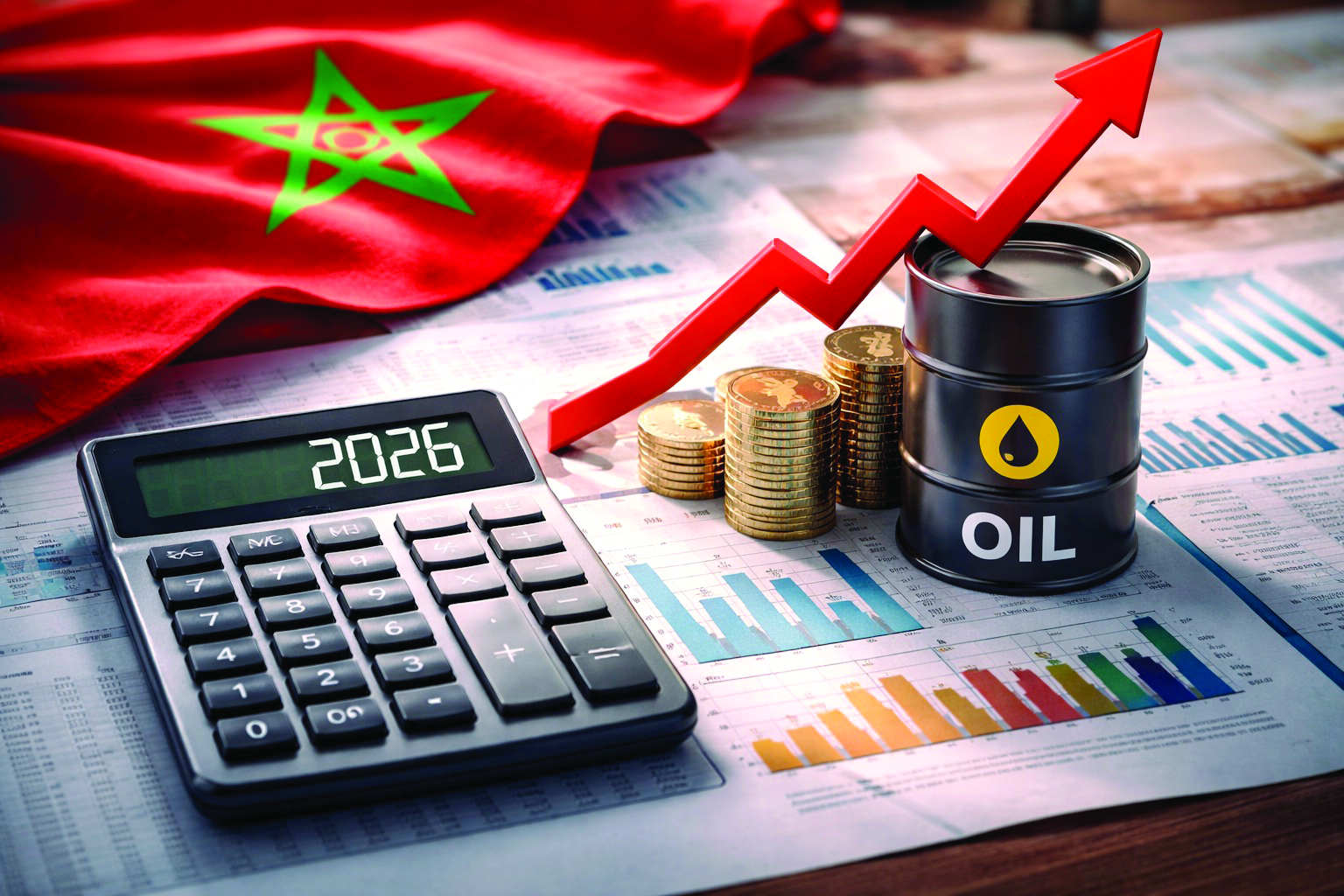
In July 2008, the price of a barrel of oil exceeded the $147 mark. The world took the hit. For Morocco, it marked the beginning of a succession of crises and economic shocks. For more than fifteen years, the Kingdom has faced extreme shocks such as the 2008 crisis, the health crisis, the war in Ukraine, the ongoing conflict in the Middle East, as well as natural disasters—forest fires, floods, earthquakes, drought… A decade and a half ago, Morocco decided to no longer endure shocks, but to transform them into opportunities.
Over fifteen years of crisis management, the Kingdom has gained experience and developed reflexes that strengthen its economic resilience and social stability. This led to the shift toward renewable energy in response to the 2008 crisis—IRESEN was established in 2011, MASEN a year earlier, and the Green Energy Park in 2017; the health crisis enabled the country to lay the foundations of the welfare state, with the implementation of direct social assistance programs, but also to launch a vaccine industry—Marbio now makes it possible to meet national program needs and export to Africa; the Al-Haouz earthquake was followed by the launch of regional platforms for storing essential emergency supplies; and drought accelerated the national water program (desalination, water highways…). These are just examples. The reality is that the Kingdom now anticipates the impacts of crises. The response is immediate: emergency measures are taken to mitigate the effects of crises on citizens and businesses (stabilization of transport and energy costs, support for farmers, direct aid…). Additional budget allocations are decreed when needed and, in extreme cases, recourse is made to the IMF’s precautionary credit line.
A monitoring committee closely tracks the situation. The reflex of passing an amended Finance Law, once invoked at every shock, has completely disappeared from public debate. The modus operandi is now well mastered. This has been seen in recent days: the government acted first to reassure about the availability of hydrocarbon stocks, with figures from the Ministry of Energy Transition showing steady supply since the beginning of the crisis. At the same time, a support mechanism was put in place to keep transport costs, electricity prices, and butane gas prices unchanged.
In short, to echo recent remarks by the Governor of Bank Al-Maghrib, Abdellatif Jouahri, what concerns Morocco is not how to face the crisis, but how to turn it into a new series of opportunities. The Kingdom has understood for years that its greatest advantage lies in being fully integrated into complex supply chains on which the entire world depends.
A kind of “supply chain interdependence,” in industry jargon. This is already underway, and the Middle East crisis will only accelerate the process. The Kingdom is becoming indispensable in terms of global food security. It is gradually freeing itself from dependence on key inputs in the fertilizer industry while enabling more and more countries to secure their supplies. It is also on its way to becoming a maritime hub at the crossroads of international shipping routes and corridors. Today there is Tanger Med, soon Nador West Med, then in less than two years Dakhla Atlantique—currently over 56% complete—and later Kénitra Atlantic. Alongside this is the expansion of the port of Casablanca, from Jorf Lasfar, among other port facilities.
Credibility, security, and stability
The Kingdom’s policy in this area is visionary and consistent. Each port in its time, and each port with its own role. Year after year, these ports are becoming essential security nodes ensuring the continuity of global energy and trade flows—alternatives, fallback positions, and access points to the mineral wealth of certain African countries, whose access to the Atlantic, and thus to global markets, will be facilitated by the future port of Dakhla.
By raising its level of preparedness in maritime security along its Atlantic corridors, Morocco reassures insurers, freight operators, and investors across various sectors, positioning itself as a trusted partner for international trade—a position that continues to strengthen. The Atlantic coastline is also an asset for the new tech industry, offering secure and easy connections to international cables.
The next generation of “green data centers,” including hyperscale projects planned in Morocco, is progressing. The giant Nvidia has already taken the step, and others (Amazon, Google, Oracle…) will likely follow. Morocco’s renewable energy potential, in a context of high global energy prices, is attracting increasing investment. The photovoltaic module industry is booming. Combined with storage solutions (BESS), currently under development, the sector will help make Morocco an energy hub between Europe and Africa, with green hydrogen and Nigerian gas delivered via the Atlantic Africa Gas Pipeline. The Kingdom also serves its European neighbors as a nearby industrial platform. Regional conflicts increase costs and lengthen maritime transport routes. In aeronautics and automotive industries, investments continue at a sustained pace, and Morocco’s position in the global value chain is strengthening. The automotive and chemical industries continue to attract significant investment. The National Investment Commission has just approved three strategic projects in these two sectors, representing an investment of 12 billion dirhams.
Morocco, a member since early February of a new international cooperation framework on critical minerals, is a key player in the supply chain of metals essential for industries such as AI, robotics, and defense. In terms of defense, Morocco plays the role of a regional pivot for peace and security—two closely linked aspects. The Kingdom, a founding member of the “Peace Council” initiated by President Trump, is the only country in its region to be part of international stabilization forces in Gaza. It has recently been designated by NATO as “a key strategic partner in its approach to the southern neighborhood,” while, just weeks ahead of African Lion 2026 (April 20 to May 8), its military partnership with the United States and other partners continues to deepen. The Kingdom has access to the most advanced defense weapons and technologies without restriction and is in the process of becoming an industrial defense power, targeting markets in African countries still facing border instability. Morocco is also expanding its military partnerships across the continent, from east to west, becoming an active and credible player on the continental stage. This status will likely be further strengthened once the Sahara issue is definitively resolved. For many observers, the end of this dispute would mean “the liberation of Moroccan diplomacy from a long period of strain and its entry with much greater strength into investment and influence matters in Africa.” The Kingdom would thus move from the status of a state focused on defending its territorial integrity to that of a liberated regional power, ready to expand its influence across the continent and beyond.