International
War in the Middle East: The 2022 Scenario Haunts the Economy
With the aim of countering the harmful effects of the Russia–Ukraine conflict on purchasing power, the government had put in place a significant cushioning mechanism. A closer look at the implications of a conflict that could be similar to those of 2022 for Morocco.

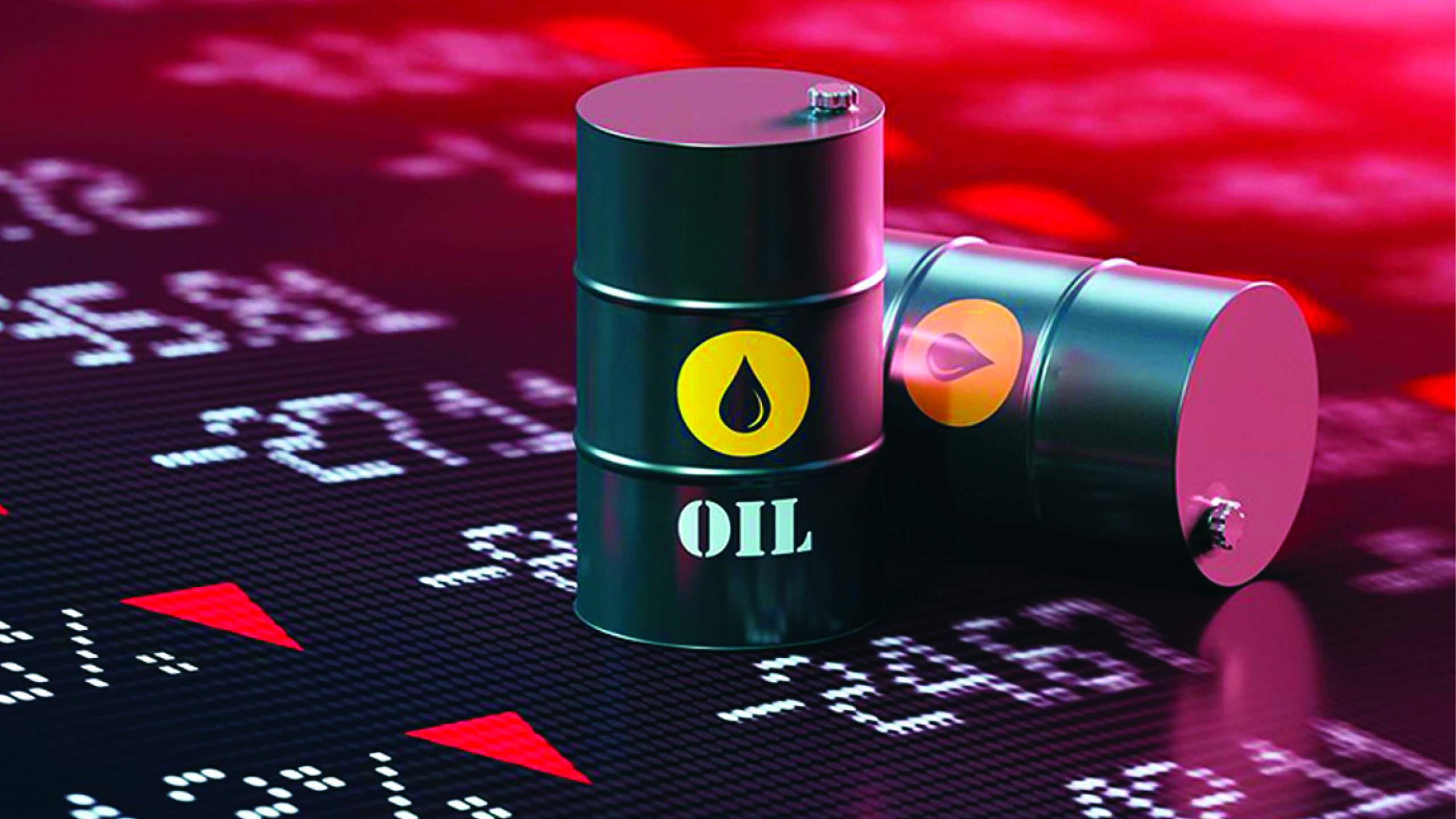
Concern is steadily spreading across global oil markets following the escalating flare‑up in the Middle East, triggered by Iran’s armed attacks, in retaliation, against several Gulf countries (United Arab Emirates, Bahrain, Saudi Arabia, Qatar, Kuwait…).
Just a few days after the start of U.S. and Israeli strikes on Iran, Brent prices (the international benchmark for oil) quickly peaked at levels not seen since 2023.
Specifically, the price of Brent stood at 93 dollars on Friday, March 6, before surging to more than 104 dollars during the day on Monday, March 9, then retreating during the session on Tuesday, March 10, to around 93.3 dollars.
Clearly, this volatility reflects the lack of calm in international markets in the face of a conflict that could last, according to some international relations experts. Moreover, Tehran has promised to continue its military strikes for as long as necessary.
In short, the peak of 93.3 dollars for Brent marks a very sharp difference compared with the 61 dollars recorded in January 2026. Even more striking, the price of European gas also jumped due to the blockage of exports from Qatar.
The Dutch TTF futures contract (the European benchmark) rose by more than 16.42% to 62.150 euros per megawatt-hour on Monday, March 9. In reality, this surge in crude oil prices results both from the destruction of oil infrastructure (Bahrain, Iran), the drop in production in several Gulf countries (United Arab Emirates, Iraq, Kuwait), and above all from the paralysis of the Strait of Hormuz, through which nearly 20% of the oil and LNG consumed worldwide transits.
It should be recalled that, so far, few oil tankers dare to sail through the strait, since shipowners and crews fear becoming targets of Iranian strikes. Moreover, the country’s authorities have claimed responsibility for several attacks on oil tankers.
In order to restore traffic through this strategic strait for hydrocarbons and the global economy, the United States promised, on Friday, March 6, to insure ships against war risks up to 20 billion dollars, on a continuous basis.
Despite this American promise and reassuring statements from President Trump, nothing guarantees that oil tankers will quickly venture through this passage controlled by Iran, since at this stage the United States does not guarantee the total safety of vessels (a cardinal variable for maritime transport), but promises to pay if there is damage.
The government remains vigilant
In this context of security uncertainty prevailing in the Strait of Hormuz, several major international financial market players continue to revise upward their forecasts regarding Brent prices.
At this stage, it should be noted that Nadia Fettah, Minister of Economy and Finance, recently indicated that the government is ready to face the impacts generated by the current conflict on the national economy, while recalling that the Kingdom has, in recent years, experimented with protective measures in favor of the most vulnerable populations.
Hence the inevitable question: could the ongoing conflict in the Middle East lead the government to reintroduce cushioning measures aimed at preserving citizens’ purchasing power and the competitiveness of Moroccan companies, similar to those adopted in 2022 following the consequences of the war in Ukraine? Given the evolution of the belligerent situation, the prospect of a barrel exceeding 150 dollars is not ruled out by some analysts.
The 2022 spiral
One of the most notable impacts of the Middle East conflict on the national economy is the surge in oil prices, since the Kingdom is a net importer.
Several credible forecasts, relayed by global financial players, warn that oil prices—particularly refined products—could exceed the peaks of 2008 and 2022 if flows through the Strait of Hormuz remain weak throughout the month of March.
As a reminder, the Russia‑Ukraine conflict in 2022, which caused a global oil shock with a peak of more than 130 dollars per barrel in March 2022 and a record reference price of more than 1,400 dollars per ton for gasoline and diesel, had triggered imported inflation in Morocco.
Preserving purchasing power
Faced with this situation, which was harmful to economic growth, the government implemented a range of original cushioning measures aimed at limiting the impact of imported inflation on domestic prices and preserving, as much as possible, the purchasing power of Moroccans and the competitiveness of companies.
Among the government’s measures were the removal of customs duties on several imported products, the introduction of an import premium for soft wheat, and direct support for transport professionals, which was renewed several times.
In addition, among other measures, there was an additional 16 billion dirhams allocated to compensation expenditures, which had reached 41.8 billion dirhams in 2022, compared with 25.4 billion dirhams in 2024, and an increase in the minimum wage (SMIG) in both the public and private sectors. During 2022, the government also resorted to another additional allocation of 12 billion dirhams, part of which was used to financially support ONEE.
Without this financial boost from the State, the public utility would have been forced to raise electricity tariffs. The reason is that the increase in the cost of national electricity production was mainly due to the rise in coal prices, which account for 60% of the country’s electricity production, with an annual average of 358 dollars per ton in 2022 compared with 115 dollars per ton in 2025, and to a lesser extent the increase in natural gas prices, which account for around 10% of national electricity production.
An urgent necessity
Beyond this reminder confirming the government’s efforts to preserve purchasing power, an escalation of the war in the Middle East over several weeks would pave the way for oil prices exceeding 150 dollars per barrel, according to several analysts.
Clearly, such a situation—particularly harmful to price stability, citizens’ purchasing power, and the national economy in general—would inevitably push the government to once again deploy cushioning measures aimed both at limiting price increases and safeguarding the purchasing power of Moroccans.
Today, several voices internationally are warning about the dangers of soaring Brent prices for the global economy and the potential impact of this war on rising costs of agricultural inputs (components of nitrogen fertilizers) and food prices.