Business
Video Game: Cazafonia, a world to trace
Fed by Dizzy Dros’s real-life experience, Cazafonia becomes an open-world game presented at Morocco Gaming Expo 2026. Between hustle, resourcefulness, and assumed identity, AJB Games Studio’s game transforms a biography into an interactive world, where a city and a generation tell their own stories.

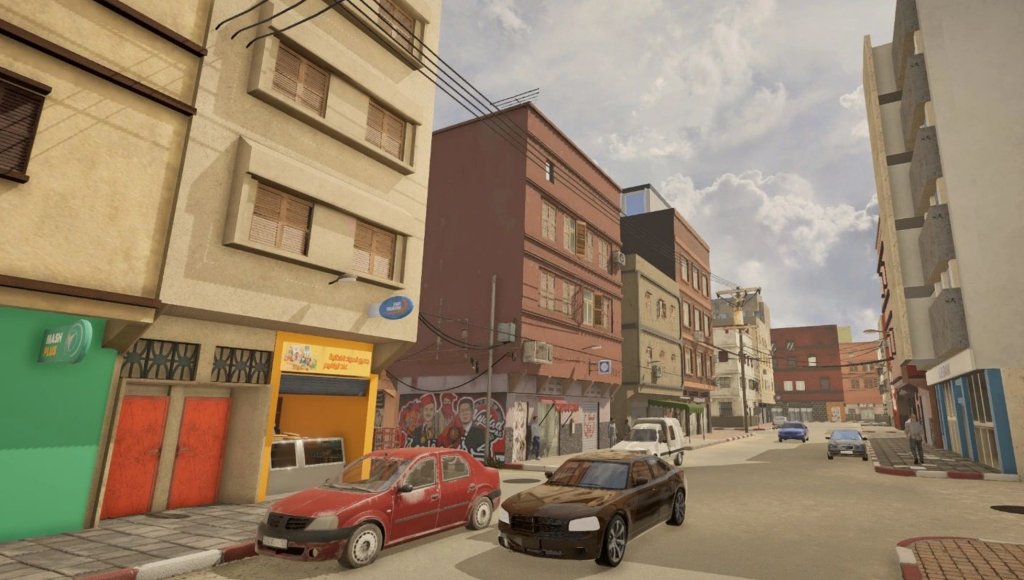
We knew Dizzy Dros in 2011, laying his Cazafonia on beats that smelled of Casablanca’s hot streets and dreams ripped away with flow. Thirteen years later, the track is no longer just an anthem of the derbs (alleyways); it has become an open world.
Cazafonia-The Game, presented as a demo at Morocco Gaming Expo in Rabat at the end of May 2026, aims to be a natural extension of a universe born in the streets, carried by a self-taught developer and a rapper who refuses to put down the mic.
Ayman Jbari, founder of AJB Games Studio, is not new to making a splash. After more intimate or horror titles like Uncursed, he moves to open-world with a tight team and ten months of hard work.
The result? Casablanca offers itself a second digital existence. We find its emblematic alleys, its rooftops bathed in light, and this road chaos that has become almost a sonic signature, to the point of engulfing calls to prayer.
No folkloric postcard, but a city that sweats, struggles, and vibrates. The game will be released on PC and mobile, a pragmatic decision to reach the widest possible audience in a country where the smartphone remains the primary gaming screen.
At the heart of the project is Dizzy Dros himself. Omar Souhaili is not just an ambassador. He is the protagonist, the narrator, the living material. “From the mic to the controller”, he summarizes with that mix of pride and grit that characterizes him. The rapper says that “from the first day, everything I built started with music. But in my head, it never stopped there.
We all dreamed of seeing a video game inspired by Moroccan streets. Today, the dream has become reality. Cazafonia wasn’t just a song, it was a world, a reality, a story I lived through”.
Clip & Cash
The gameplay relies on a clever structure that transforms biography into mechanics. Five stages, five clips to shoot. To unlock the next one, you must accumulate money.
“Casa inspires resourcefulness”, explains Ayman Jbari. Scooter delivery amid urban chaos, side missions open on the map, chase races, more narrative missions… everything serves to finance the next clip.
We’re not in the luxury of Los Santos. We’re in Casablanca reality where every dirham earned sweatily from the handlebar brings you closer to the spotlight.
Characters who seem to come straight from the streets, dialogues tuned to daily life, and a Moroccan culture claimed without folklore. The game sketches an uncommon plunge into the Arab world.
Dizzy says it without filter: “Cazafonia tells a true story, an experience that mixes music, street, and Moroccan culture in a unique way. It’s for the ‘drari’ (kids) who were there from day one… and for those who are only arriving now”.
This symbiosis between rap and video games is not accidental. It extends a tradition where street culture seizes all available mediums. Tools change, not the intention.
From ghetto blaster to modern consoles, the same urgency remains: telling your daily life without waiting for someone to make room for you.
In a country where Ubisoft had attempted the adventure before leaving, where the local industry emerges through passion and resourcefulness, Cazafonia carries obvious symbolic weight.
This is not a “Moroccan GTA” in the marketing sense. It’s a cultural object that claims its own narratives, its own rhythm, and a creative energy forged in contestation.
The demo seen in Rabat sparked excitement. Queues at the booth, enthusiastic feedback, palpable national pride. The whole thing hints at potential but also at room for improvement in an independent production, between animations to refine, universes to enrich, and AI to fine-tune. Ayman Jbari embraces this artisanal, almost punk side.
No triple-A with Hollywood-level budgets, but raw authenticity that calibrated productions often lack. The polish will come. The soul is already there.
In the broader landscape of African and Arab gaming, the project stands as a pioneer. Cazafonia stands out with uncommon cultural representations, sovereign narration, and an assumed hybridization between popular music and interactive experience.
Where many replay the same formulas, the game prefers to branch off. We think of rap scenes that conquered Europe by imposing their slang and realities. Tomorrow, maybe, studios from Dakar, Abidjan, or Cairo will look at this virtual Cazafonia and say it’s possible.
What remains essential is the promise of a living city, a journey steeped in real experience, and a soundtrack destined to make noise. Between delivery missions and clip shoots financed by hustle strength, the player doesn’t just play a role. They relive a street epic that marked an entire generation.
Cazafonia is not just a game. It’s the logical continuation of a track that never really stopped playing. From mic to controller, the flow continues. And this time, it’s us holding the wheel on Casa’s “binne drouba” (own path). Cazafonia is ours, ours…
Ayman Jbari, Game Changer
He belongs to that generation that grew up with a controller in hand and eyes fixed on the screen, asking the same obsessive question: “What if I changed this?” Tekken, PES… nothing pleased him. Quickly, fascination became vocation. “Since I was little, I was a gamer. I always told myself: I want to modify something in these games.”
Pure self-taught, he trained on YouTube, dissected Game Studios, understood that game development is not just code: “It’s art, 3D, sound, concept… all combined to create a final product.” Unlike big studios like Rockstar where each job is compartmentalized, the indie learns everything alone, in their corner.
In 2023, he finally structured a small team, composed of Younes (concept artist and 2D artist) and Hamza (3D specialist). Today, there are only three at AJB Games Studio. “The most important thing in game dev is having a team,” he confides. “You can start alone, but you won’t stay alone forever. The era of the Thomas Edison solo is gone.”
What strikes about Ayman is his discreet but powerful CV. He participated in international productions, notably within an Arab team on Capcom’s Resident Evil 7 (localization and translation).
And above all, he already tasted success with Martha’s Dolls, his previous title that won the best game award in North Africa and the Middle East at an event in Saudi Arabia. The game was massively streamed and accumulates over 100 million views on YouTube.
With Cazafonia, he moves to another dimension. An ambitious open-world, solidly culturally anchored, born as much from resourcefulness as from passion. No Hollywood budgets, just a tight small team and a clear vision. It’s a whole Casablanca mindset condensing there, between hustle culture, claimed authenticity, and refusal of exclusivity. From the family living room to Morocco Gaming Expo booths, Ayman Jbari never let go of the controller. Nor the wheel.