Business
Used cars: A dynamic but weakly structured market
The used‑vehicle market is showing strong momentum, driven by growth in new‑car sales and the availability of financing options. However, it continues to suffer from the predominance of informal activity.

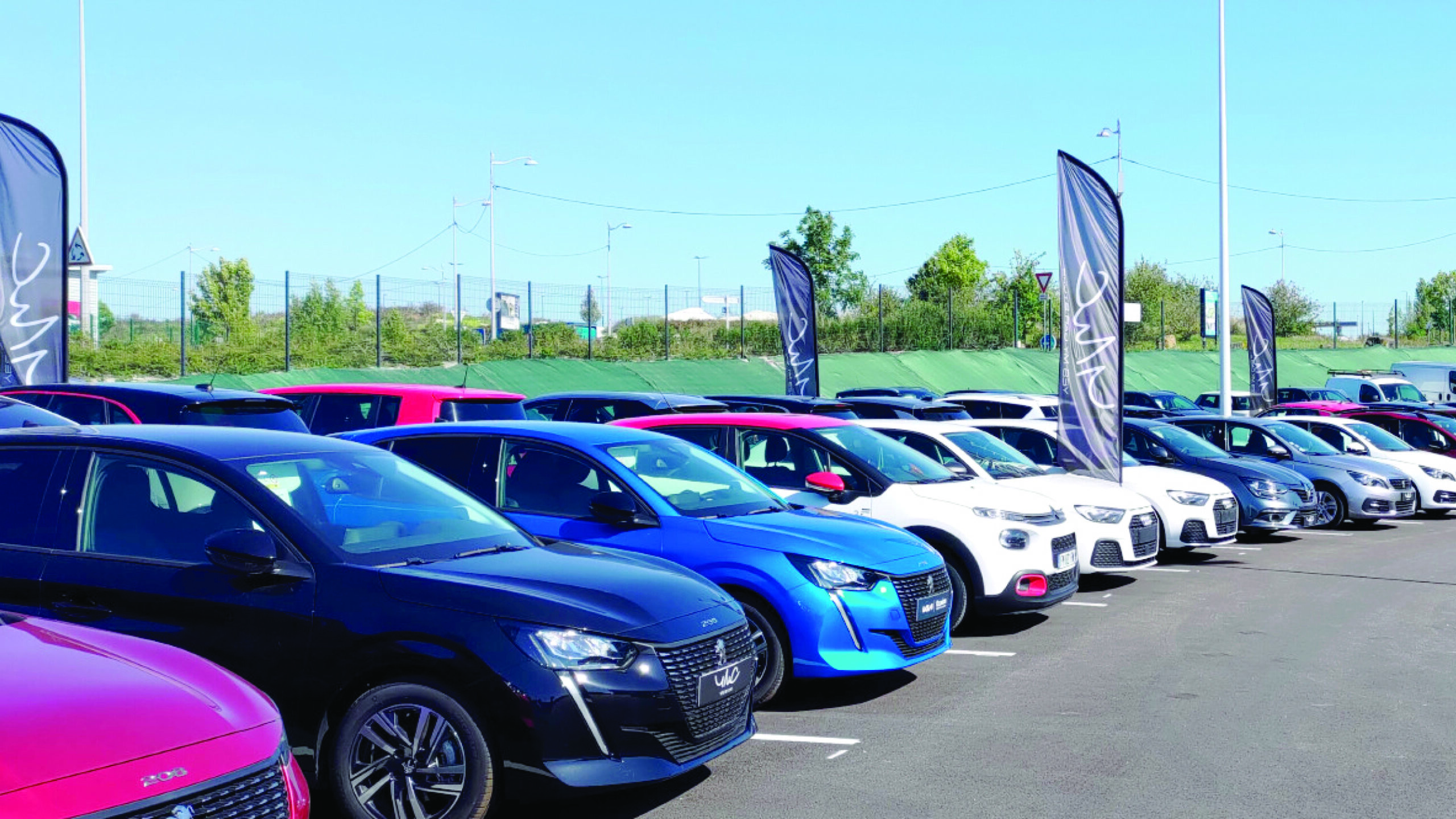
The used‑vehicle market is showing uninterrupted dynamism. Apart from the period of the health crisis, which saw a decline in the number of ownership transfers, the sector has confirmed its growth year after year.
By the end of 2025, nearly 780,000 ownership transfers had been recorded, representing a 13% increase compared with 2024. Passenger cars, which account for 70% of the market, were sold in volumes of around 540,000 units, while sales of light commercial vehicles reached 197,000.
At the same time, the new‑car market posted growth of 33%, reaching 234,372 units. “The used‑car market is directly correlated with the new‑car market, both in terms of flows and prices,” explains Adil Bajou, Chief Executive Officer of Otoclic, a company specialising in the purchase and sale of new vehicles.
It should be noted that the used‑car market is nearly four times the size of the new‑car market. In other words, one out of every four cars is sold on the second‑hand market. Yet it remains a poorly structured sector, dominated by informal activity.
“The informal sector accounts for up to 97% of transactions, compared with only 3% for structured operators. This entails several risks for buyers, but also represents significant room for improvement for the sector,” adds Bajou.
Indeed, the market is driven mainly by unregulated sales outlets, online platforms, intermediaries, and social networks. This increases the risk of fraud: hidden defects, falsified mileage, concealed accidents, excessive wear, and so on.
Given its importance and potential, almost all car dealers have set up subsidiaries specialising in used‑vehicle sales.
These entities carry out meticulous inspections, accompanied by comprehensive diagnostics, and impose strict criteria before purchasing a vehicle from a private individual. At the point of sale, they offer warranties, after‑sales services, and follow‑up support.
This is also the case for certain specialised garages. “We have a dedicated diagnostic unit. A vehicle undergoes 120 inspection checks before being purchased from a customer, so out of 10 to 15 vehicles offered for sale, only two to three are actually acquired,” says the head of Otoclic.
In addition, the vehicle’s administrative status is checked to ensure that it is not subject to any opposition, lien, legal proceedings, or reported as stolen.
Moreover, these specialist garages, like dealers’ subsidiaries, offer warranties ranging from six months to one year. Customers may also benefit from a trial period of a few days to test the vehicle, with a “satisfied or refunded” guarantee.
Vehicle condition and spare parts drive prices
What about prices? They follow the classic laws of supply and demand, but are also determined by the diagnostic results. Another key criterion is the availability of spare parts in the event of a breakdown.
The easier spare parts are to obtain, the better for the seller, as the vehicle retains its value. This is not necessarily the case for luxury brands such as Maserati, Jaguar, or Porsche.
“For example, a Maserati first registered in 2015 sold for 200,000 dirhams. The same applies to a Jaguar registered between 2012 and 2014,” illustrates another garage owner. A simple look at online marketplaces shows the price gap between new and second‑hand luxury vehicles.
“These so‑called ‘exotic’ cars operate under different rules. Not only are after‑sales services expensive, but so are spare parts, taxes, and insurance,” explains the garage owner. In other words, “buying this type of vehicle is generally considered a pleasure purchase, and owners typically keep them for only a short time,” he adds.
Expanded financing solutions
Financing for used vehicles is similar to that for new vehicles at banks and finance companies. In fact, some institutions offer the same conditions in terms of loan amounts and interest rates.
Specialised garages, as well as dealers’ subsidiaries, also sign partnership agreements with credit institutions to facilitate purchases.
Participatory banks have also entered this segment, offering financing solutions for used vehicles. In all cases, loans can cover up to 100% of the sale price, with repayment terms of up to 84 months.
Support with compiling financing applications is also provided. “The goal is to simplify administrative procedures for customers, help them secure slightly better rates than standard ones, and foster customer loyalty,” Bajou concludes.
Digitalised vehicle ownership transfers
The National Road Safety Agency (NARSA) has launched a portal wholly dedicated to vehicle ownership transfer procedures. When ownership of a vehicle registered in Morocco changes, both seller and buyer are required to follow the various steps through this platform.
This online service, intended for users and the general public, aims to simplify and secure sales and purchase procedures while protecting the rights of both parties.
As such, transfer applications must now be submitted by the seller and the new owner through approved agencies of Barid Cash or Al Barid Bank, instead of the former vehicle inspection offices, within a maximum period of 30 days following the legalisation of the sale declaration signature.