Business
Urban buses: A revolution on wheels
The vast national program to overhaul urban transport has paved the way for increased competition between private operators. Already operational in Fez, the CTM group is among the first actors to adopt this new delegated management model.

Several cities of the Kingdom are benefiting from a complete overhaul of their mobility plans, particularly urban transport by bus, thus marking a total break with old practices.
Currently, it is the Ministry of the Interior that covers all investment expenses (CAPEX), whether for the acquisition of buses or for the construction and equipment of maintenance and repair centers, the acquisition of ticketing systems, and operational support…
It is this supervisory authority that is also responsible for outsourcing the management, making it available to private professional partners under a delegated management contract.
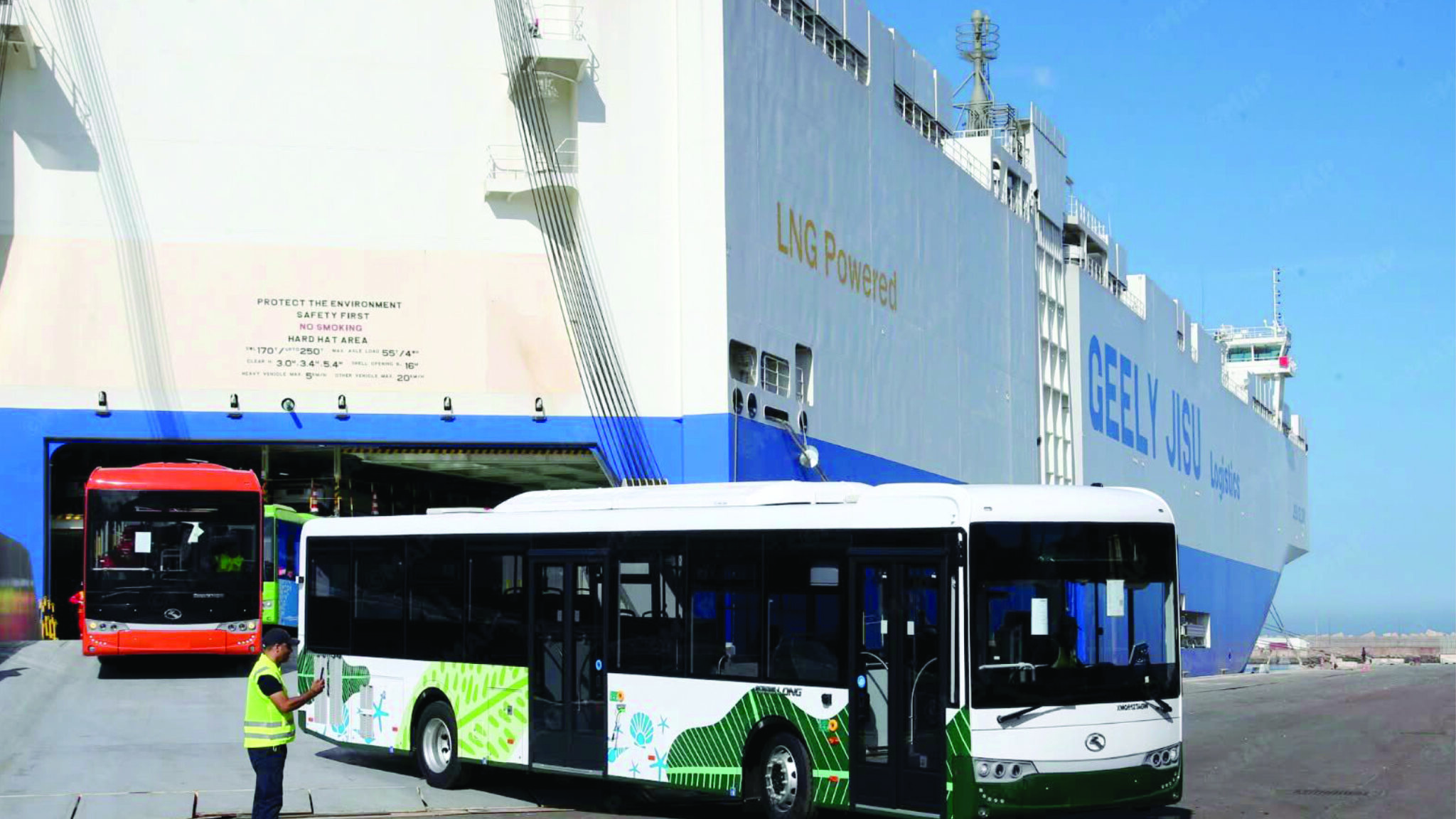
The ministry has moreover allocated a budget of 11 billion dirhams for this ambitious strategy, which will cover the period 2025–2029, including the acquisition of nearly 3,800 new buses to cover urban mobility in 84 cities and urban areas.
Agadir, Marrakech, Fez, Tangier, Rabat, Benslimane… and their agglomerations are the first in a series of cities concerned. The second phase of this program targets 24 cities and nearby urban areas, including the cities of Dakhla, Guelmim, Oujda, Essaouira, Tinghir, Taounate, and Sidi Bennour.
The final stage concerns 31 cities, including Casablanca, Meknès, Khouribga, Laâyoune, Béni-Mellal, Nador, El-Aroui, El-Jadida, and Azemmour. Younès El Kasmi, governor and director of urban mobility and transport at the General Directorate of Local Authorities at the Ministry of the Interior, had already announced the upcoming delivery of 1,000 buses as part of this first phase, of which several cities have already received an initial batch now being prepared for imminent deployment.
Thus, 70 vehicles have been received at the port of Agadir and 257 at that of Casablanca. Several agglomerations will benefit: 49 in Marrakech, 40 in Agadir, 56 in Tangier, 68 in Tetouan, and 44 in Benslimane.
Currently, numerous calls for tenders concerning the management companies for public bus transport have been launched. And soon, the selected management company for Tangier, Agadir, Marrakech, and Tetouan will be known.
Competition is already fierce for these markets: Alsa, Supratours, Autasa, the CTM–Transdev consortium… all public transport operators are involved, aiming to win one of the urban mobility contracts.
CTM, a pioneer in Fez
It must be said that CTM is already operational in the market of the city of Fez through its subsidiary Issal Fès. And this is not the group’s first experience. It has already been present in the city of Tetouan and its surroundings since November 2023. “Since taking charge of this activity in the city, we have observed double-digit growth, both in ridership and in bus usage”, says an Issal Fès official.
September 11: launch in Fez. “We took over urban bus transport in Fez as is. While waiting for the arrival of the new buses, we upgraded the existing fleet and carried out several maintenance and repair operations”, our source notes.
Furthermore, “the fleet has been reinforced by 40 additional buses in good working condition that the Ministry of the Interior has made available to the city to temporarily strengthen the fleet”, adds the official. Thus, in two months, bus transport is being provided by a fleet that has been multiplied by 2.5 compared to the start.
The partnership between the delegatee and the supervisory authority, which should apply to other delegated management partners soon to be awarded the ongoing contracts, is for a transitional year, after which a 10-year contract will be concluded between the parties. This term may be renewed, terminated, or revised depending on the assessment and the ministry’s needs.
Not only acquisition
The Ministry of the Interior, through the delegatee, is not responsible solely for the acquisition of buses, but also for all the management mechanisms that revolve around it.
These include, among others, information and operating support systems, the deployment of electronic ticketing solutions, storage and maintenance centers, signage terminals, and the development of depots…
The financing of all this investment is covered one-third by the regions and two-thirds by the Urban and Interurban Road Transport Reform Support Fund (FRAT).
In any case, the management companies must comply with a detailed set of specifications requiring an efficient, reliable, and environmentally friendly transport service, service quality, regularity and passenger information, as well as inclusion of the entire public. Added to this is the support for the digitalization of services and the development of local skills.
The ultimate objective of this overhaul is to provide the Kingdom with a modern, high-performance transport network that meets the standards of major cities.
Sustainability, the engine of new mobility
The strategy for modernizing public bus transport is accompanied by a sustainable mobility policy. The ministry thus encourages sustainable urban mobility plans and is even committed to providing technical and financial support to local authorities in this process.
Several cities have already embarked on this vision, including Rabat and Benslimane, which have laid the foundations for an integrated, sustainable mobility system adapted to the future needs of the territory in preparation for welcoming thousands of visitors for the 2030 World Cup, as well as Laâyoune, which has launched a study aimed at managing mobility needs, including a circulation plan and a parking plan.