Kingdom
Unified Socialist Party: The Making of Disunity
The duo at the helm of the PSU, Jamal El Asri and Nabila Mounib, is facing a new challenge. A new faction has come out into the open. Behind it stands a former member of the OADP, El Alami Lahrouni.

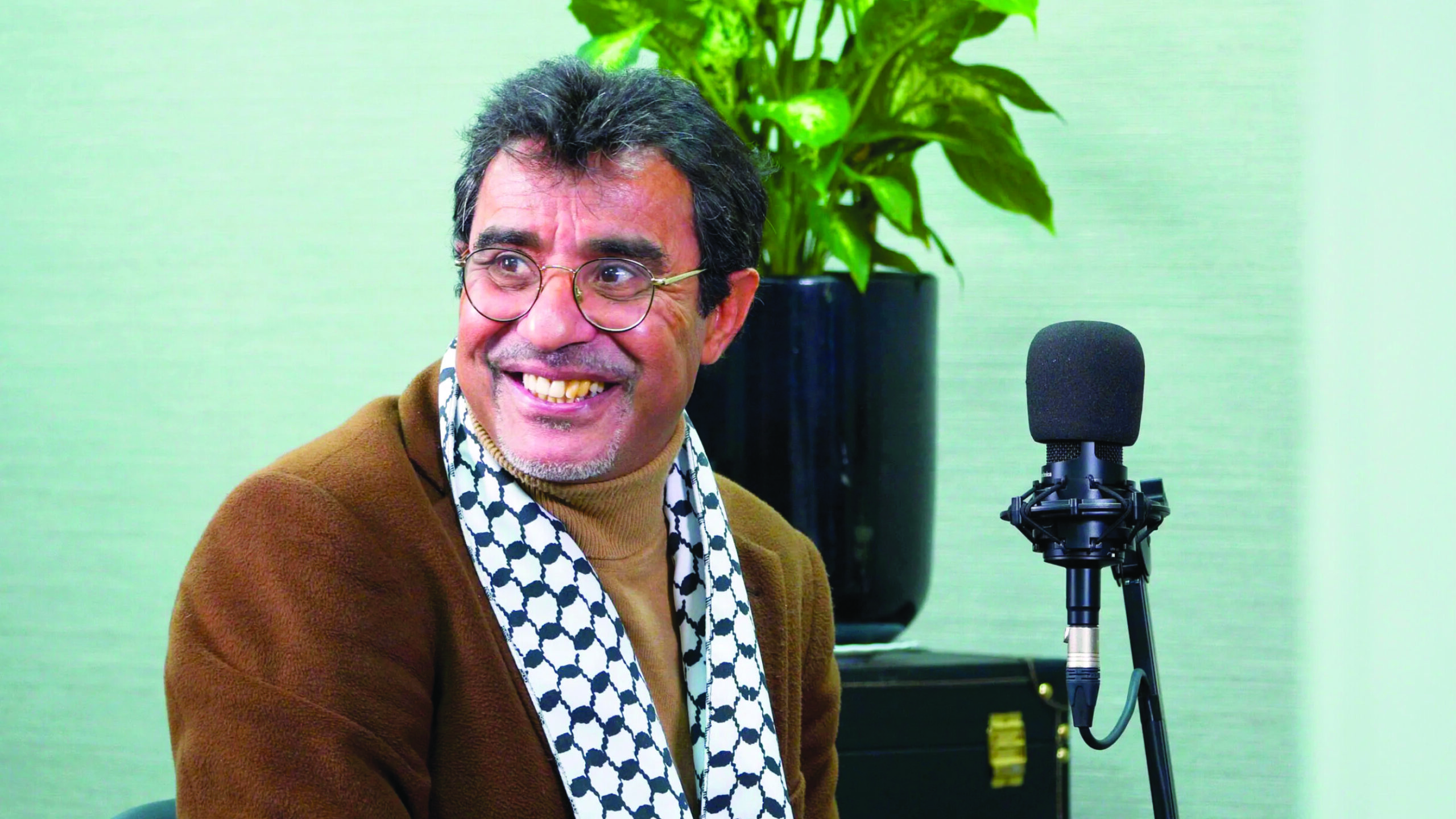
Nothing is going well within the ranks of the Unified Socialist Party. Very recently, a new reformist faction emerged with considerable uproar. Behind this movement are more than twenty activists in a party that has always been traversed by currents—some that take shape and others that fade away with the flow of current events.
Unlike others, the new faction has opted for a “frontal” approach, notably riding the wave of “guerrilla warfare via social media,” while also working to secure mobilisation around it by taking public opinion as witness.
“The Renewed New Left” is the name this current has chosen. It relies on the “rejection” of an inherited legacy “accepted by default,” as a veteran of the OADP from the days of its experience on the first floor of the now-defunct Lux cinema in Casablanca tells us.
It is as if the choice made by Bensaid Ait Idder—who was behind the creation of the PSU in 2005, with a four-star logo—is being called into question. A logo that has since faded!
In terms of activism, the new dissenters within the “Candle” party have organised themselves into a “tansikiya watania,” that is, a “national coordination.”
This model has become “the most effective lever for mobilisation” at the national level across regions, where dozens of local branches are claimed. It is a case of the biter bit.
However, the notion of a “national coordination” also implies those who position themselves as standard-bearers of the new left, echoing earlier activists who likewise emerged from a certain leftist matrix dating back to the late 1970s, against the backdrop of a wave of “leftist renewal.”
The appearance of the PSD in the mid-1990s remains in memory—a party that formed a parliamentary group with the PPS before dissolving into the USFP.
Facing the revolt, the leadership opts to remove its leader
Indeed, seemingly to “claim” this legacy, the new current publicly marked its birth on 23 March—an exercise in historicism meant to establish roots—during a press conference.
This announcement, unsurprisingly, did not sit well with the PSU leadership, led by the duo Jamal El Asri and Nabila Mounib, respectively and officially the party’s Secretary-General and Deputy Secretary-General.
Hardly had the announcement been made when a counteroffensive was launched to “disavow” this movement, which describes itself as “reformist” without renouncing its “membership” in the party. The leadership, however, denies it any legitimacy and has even threatened to refer “the case to the courts.” For now, the central headquarters is adopting a wait-and-see approach.
But not for long. According to the latest developments, the leadership of the “Candle” party has decided on the outright expulsion of the leader of the revolt, Alami Lahrouni, from the party’s ranks, of which he is a member of the political bureau.
Within the PSU, tensions continue to simmer. However, some observers believe an irreversible split may not be far off. In any case, more clarity is expected following the national council meeting scheduled for Sunday, 10 May.
Admittedly, uncertainty remains, as this issue does not appear on the agenda of a meeting reportedly focused on the announced “rapprochement” between the PSU and the FGD. Nevertheless, ongoing internal clashes cannot simply be ignored.
Following the announcements, the matter has taken on the feel of a drama with multiple twists. On 4 April, the PSU national council held a formal meeting to express its strong opposition to this movement. Subsequently, El Alami Lahrouni, national coordinator of the so-called renewed new left, has been the target of coordinated attacks, particularly on social media.
Total calm at headquarters…
On 10 April, the movement responded by denying the legitimacy of the national council meeting. Moreover, a highly inflammatory statement was made public—its tone unprecedented.
Within the movement, the stakes are being raised, with claims that its creation is the culmination of a process dating back to the 5th national congress in 2023. That congress, they argue, was marred by “numerous irregularities.” Evidently, when rootedness is lacking, recourse is made to so-called social networks.
That said, the PSU leadership’s reaction was swift—especially as the party, often more concerned with reacting to issues beyond Morocco’s borders, had to convene a press conference to explain the ins and outs of its position.
In the party’s history, splits have become almost its trademark.
According to an early OADP activist, the firm grip of its “iron lady,” Nabila Mounib, is the main cause of this upheaval. She is said to be highly active on social media, responding to every issue that arises—from Covid to the earthquake, among others.
Including even the GMT+1 time change as political subject matter!
Meanwhile, recent days have seen complete calm at the party headquarters at Résidence du Maréchal Ameziane, where the dilapidated state of the offices is glaring.
Negotiations, we are told by one activist, are taking place away from these walls.
Awaiting proof on the ground
For some time now, expectations have been building for a surprise in the upcoming elections. On the Moroccan left, there was an initiative led by the head of the “book party,” but it did not succeed—neither the PSU nor the FGD supported it.
Subsequently, a line of cooperation was established between the latter two parties, aimed at presenting joint candidacies. Recently, their leaderships held a meeting to discuss closer ties ahead of the elections.
Although the matter does not appear to have unanimous support within their respective ranks, the national councils of both parties have ratified an agreement on the distribution of constituencies in which they will run as a “united front.” What remains now is proof in practice.