Kingdom
Touria El Glaoui: “The market must serve creation, not dictate its form.”
Thirteen years already spent prying open the doors of a market that long remained deaf, and shifting the boundaries of a narrative that was far too narrow. With 1-54, Touria El Glaoui did not simply create a fair: she placed contemporary African art at the very centre of the global stage, with neither folklore nor condescension. In Marrakech, London, or New York, she orchestrates a circulation of works and perspectives that conveys one simple truth: the continent no longer needs to be explained—it tells its own story.

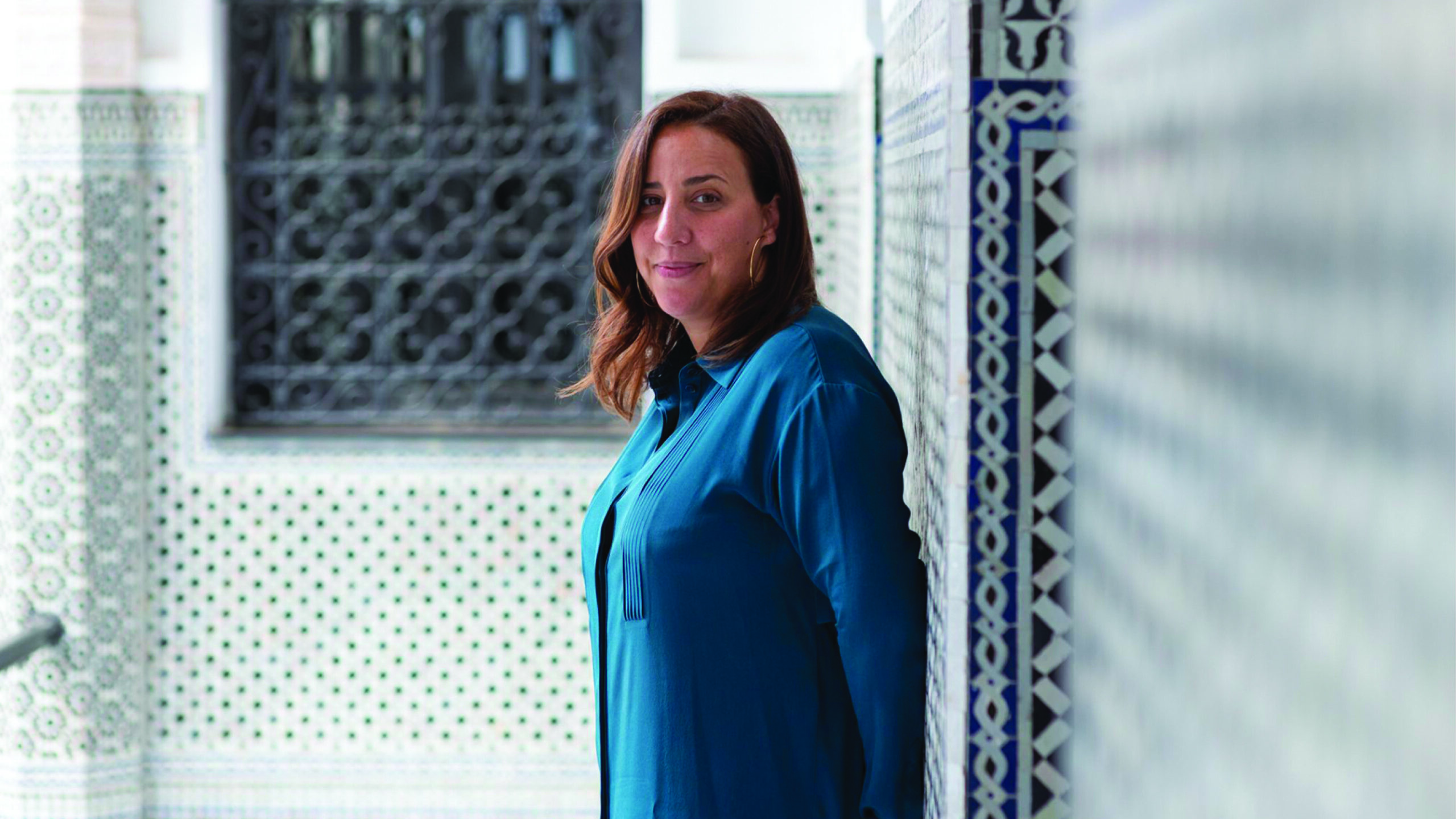
She is one of those cultural bridge-builders her time has needed. Founder and director of the 1-54 Contemporary African Art Fair, Touria El Glaoui has spent more than thirteen years connecting contemporary African art scenes to the global market, creating spaces for dialogue, recognition, and lasting professionalisation.
A career path that has earned her a place among Forbes’ 100 Most Powerful Women in Africa and among the continent’s most influential figures according to New African.
In her unapologetic early fifties, with a legendary smile and a calm yet determined gaze, Touria El Glaoui is the woman behind 1-54—named for the continent’s 54 states. It is the only international fair exclusively dedicated to contemporary African art and its diaspora, held each year in London, New York and Marrakech, with occasional forays into Paris or São Paulo.
Do you think the Western gaze still influences African creation, or are you seeing a completely autonomous momentum?
For a long time, the Western gaze weighed heavily on representations and expectations, but today we are seeing an increasingly assertive autonomy.
African and diasporic artists create first and foremost from their own realities, histories, and references. They engage in dialogue with the world, but without conforming to an external gaze.
They are now the ones defining their own frameworks and priorities.
You often speak about “rewriting the narrative of African art.” Can we really change the perception of the market and collectors?
Yes—it takes time, but it is possible.
Rewriting the narrative means moving beyond a reductive or folklorising vision to show the complexity, diversity, and richness of contemporary practices. By working with demanding galleries, institutions, and committed collectors, we help establish a fairer, more sustainable, and better-informed reading.
1-54 sits at the intersection of the market, criticism, and public exhibition. How do you manage the tensions between artistic standards and economic imperatives?
It is not about setting these dimensions against each other, but about making them converse. The market can be a lever for visibility and professionalisation, provided it rests on solid foundations. At 1-54, the priority remains artistic quality, the coherence of projects, and respect for artists’ trajectories. The economy must support creation, not dictate it.
What criteria, in your view, define the “strength” of a work or of an African artist today?
Strength lies in sincerity, consistency of the journey, depth of intent, and the ability to engage with one’s time.
A strong work is one that goes beyond mere aesthetics to offer a reflection, an emotion, or a singular way of seeing the world.
Some critics reproach the African art market for its “over-commercialisation” or “boxed-in exoticism,” even saying African art has become a “luxury product” for Western collectors. Is that a betrayal or a sign of recognition?
These excesses exist, as in any growing market. But they do not define the sector as a whole. International recognition is also a form of legitimising artists’ work.
The challenge is to remain vigilant, to foster balanced relationships, and to value sincere approaches rather than passing trends.
If you had to describe in one sentence what makes contemporary African art unique, what would it be?
It is an art deeply rooted in local realities, while being fully connected to global issues.
What new challenges and the main innovations marked this edition?
This year, the focus was on strengthening dialogues between African, diasporic and international scenes, on more engaged curatorial formats, and on developing educational and discursive programmes. It also involved offering greater support to young galleries and emerging practices.
Which works or artists from this edition surprised you the most, and why?
Several artists particularly struck me through the maturity of their approach and their ability to renew forms. Some offer highly personal readings of history, memory, or identity, with great formal mastery.
It is this combination of formal rigour and depth of intent that makes this edition especially stimulating.