Kingdom
These Derivatives That Multiply the Value of Phosphate (2/2)
Moroccan phosphate is not just about fertilizers. Its derivatives, currently being exploited, range from uranium to components for electric batteries. With its rare earth content, it has become a global stake in cutting-edge industries.

Fluorite, from simple waste to a key product
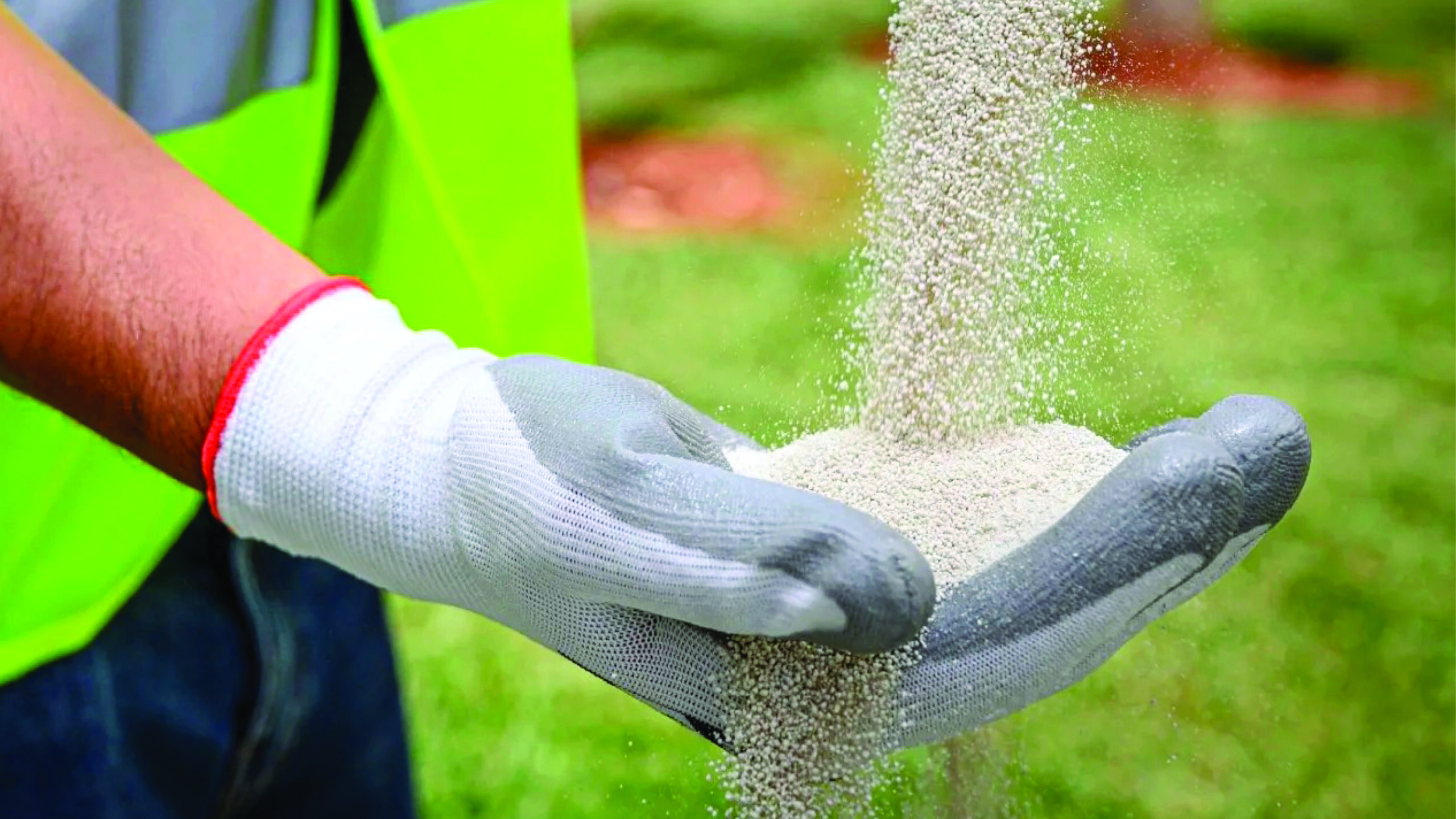
The fluorine of which Morocco possesses rich reserves and which had never been exploited until now is today taking on great importance. It is in high demand globally and is essential in many sectors: technological, pharmaceutical, agri-food, and especially in the battery industry.
Founded in 2023, Fluoralpha, a subsidiary of InnovX, whose factory was installed in Jorf Lasfar, aims precisely to become a major player in the fluorinated products sector. At the end of last September, InnovX had announced the signing of a strategic financing agreement worth more than one billion dirhams (approximately 110 million US dollars) for its subsidiary Fluoralpha, with Bank of Africa, “to support the development of a large-scale industrial project in Jorf Lasfar dedicated to the valorization of fluorine recovery from Moroccan phosphate rocks,” the company’s top management emphasized at the time.
The project includes a production unit for anhydrous hydrofluoric acid (AHF), with a capacity of 20,000 tonnes per year, and a production unit for aluminum fluoride (ALF3), with a capacity of 28,000 tonnes per year. These two strategic, high-value-added inputs are essential to several fast-growing global industrial chains, namely electric batteries, aluminum, semiconductors, and advanced chemistry.
Present mainly in electrolytes, fluorinated salts, such as LiPF6, contribute to the development of high-performance and advanced batteries for electric vehicles and renewable energy storage, thus supporting the global transition towards cleaner energy solutions.
Similarly, aluminum fluoride (AlF3) is primarily used in aluminum production by electrolysis, serving as a flux to lower the melting point and improve the conductivity of the electrolyte solution.
In the semiconductor and chip industry, its unique ability to attack and dissolve silicon oxide makes hydrofluoric acid a crucial product. It is used both in etching (it selectively etches silicon dioxide, allowing for the creation of precise patterns on chips) and in cleaning and stripping.
Environmentally friendly cardboard
In 2019, during the 5th edition of Symphos, a Belgian academic and industrialist, Pauli Gunter, presented a project for producing recyclable and biodegradable paper and cardboard made from phosphate extraction waste.
This would kill two birds with one stone. Phosphate mining generates significant quantities of tailings, which are mining wastes that accumulate on exploitation sites. These tailings pose environmental problems. Stone paper presents itself precisely as a sustainable and innovative solution to valorize this waste.
This innovative concept aims to transform mining residues into an ecological paper material, without water or trees, using mainly calcium carbonate (CaCO3) extracted from this waste, mixed with synthetic resins like high-density polyethylene (HDPE). Invented in Italy in the 1960s and industrialized in Asia, mainly in China and Taiwan, this paper is composed of 80% stone powder (calcium carbonate) and 20% non-toxic binders (HDPE). It is waterproof, recyclable, biodegradable in 3-6 months, and consumes 99% less water than traditional paper. Furthermore, its production avoids deforestation and reduces CO2 emissions by 40 to 50%.
During this International Symposium on Innovation and Technology in the Phosphate Industry, organized by OCP and UM6P (Benguerir, October 7-9, 2019), Pauli Gunter proposed a project aimed at using barren rocks, i.e., those not valorized in fertilizer production, to produce stone paper.
An industry that could generate 10 to 15 billion dollars in annual revenue, positioning Morocco as a world leader. There was talk of a pilot unit that should see the light of day in 2027, but no official announcement has been made in this regard. In the Project Bank developed by the Ministry of Industry and Commerce, one finds the project for a “stone paper manufacturing unit from phosphate waste.”
Animal feed, a lucrative market
In late November 2013, the OCP group unveiled, on the occasion of the 16th Dawajine Salon, the launch of a new product for animal feed: “PPP-Animal Feed”. This feed based on phosphate and calcium is intended for animal nutrition (livestock, poultry, etc.). The group’s production was destined for 10% to the local market.
The rest was to find its way to Europe, Africa, Latin America (Brazil), North America (the United States), and Asia. The first export of this product was shipped in May 2013 to Portugal. Today, via its Phosfeed range, the group supplies animal nutrition solutions in several countries, highly digestible phosphate supplements that provide the phosphorus and calcium essential for the health, growth, and reproduction of livestock (cattle, poultry, pigs, aquaculture).
In May 2023, the group finalized the acquisition of a 50% stake in the company Global Feed from Fertinagro Biotech, the main Spanish fertilizer producer.
This partnership makes OCP one of the leading suppliers of customized, high-value-added, sustainable, and affordable animal feed solutions. This acquisition comes in a context where the animal nutrition market has experienced sustained development globally, “thanks to the intensification of livestock farming and the need to meet the population’s nutritional preferences, increasingly oriented towards meat and high-protein products, particularly in emerging countries.”
A little over a year later, the group decided to increase its stake in the company to 75%. This is a sign that the group, already a world leader in fertilizers, has decided to carve out a place for itself in the lucrative animal feed sector.
Uranium, for clean energy
Since the launch of the yellowcake production unit was officially announced in El Jadida by Uranext, a subsidiary of InnovX, no information has leaked about the project.
It is known, however, that the startup, which invested 100 million dollars in this plant for extracting uranium concentrate, essential for civilian nuclear power, from phosphate, embodies a strategic shift for Morocco in both the mining and energy fields.
It should be emphasized in this regard that, as specified by the project initiators, Uranext’s approach is based, among other things, on a long-term vision, following a 15-year strategic roadmap, as well as on the development of an exclusive and innovative CIX (Continuous Ion Exchange) extraction technology.
Morocco’s advantages are enormous. The most important is that its phosphate reserves contain, according to estimates, about 7 million tonnes of uranium. Using phosphoric acid derived from Moroccan phosphates to extract uranium via an innovative extraction process is also an asset.
Similarly, the Kingdom has embarked on a large-scale policy for securing water resources, notably through desalination. The rise in uranium prices since early 2020, with a peak of over 106 dollars per pound in 2023, and the search for supply diversification by several countries using civilian nuclear energy make the context particularly favorable for Morocco to engage in this field.
Especially since this transition from the raw material (phosphate) to a strategic product is likely to generate substantial revenues. This while allowing Morocco to participate in the civilian nuclear value chain for desalination, research, or electric power production. It is also not excluded that a rise in skills will result in the development of the industrial ecosystem around uranium, with thousands of jobs at stake.