Kingdom
These Children the State Protects: Between Hopes and Challenges of a System in Transformation
As the State expands its social assistance system for children in care, protection facilities are called upon to evolve to overcome their structural limitations: insufficient budgets, inadequate supervision, and lack of preparation for life after 18. Between promising advances and bumpy life journeys, the children keep hope alive…

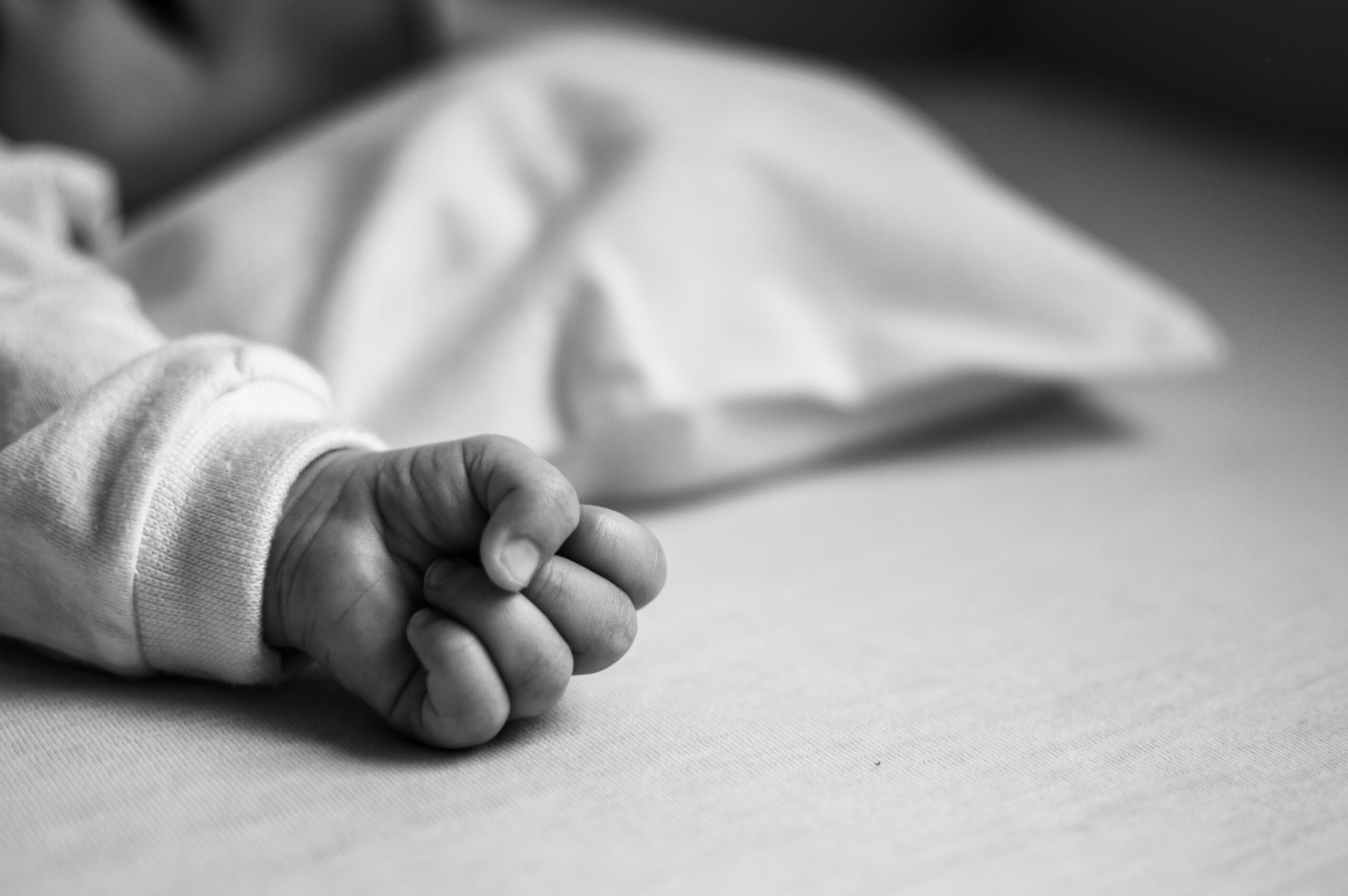
As the government has just announced the extension of direct social assistance to children in social protection institutions, a crucial question arises: Will this measure prepare them to be autonomous once they become adults?
Even today, hundreds of young people leave institutions at age 18 with no personal belongings, no resources, and sometimes no bearings, abruptly confronted with a world they have not had time to get to know.
While the State is strengthening social assistance to guarantee them decent living conditions during their care, the major challenge of transitioning to adulthood remains. Some, for lack of structured support, end up in precarious or vulnerable situations.
Other young people make it thanks to their resilience and the support of committed individuals. This is the case of Khadija, who grew up in a social protection institution in Casablanca since the age of 8. She recounts the moment of departure, the day she turned 18.
“They told me you’re 18 now. I was scared, because in the institution, we are protected, we are supervised, but we are not taught real life!” What saved her, she says, was the computer training that an educator at the center advised her to take.
“She also found me an internship paying 2,000 dirhams. My first income, which I counted at least twenty times and couldn’t bring myself to spend for several days…,” she recounts. Today, she is a technician and earns, without revealing it, a decent salary, which “allows me to rent a studio, do my shopping, and be independent.”
For her, the announcement by the Head of Government of the new measure “is a step forward. Financial support is a good thing, but it’s not everything, because human support is more important for learning community life and building self-confidence. It should start well before the age of 18.”
Also confirming the necessity of human support, Abdellah C., now 35 and a lawyer in a Casablanca firm, regrets the absence of financial support when he was in an institution.
“School was my escape…”
“At that time, post-18 life was a real tragedy for hundreds of children who had no bearings, no diplomas, and no training. In short, nothing to face life after the institution and rebuild themselves. Many of them squatted in old buildings and public spaces to sleep or simply refused to leave the institutions!” laments Abdellah, placed in a social protection institution in Fez since the age of 10 following a difficult parental divorce.
Studious, Abdellah took refuge in books and was convinced, he recalls, “that if I worked hard, I could invent a different future for myself.” Passing the baccalaureate was, for him and his mother, “a real event. One of my teachers guided me towards the field I dreamed of: law, so I could defend myself and defend the cause of children placed in institutions.”
Today, he is in a law firm specializing in family law. “Every time my client wins a case involving divorce or family abandonment, it’s as if I were winning a victory over my own destiny,” confides the young lawyer, who still carries within him the image of a child who didn’t understand why life was so hard on him, but who clung to the idea that one day he could help those living through similar injustices.
That is why he often returns to his former home and other institutions to speak to young people and raise their awareness about the importance of education and vocational training. “It’s a way for me to tell them that the story is never written in advance, that even those who started with so little can change the ending of the narrative,” he says.
For a former resident of the Ain Chock orphanage, Abdellah’s case is a “stroke of luck, a fairy tale. Because the past decides everything. I followed culinary arts training thanks to a social worker who managed to find me a foster family after I left the orphanage. It was an elderly childless couple who took good care of me and found me work in a pastry shop, but as soon as the owner found out I came from the orphanage, he fired me!” And this was not her only failure. At 24, she managed to find a job as a cook with a French family.
Once again, her past caught up with her when the parents of the family’s driver, who wanted to marry her, refused because she came from the orphanage. “I don’t want people to see me as the ‘institution girl,’ but as a young woman who worked to make a place for herself in society,” she declares.
She adds: “These are hard blows we are not prepared for, and many young people who are not supported end up on the streets and fall into delinquency.”
For her, financial support is useful, but serious support for young people is needed to help them rebuild themselves. It should be recalled that the social assistance has been in effect since 2023 and applies to vulnerable households or at-risk children, including orphans, children in institutions, and abandoned children.
The assistance for children taken in by social protection institutions will be granted within the framework of this program. This assumes that said institutions are recognized as eligible by the administration. The payment method is not yet known, and it is currently unclear whether the assistance will be granted to the institution or deposited into accounts in the residents’ names.
Within the associative sector, particularly organizations working on issues related to childhood and youth, the extension of direct assistance to this social category is welcomed. This measure, it is said in these circles, will allow young people to have funds, even modest ones, to start a new life.
This is especially significant given that social protection institutions, as has often been mentioned in various reports, have very few, if any, programs to support the transition to adulthood. Hence the risk of marginalization.
Nevertheless, several laws have been enacted for the professionalization of social work, the establishment of a more inclusive social protection framework, and for better governance and structuring of the social system. The new legal framework aims to address the historical problems plaguing these institutions.
These problems revolve around four axes: infrastructure, funding, human resources, and psychosocial support. Deficiencies that explain the increased pressure on reception capacities and overcrowding in social protection centers, the lack of supervision, a heavy reliance on public subsidies, and insufficient social reintegration programs.
According to a UNICEF report published in 2024, an estimated 11,982 children “in difficult situations” have been placed in social protection institutions in Morocco. Among them, 7,172 are boys and 4,810 are girls.
These children are housed in the 103 social protection centers across the country. This number is likely still an underestimate of reality, due to census limitations and informal placements, particularly by families.