Kingdom
The RNI Looks Ahead to “the Future”
At the National Rally of Independents, they do not change a method that has already proven its worth. The one based on listening and proximity is, in fact, the backbone of the Dove party’s approach. It began with “The Path of Trust” and has continued ever since through to “The Path of Achievements.” Now comes the time to look ahead to the future.

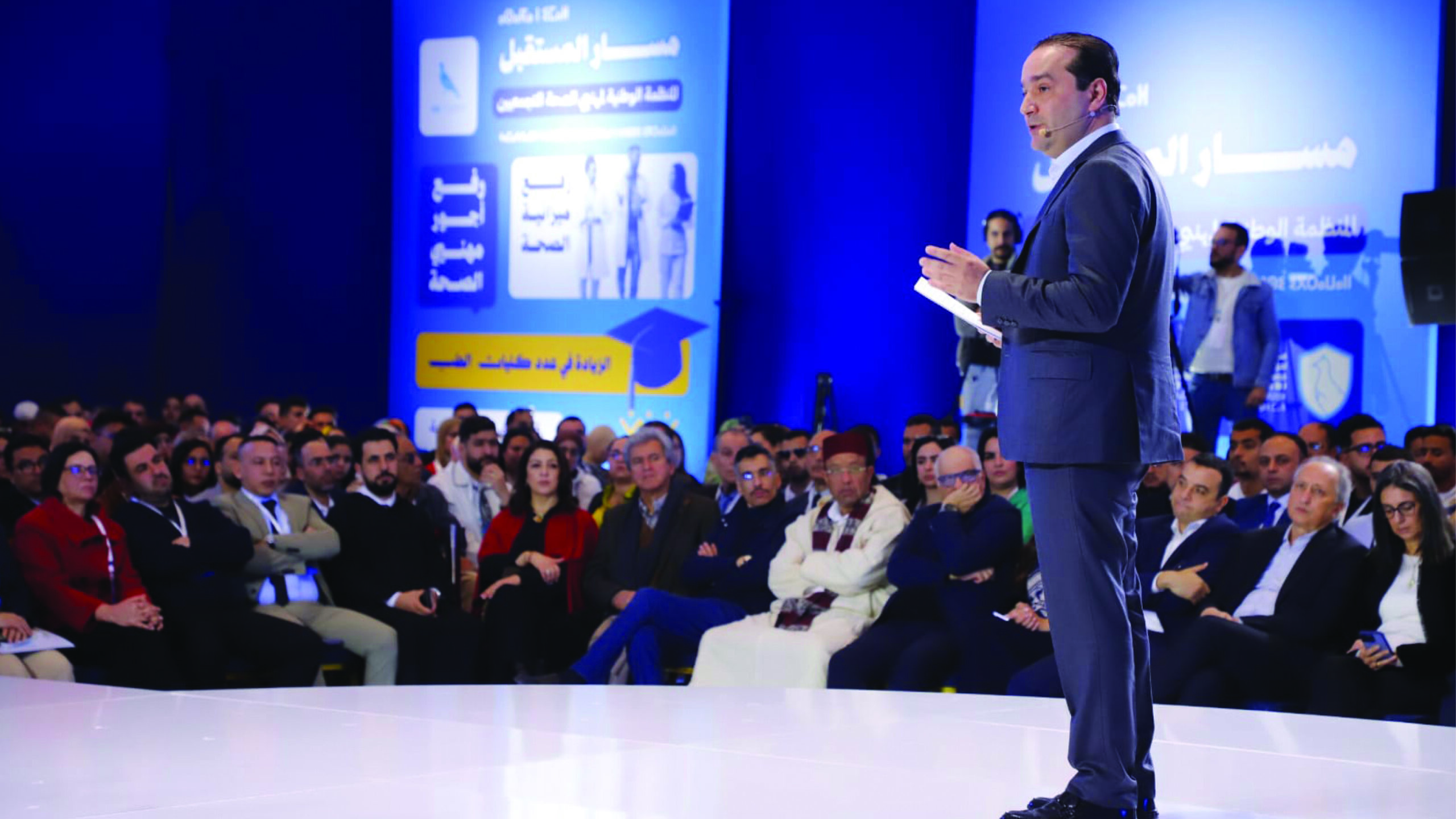
After “The Path of Achievements,” the RNI launched, this Saturday, March 7 in Skhirat, a new phase of its approach to political action, based on listening and proximity. “The Path of the Future” has thus been launched. This time, it began with the health sector.
A deliberate and fully assumed choice, said the party’s president, Mohamed Chaouki, who was speaking before more than 1,500 representatives of the various branches of health professionals, who came from different regions of the Kingdom. Especially since, he specified, this sector is among the priority foundations of the social state project.
He also stressed that it constitutes a new building block in a broader approach that is part of a long process marked by the organization of numerous meetings, beginning with “The Path of Trust,” the “100 days, 100 cities” initiative, “The Path of Development,” and, last but not least, “The Path of Achievements,” which concluded on a high note just a few weeks ago in Tangier.
The choice of the health sector is, in the eyes of the president of the National Rally of Independents, all the more “relevant” insofar as “it represents the backbone of the social state project.”
Certainly, Mohamed Chaouki did not fail to express the government’s “pride,” under the leadership of the Head of Government, Aziz Akhannouch, regarding the achievements made through the reform launched in the health sector, but he was keen to stress the need to consolidate them.
This applies both to the services provided to citizens, infrastructure, governance, and also to the particular attention given to human resources across all branches of the health sector.
Nevertheless, within the Dove party, they are not resting on the laurels of these achievements, but intend to “continue” the work undertaken in order to move forward, emphasized the various members of the RNI leadership who attended in force in Skhirat.
Beyond the achievements…
However, the Skhirat meeting was not only an opportunity to dwell on accomplishments; it was even more seen as a chance to project into the future. Far from an approach limited to “thinking up solutions in the comfort of offices and under the eye of experts,” the Dove party is driven by “the desire to bring forward the expectations and needs of both citizens and professionals.”
The idea behind this, far from any attempt to sugarcoat the situation, is to carry out an “objective assessment of the data and to propose appropriate solutions in order to overcome any shortcomings identified along the way,” said this member of the RNI Health Professionals Organization, which was created in 2018. Moreover, as the organization’s president,
Nabila Rmili, recalled, professionals’ ideas “were at the heart of ‘The Path of Trust’ and were adopted by the party. What’s more, they featured prominently in its program and were later translated into policy after the Executive took office. Furthermore, while praising the work accomplished, Dr. Rmili indicated that this approach will continue.”
Because, beyond this newly launched listening process, the coming weeks will see the organization of other meetings at the level of the organization’s regional branches, whose aim is to develop new proposals and solutions to meet the challenges ahead.
A meeting is scheduled in the coming weeks to report back to the party leadership, Rmili promised. Optimizing the quality of services provided remains the ultimate objective of all public policies across all sectors in order to meet the aspirations of Moroccan women and men.
The Minister of Health and Social Protection, Amine Tehraoui, spoke along the same lines, while highlighting the progress achieved in recent years. Thus, the government official noted that no fewer than 497 legislative and regulatory texts, including 17 laws and 5 decrees, have been adopted.
A legal framework that was far from a luxury, but rather a necessity to properly oversee the historic transformations experienced by the sector. However, to successfully carry out such a transformation—one that has a direct impact on citizens’ daily lives—substantial funding had to be mobilized. The proof lies in the invested budgets, which rose from 20 billion dirhams in 2021 to more than 42 billion dirhams in 2026.
These allocations have made it possible to increase the capacity of hospital infrastructure, open new university hospital centers (CHU), as well as rehabilitate no fewer than 1,400 primary healthcare centers, 70% of which are in rural and remote areas.
In the same vein, health professionals—the women and men who are the drivers of the reform—have seen their remuneration significantly increased, with raises ranging from 2,000 to 7,000 dirhams per month.
To this must, of course, be added the work carried out on the digitalization of the health system and the unification of information systems for optimal management of medical records, aimed at ensuring more effective monitoring of patient care and, consequently, improving the quality of services offered to citizens. The new RNI cycle is only just beginning. Other meetings are in the pipeline, it is assured.
The vision and its extensions
Since 2016, the RNI has entered into an organizational dynamic that has resulted, among other things, in the creation of no fewer than 19 parallel organizations.
This is a way not only to ensure a presence across all segments of Moroccan society, but also—and above all—to be as close as possible to citizens. Especially since these organizations serve as channels for conveying the expectations and needs of populations throughout the territory. Moreover, these branches are also sources of proposals that feed into the party’s programs and, consequently, public policies.
This dynamic, initiated under the leadership of Aziz Akhannouch, in fact dates back to “The Path of Trust” and concludes with that of “Achievements.” All under the banner of a conviction-slogan: “agharass, agharass.”