Kingdom
The Hidden Side of Phosphates
Morocco is already a key player in the global fertilizer market. Its role as a geostrategic actor is set to grow significantly. Its phosphates, which it is increasingly determined to process locally, provide much more than just fertilizers.

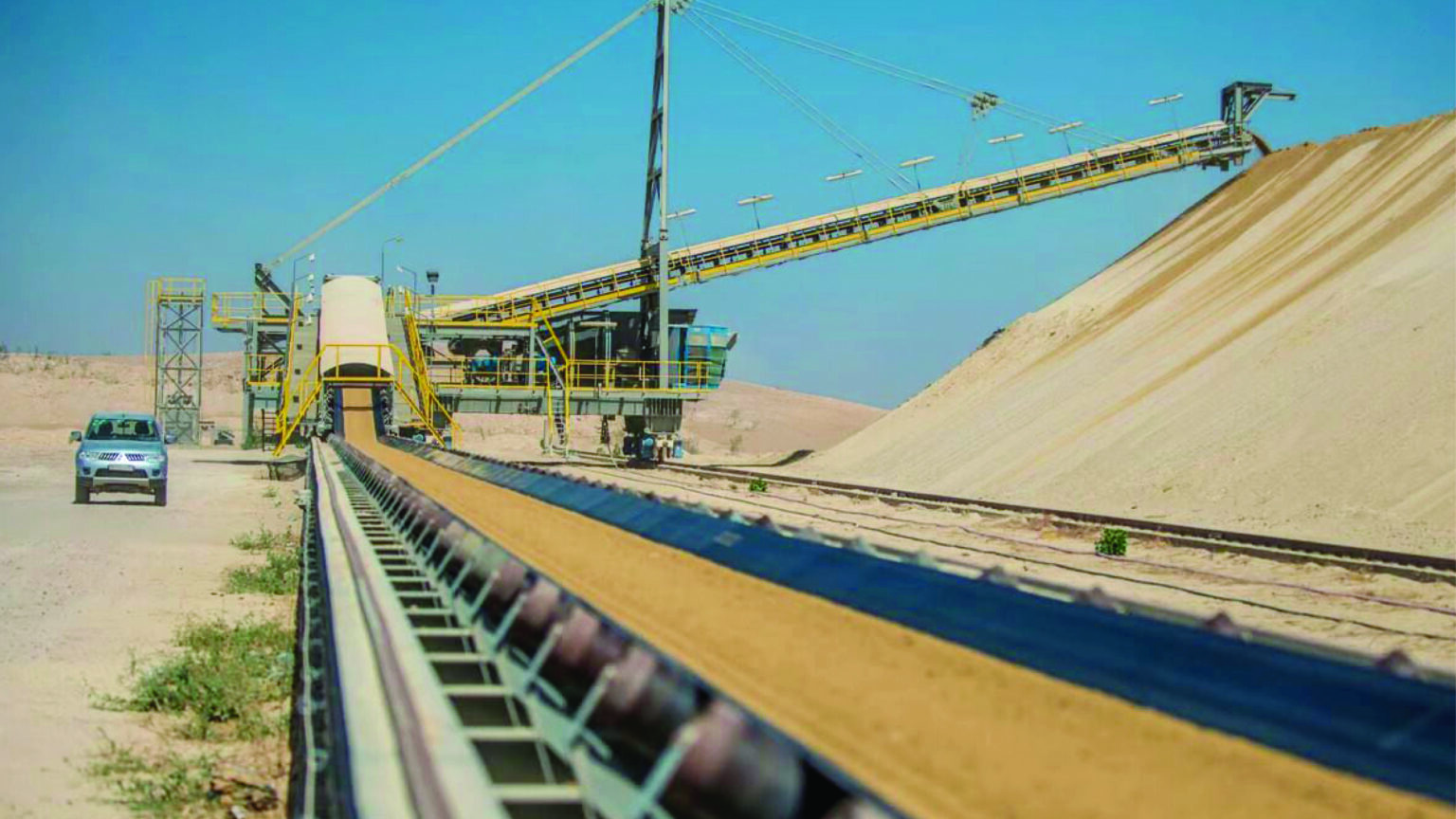
In early November, the American USGS made a far from trivial announcement. Amid tensions with China over strategic and critical minerals, the United States decided to add phosphate to the USGS (United States Geological Survey) list.
In the press release welcoming this decision by its government, the American giant Mosaic gets straight to the point. The context demands it. Phosphogypsum (PG), a phosphate derivative produced by the group, “contains significant quantities of five rare earths, which are also critical minerals.”
These elements, the release continues, “are essential to the country’s defense, energy, and technology sectors.” There is no need to recall that phosphate is essential to food security, and that, especially after the global health crisis, food security has become inseparable from national security itself.
It is worth noting that in the context of the war in Ukraine and China’s decision to restrict its phosphate exports, major countries like India, Brazil, Pakistan, Japan, as well as various African nations, have concluded long-term strategic partnerships with the Kingdom to secure their fertilizer supplies. This is not a minor detail.
However, the US classification of phosphate as a critical and strategic mineral is of another dimension. Henceforth, for this country, phosphate is essential to economic stability and national security, both in terms of strengthening the national food supply chain and supporting emerging technologies.
For Morocco, an allied country holding over 70% of global reserves (it is the second-largest producer behind China and ahead of the USA), this will have significant impacts. While from a commercial perspective the decision makes the American market, for the time being, a bit more challenging for OCP due to various forms of support provided to local producers, on the strategic front it is a different matter entirely.
First, the Kingdom becomes more than the strategic ally outside of NATO it has already been for years. The strategic partnership between the two countries now extends beyond the political, security, and military frameworks. It becomes economic as well.
This is because, logically, the decision foreshadows American and European investments (the EU also declared phosphate a critical mineral in 2014) in phosphate processing in Morocco, leading to increased industrial diversification.
A Precursor Already
In fact, an American “Deep tech” company is already setting up in Morocco as a precursor. Nascent Materials, as it is called, recently launched a Moroccan subsidiary dedicated to research, development, and design of materials for batteries, particularly for LFP (lithium-iron-phosphate) and LMFP (lithium-iron-manganese-phosphate) cathodes.
This initiative, announced in November 2025, follows its partnership with UM6P Ventures. To gauge the scope of this setup in Morocco, it is important to know that the startup initially focuses on manufacturing LFP and LMFP cathodes which are favored by automakers and… data center operators.
From there, a new process developed by the startup could improve the cathode’s energy density by up to 12%, while reducing its production cost by 30%. All signs point to new companies following suit.
The American approach being, in fact, more aggressive, as it plans significant incentives and substantial government subsidies, both to build and maintain the strategic stockpile and to secure supply, American investors are not expected to delay, paving the way for their European counterparts who would be pushed to keep pace to secure their own supplies as well.
And in both cases, for obvious reasons, Morocco is the best suited to host new investments in the field. Furthermore, some analysts point out, “by being included on the USGS list, Moroccan phosphate benefits from a priority status. This strengthens the diplomatic alliance, making Morocco’s stability directly linked to American national security.”
As a result, Rabat is no longer just a political ally, but “an indispensable link in the American value chain.”
Winning on Both Fronts
Beyond potential American and European investments in the field, the American decision will also have an indirect impact on Chinese investment in Morocco, particularly in the battery sector.
Indeed, it is observed that American law (IRA) provides subsidies for electric vehicles, but only if the battery’s critical minerals come from the USA or a country with a free trade agreement. Precisely, Morocco is the only major phosphate-producing country with an FTA with the United States.
This gives LFP batteries produced in Morocco a significant competitive advantage. One should therefore expect more Chinese investment in the sector. Some announcements have already been made very recently in this regard.
For Chinese companies, producing “made in Morocco” batteries is a way to more easily access the American market by bypassing customs barriers imposed on China, thanks to the FTA and the new critical status of phosphate.
Except that, and this is another major advantage, the producers of batteries and their components, often joint ventures involving Moroccan or European actors, must comply with strict rules on “Foreign Entities of Concern” (FEOC) to not be disqualified by Washington, “which pushes for real technology transfers to Morocco.”
Consequently, the public giant no longer sells only fertilizers, a sector where it has another major asset, with the exploitation of the new potash mine in Khémisset. A mineral which has also just entered, at the same time as phosphate, the USGS list and of which Morocco has reserves of around 300 million tons (Canada, the world leader, holds 1.1 billion tons), and which is used in fertilizer manufacturing.
OCP also sells “energy,” in the form of LFP battery cathodes (and even complete batteries thanks to its subsidiary Mera Batteries), but also, very soon, fuel for nuclear power plants thanks to the uranium concentrate, itself a critical mineral, extracted from phosphate.
This particular status validates the group’s strategy to become a central player in global food and energy transition. This is without counting the applications of other derivatives of Moroccan phosphate in which OCP is already fully invested.
For Morocco, the American decision is a power accelerator. Phosphate moves from the status of a raw material to that of a tool of influence. It is a geological resource, of which the Kingdom holds the world’s largest reserves, transforming into a “geo-economic weapon.”
The Kingdom’s bargaining power is skyrocketing. It now asserts itself as the indispensable “trusted third party” between American technological appetite and Chinese industrial capital. The Moroccan diplomatic doctrine of multilateralism makes perfect sense.
Soon Potash as Well
At the same time as phosphate, the United States also decided to place potash on the list of critical minerals. In this field, two countries dominate the global market: Canada with its reserves estimated at 1.1 billion tons and its 32.4% market share, with a production of nearly 22 million tons per year, and Russia (18.6% with a production of 12.5 million tons).
With Belarus, these three countries account for 70% of global production. OCP is preparing to enter this market. A mining project is under development, in partnership with ONHYM, in Khémisset. Feasibility studies for resource certification have been conducted and the deposit could contain nearly 350 million tons.
Other studies even mention a potential of over 500 million tons. That’s nearly half of Canada’s reserves. Behind the Moroccan potash project, a new operator is emerging. MOL (Mining Operations Lab) is an innovative entity linked to the OCP group whose vision is to “create world-class mines of the future, at the cutting edge of digital technology, driving a safe, sustainable, digital, and efficient 5.0 mining transformation that disrupts the traditional mining model.”