Business
Telecoms: Nokia will provide the technology for the Medusa
submarine cable With a total investment of 342 million euros, this future submarine cable, promoted by the infrastructure operator AFR-IX Telecom based in Dublin, aims to reduce the digital divide between Europe and North Africa by improving connectivity in countries including Morocco.

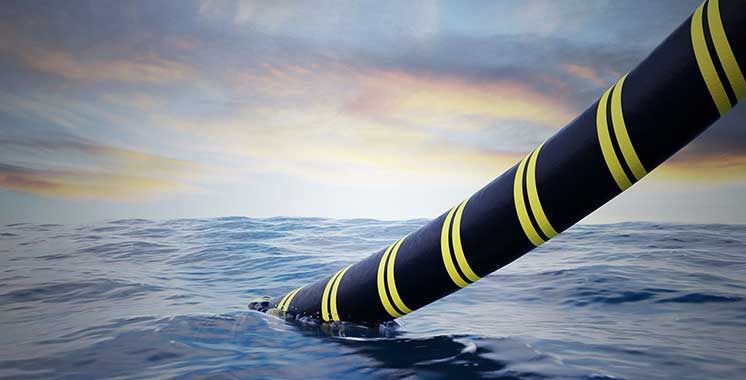
Nokia has been selected as the technology supplier for the Medusa submarine cable project, announced the telecommunications group in a press release published on July 28. The Finnish operator specifies that it will provide its 1830 GX platform as well as its ICE7 coherent optics, enabling the transmission of tens of terabits per second per fiber pair, with low latency and high energy efficiency.
This digital interconnection, stretching 8,700 km, expected to enter service from 2026, will connect the Atlantic coast, the Mediterranean, and the Red Sea, thus creating a new high-speed digital corridor in the region.
With a total investment of 342 million euros, the future submarine cable, promoted by the infrastructure operator AFR-IX Telecom based in Dublin, aims to reduce the digital divide between Europe and North Africa by improving connectivity in countries such as Morocco, Tunisia, Libya, Algeria, and Egypt. “Designed as an open-access system, Medusa offers telecom operators in the region access to advanced connectivity services, supporting the deployment of 5G, the growth of cloud infrastructures, and the increasing bandwidth needs of AI and future technologies,” emphasizes Nokia.
Two Moroccan operators participate This infrastructure will connect Morocco to Southern Europe, linking Nador to Marseille. At the end of January 2024, the operator inwi signed a strategic partnership agreement with Medusa Submarine Cable System, the Irish telecommunications operator, to strengthen its trans-Mediterranean connectivity. The partnership focuses on providing and operating dedicated fiber optic links in the new Medusa submarine cable.
A year earlier, Orange Maroc had also announced that it had concluded an agreement with the same entity to offer a secure, open, and high-performance interconnection solution between Europe and Morocco. To do so, the operator decided to invest in new infrastructure to host submarine cables in the Nador region.