Influences
Tarik Oualalou, the Designer of Major Projects
In recent years, the Rabat-based architect, through his firm Oualalou+Choi, founded in 2002 with his American-Korean partner Linna Choi, has produced emblematic and titanic works.

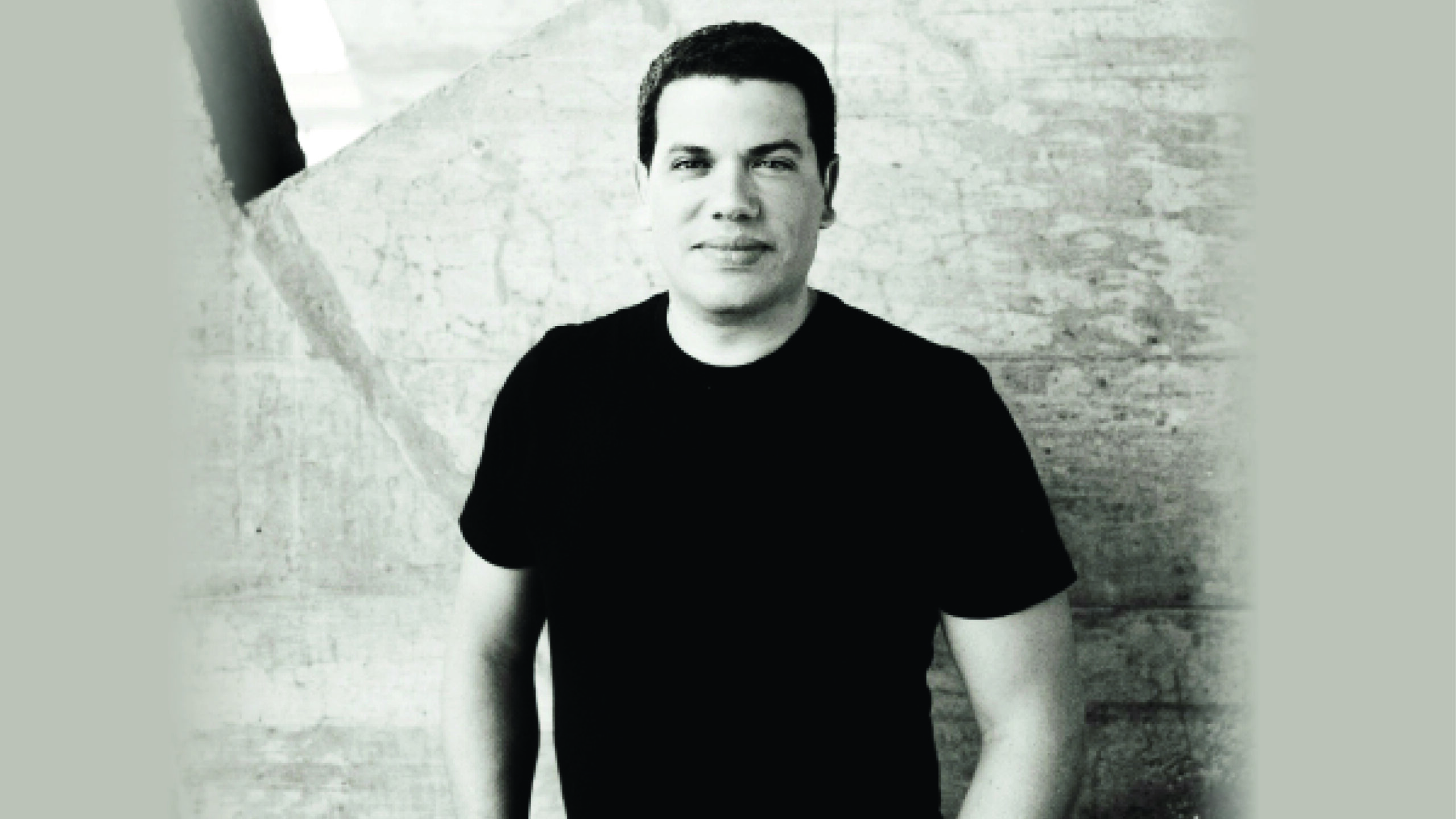
Graduated in architecture from the École nationale supérieure d’architecture Paris Malaquais and the Rhode Island School of Design, Tarik Oualalou also holds degrees in art and architectural history from the École du Louvre and in engineering from the École nationale des arts et métiers de Paris.
The son of socialist leader Fathallah Oualalou is also an architecture teacher, having led studios at several prestigious universities: Rice University, MIT, American School at Fontainebleau, Rhode Island School of Design, and the École spéciale d’architecture.
The same applies to his wife and partner, Linna Choi: a graduate in architecture from Yale University and Harvard University Graduate School of Design, she is a teacher and architecture critic, and is registered with the State of New York Board of Architects in the United States.
Individually or as a duo, they have received numerous awards in the field. The two partners, who founded the agency Oualalou+Choi in 2002, with offices based in Casablanca and Paris, designed the Village for the IMF-World Bank Annual Meetings (2023) in Marrakech and the Morocco Pavilion for that event, as well as the COP22 Village.
Several cultural infrastructures also bear their imprint, notably the Moroccan Cultural Center in Paris, the Morocco Pavilion at the Dubai 2015 and 2020 international expositions, the Sahara Museum in Dakhla, and the Volubilis Museum (2013), which earned the duo the “Arab Architects Award 2022.” In their rich cultural portfolio, one also finds the renovation of the four Caravanserais of the medina, dating from the 14th to the 17th centuries.
The son of the former mayor of Rabat and ex-Minister of Finance, Fathallah Oualalou, is also responsible for the Mazagan urban hub, the reconstruction of the Lincoln Hotel in Casablanca (listed in the national heritage registry), the Toumliline monastery, and the UM6P campus in Foum El Oued (Laâyoune).
A 5-billion-dirham grand stadium
The firm has also secured several public facilities in recent years that are both emblematic and titanic. Among them is obviously the Grand Stade Hassan II in Benslimane (5 billion MAD), whose design was entrusted to them in March 2023, in partnership with the British architecture firm Populous, for a fee rate of 5.7%.
Built on a 100-hectare site, the complex, which will be served by the future Kenitra-Marrakech high-speed rail line (LGV), is characterized by its monumental 250,000 m² tent, supported by 36 masts, each bearing a load equivalent to an Eiffel Tower. A design inspired by the traditional Moussem, as if to anchor Moroccan identity in this majestic roof.
“What interests us is exploring very ancient figures to address completely new necessities. We center ourselves in the past to speak about the future, because the future of architecture is no longer in buildings that are shells, but in membrane buildings that breathe and create a new, more intimate relationship with nature and the elements,” explains Tarik Oualalou.
The football arena will be able to host up to 115,000 spectators during the 2030 World Cup, making it the largest football stadium in the world. It will also be a space where emotion combines with sensations. “A football match isn’t just 90 minutes of play. It’s a complete experience, before, during, and after the final whistle,” he asserts to explain his architectural choice.
“Inventing things that are profoundly Moroccan”
Oualalou+Choi will also design the future Casa Sud high-speed rail station (700 million MAD), whose construction was launched on September 24 last year by His Majesty King Mohammed VI.
With an annual capacity of 12 million passengers, the site will include six platforms, ten railway tracks to accommodate Al Boraq high-speed trains, long-distance trains, metropolitan trains, regional trains, and the “airport-express” train intended to serve Mohammed V Airport from the Casa-Port station.
The secret to winning these major projects? “We build buildings that are incredibly specific to the places where we make them. We situate ourselves within a very long history of Moroccan architecture, so we produce a contemporary, critical architecture that is not disconnected from the great history and great tradition,” he reveals.
“We don’t just want to copy forms and simply imitate magazines, but try to invent things that are profoundly Moroccan and embedded in a contemporary critical discourse,” insists the architect.
The project that makes him so proud: the Volubilis Museum, near Meknès. “It’s the first project we designed and one that truly marked our way of seeing the world and approaching this profession. It’s really an incredibly important building for us because it establishes our approach.”
For Oualalou, architecture is the relationship that humans create between the ground and the sky. “Each of our buildings speaks of the ground and creates a relationship with the sky,” he summarizes.