Kingdom
Support for Livestock Farming: A Program That Delivers on Its Commitments
The revitalization of the sector is well underway. With 1.2 million beneficiaries and billions of dirhams mobilized, the rebuilding of the national livestock herd is progressing in line with the objectives that were set.

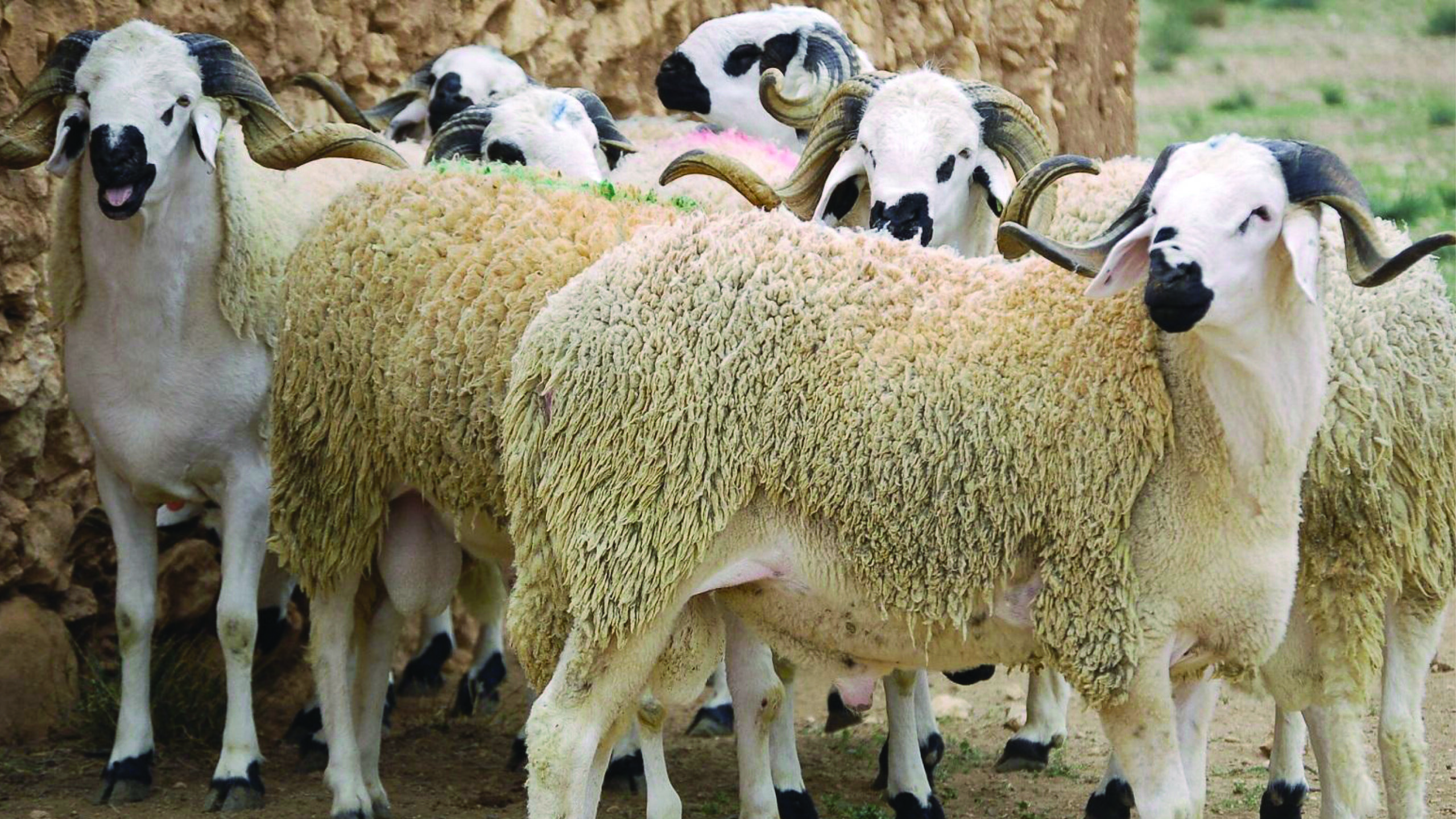
The fundamentals of the livestock sector are becoming solid once again, thanks to the combination of several factors.
The first factor is the abundance of rainfall experienced across all regions of the country, which has helped improve fodder resources.
The second relates to the ban on slaughtering animals during the Aid Al‑Adha of the previous year, a measure that helped strengthen livestock numbers.
The third and final factor concerns the large-scale livestock restocking program launched in May 2025 by the Ministry of Agriculture, in coordination with the Ministries of the Interior and Finance.
The scheme is primarily aimed at small farmers and livestock breeders most affected by seven years of drought, who have faced difficulties in securing feed supplies due to declining fodder production, low pasture productivity caused by irregular rainfall, and dependence on imports.
At present, 1.2 million livestock breeders have benefited from the assistance granted, for a total amount disbursed of 5.55 billion dirhams. As a preliminary phase ahead of the program’s launch, a census was conducted, resulting in a precise database that established a national herd of 32.8 million head of livestock and 1.2 million breeders.
In other words, this phase of the program has delivered on its promises. The budget envelope set out was fully disbursed to the livestock breeders initially identified.
Direct aid for sheep was allocated at 150 dirhams per head for the first ten animals, then 125 dirhams per head for animal numbers between 11 and 50, 100 dirhams per head between 51 and 100, and 75 dirhams per head for any animals exceeding 100 head.
For goats, the amount of aid is set at 100 dirhams per head for the first ten animals, then 85 dirhams per head between 11 and 50, 75 dirhams per head between 51 and 100, 60 dirhams per head between 101 and 200, and 50 dirhams per head for any animals exceeding 200 head.
As for cattle and camels, the aid amounts to 400 dirhams per head for the first five animals, then 350 dirhams per head between 6 and 10, 300 dirhams per head between 11 and 50, 200 dirhams per head between 51 and 100, and 150 dirhams per head for any animals exceeding 100 head.
Second Phase Underway
Since 24 March, the Ministry has launched an operation to verify the continued retention of breeding female sheep and goats recorded between 26 June and 11 August 2025 and identified by ear tags.
This procedure is being carried out nationwide, with local committees mobilized in all prefectures and provinces. Following the inspections, the second installment will be paid “as soon as possible,” under the same payment arrangements as the first installment.
This payment will mark the completion of the direct support program undertaken to reconstitute the national livestock herd. The amounts concerned are therefore 400 dirhams for each female sheep and 300 dirhams for each female goat.
Payments are made in two installments: an advance of 100 dirhams per female, followed by a second installment of 300 dirhams per female sheep and 200 dirhams per female goat, which, according to the supervisory ministry’s projections, has been allocated since 1 April 2026.
The total budget allocated amounts to 3.2 billion dirhams. It should be noted that maintaining breeding females is a key condition for the gradual rebuilding of animal capital, the stabilization of red meat supply, and the preparation of upcoming pastoral seasons.
A Five‑Pillar Framework
Overall, the program is built around five main pillars. The first focuses on restructuring breeders’ debts. The financial burden weighing on 50,000 breeders is being reduced at a cost of 700 million dirhams, borne by the State.
This includes the cancellation of 50% of debts below 100,000 dirhams, covering 75% of beneficiaries; the cancellation of 25% of loans ranging between 100,000 and 200,000 dirhams, representing 11% of beneficiaries; and debt restructuring for farmers, along with the exemption from late-payment interest on loans exceeding 200,000 dirhams.
The second pillar concerns support for animal feed, through subsidies on the sale price of barley (7 million quintals) at 1.5 dirhams per kilogram, and compound feed for sheep and goats (7 million quintals) at 2 dirhams per kilogram.
Approximately 2.5 billion dirhams are allocated to this measure. The third pillar involves launching an operation to identify breeding females in the national herd, to monitor and support the ban on their slaughter, with the objective of reaching more than 8 million female sheep and goats by May 2026.
Under the fourth pillar, the government will roll out a preventive treatment campaign to protect 17 million head of sheep and goats from diseases linked to the effects of drought, at a cost of 150 million dirhams.
Finally, the fifth pillar relates to the organization of technical support for breeders, aimed at improving breeds through the creation of artificial insemination platforms and technical assistance, in order to increase productivity, at a cost of 50 million dirhams.
Supply Secured for Aid Al‑Adha
Thanks to the measures undertaken by the government to rebuild the national livestock herd, market balances are gradually being restored.
Support to breeders, assistance for animal feed, and financial mechanisms have helped preserve production potential and strengthen supply. In this context, the market now appears better supplied, with increased availability of livestock across the entire territory.
As Aid Al‑Adha approaches, the conditions are in place to adequately cover the needs of Moroccan citizens…
Will the suspension of slaughter be maintained or not?
For now, nothing is certain.