Business
Stock Market: the Era of Transformation Begins
As international tensions disrupt the market, the Casablanca Stock Exchange continues rolling out its reforms, with the official launch this Monday, April 6, of the futures market, which will be followed by the introduction of different categories of UCITS (undertakings for collective investment in transferable securities).

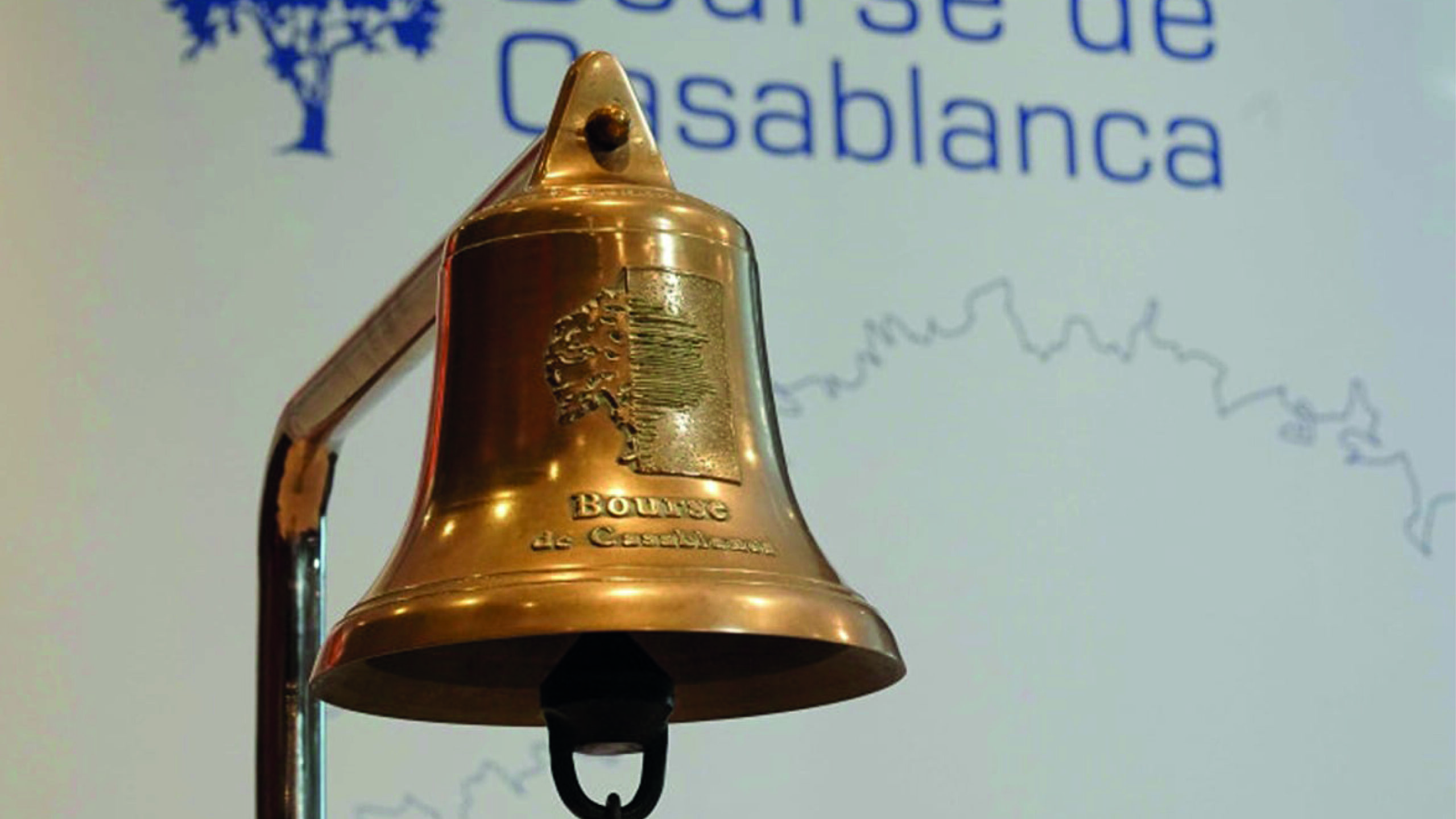
The Casablanca Stock Exchange is entering a new era. It is indeed embarking on a profound transformation marked by a series of structural reforms. At the heart of this shift is the imminent launch of the futures market.
This is undoubtedly the most decisive reform since the modernization of the stock market framework in 1993. The introduction of derivatives, particularly index futures contracts, opens the way to hedging and arbitrage strategies that were previously nonexistent.
The market is fully prepared for this transformation: the first approvals for trading-clearing members have been granted, and staff have been trained. Moreover, the exchange’s management company, along with other market participants—most notably the AMSM (Moroccan Association of Trading Rooms)—has deployed significant efforts in training and raising awareness about this new product.
In this context, the Casablanca Stock Exchange has already published the main characteristics of the firm futures contract on the MASI 20 index, officially called the “MASI 20 Future.” With an initial margin of 1,500 dirhams, it will offer four quarterly maturities: the first will take place this Monday, April 6, with expiries on June 22, September 21, December 21, and March 22, 2027. In addition, the contract size is 10 dirhams per index point.
Along the same lines, the introduction of ETFs represents another key lever of transformation. These instruments—liquid, transparent, and low-cost—allow for simple and diversified market exposure, as well as immediate and accessible diversification in a single transaction.
ETFs thus provide increased liquidity thanks to the systematic presence of market makers and the creation and redemption mechanism of units that supports the secondary market.
Their rollout should therefore help democratize equity investment while strengthening the market’s appeal to foreign investors.
Mobilizing savings
This development is part of a broader overhaul of the UCITS framework, stemming from the recent enactment of Law 03-25. This law marks a decisive turning point for the capital market and the asset management industry, which, it should be recalled, plays a major role in channeling capital into the real economy.
Thus, new types of funds are expected to be introduced soon, including master-feeder UCITS, whose strategy consists of the feeder funds investing 85% of their assets in a single master UCITS and holding 15% in cash; dedicated UCITS, which are closed to the general public but open to a category of qualified investors, capped at 20 in total; and participatory funds designed to comply with Islamic finance principles, investing exclusively in Sharia-compliant assets—namely sukuk certificates, participatory deposits, and listed shares of companies whose activities, assets, and liabilities meet Sharia criteria.
Another type is UCITS-RFA, which will benefit from lighter operating rules, as is the case for OPCIs and OPCCs.
These new paradigms, set to be rolled out progressively, coincide with an equity market that had been among the most dynamic in its recent history. The return of IPOs, capital increases by listed companies, strong interest from individual investors, and rising trading volumes had brought the market to its peak—until the outbreak of the conflict in the Middle East erased a significant portion of last year’s gains. It has also created uncertainty regarding the outlook for the equity market by the end of the year.
Scenarios are emerging from all sides, forecasting variations within a very wide range, from -20% to +10%. This leaves little room for analysts to update their recommendations and for asset managers to carry out the necessary reallocations, whether in terms of portfolios or asset classes.
Uncertainty and wait-and-see
On the other hand, the IPOs expected this year remain uncertain and may be delayed, given the increasingly unfavorable context. Executives are likely to hold off until the international geopolitical situation stabilizes.
However, the market began the year with capital increases already completed, such as Risma’s 350 million dirham operation. Others have been announced, including Sothema’s 80 million dirham increase for the benefit of its executives—following a similar 630 million dirham operation for the general public in December 2025—as well as Crédit du Maroc’s 700 million dirham increase.
The good news amid this global turmoil is that its effect on the equity market is beneficial. With a P/E ratio of 19 instead of 21 just a few weeks earlier, it now presents one of the most attractive valuation levels. Not all stocks offer appealing P/E ratios, of course, but some represent very interesting entry or accumulation points in portfolios.
In any case, once these global tensions subside, the equity market is expected to embark once again on an unprecedented rally, as all indicators point toward a sharp recovery: the national economy, inflation, fundamentals, and the performance of listed companies.
Futures market: operational details clarified
A few days before the official launch of the MASI 20 Future, the Casablanca Stock Exchange published a set of notices and instructions relating to the futures market operator.
These outline the methods for determining closing prices, the transaction cancellation mechanism, order validity durations, execution procedures, priority rules and allocation of securities, reservation thresholds, and applicable fees.
For the Central Clearing House, they specify the daily fluctuation limits of derivative financial instruments, the methods for calculating initial margin, settlement and clearing prices, clearing fees, and the equity settlement threshold.