Kingdom
Sparks of Greatness: From Hope-Filled Neighborhoods to Academies of Excellence
Morocco, with its local pitches where the round ball reigns, its elite academies sculpting tomorrow’s stars. Between the blistering asphalt of neighborhood games and the flawless pitches of training centers, the country is reshaping its football future. A deep dive into a revolution in cleats, where excellence meets hope and every dribble carries a social ambition.

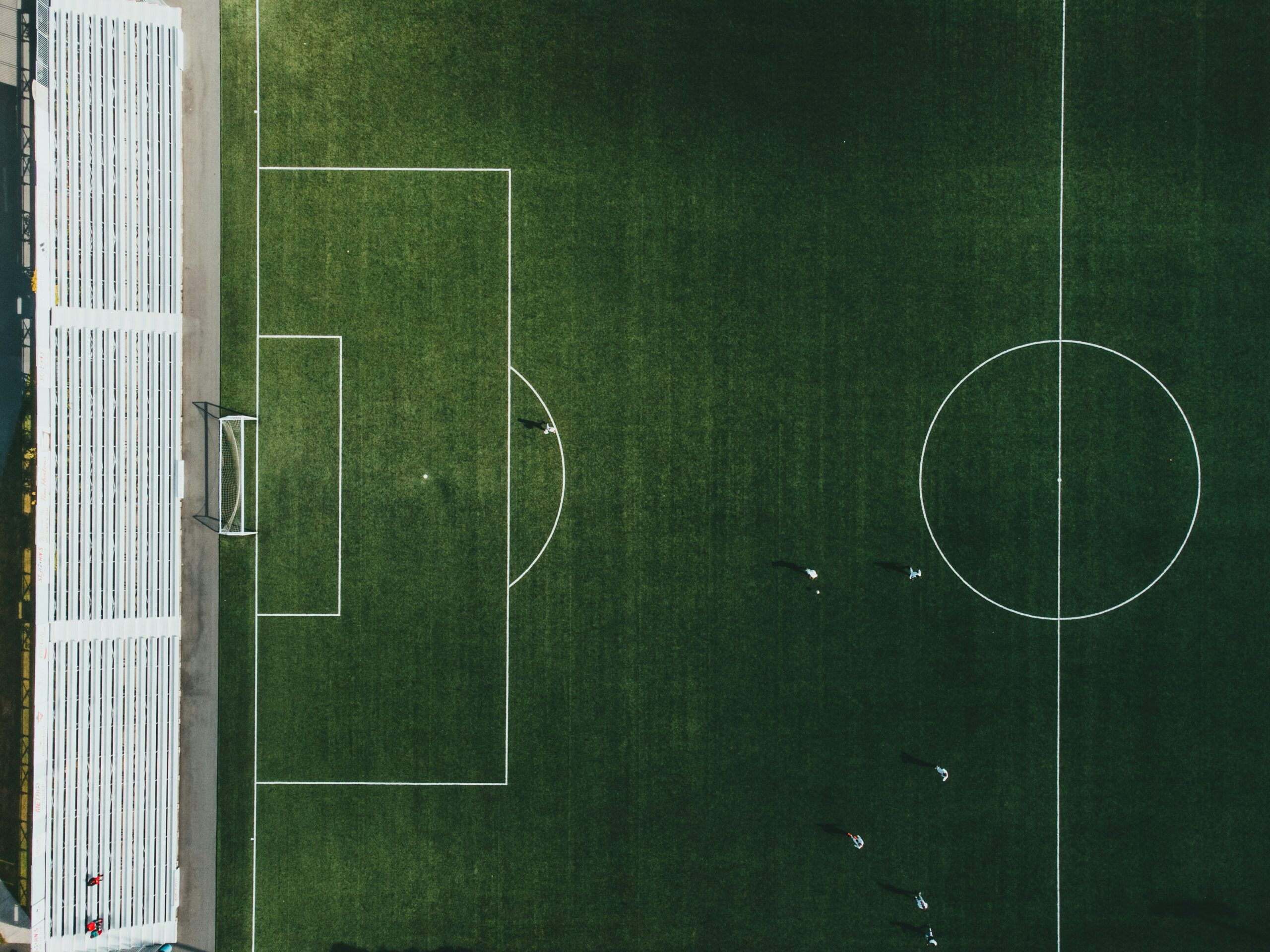
Casablanca, in the maze of Sidi Belyout, football is not just a sport: it’s a common language, a bond that brings souls together. On neighborhood pitches, kids in faded jerseys or flip-flops exchange fierce passes, under the watchful eyes of elders replaying the match.
Here, no state-of-the-art synthetic turf, but raw, visceral energy. Neighborhood teams—Hay Mohammadi, Derb Sultan, Ain Chock, Sbata—form through affinities, through what’s called here “neighborhood identity.” A Casablancan pride, almost tribal, that electrifies local tournaments where every goal scored is a revenge on life.
These “neighborhood vs. neighborhood” matches are not just games. They are an outlet, a socialization space where kids, often left behind, find meaning in their days. And sometimes, a destiny. Because in these alleyways, scouts on the lookout, sent by the Royal Moroccan Football Federation (FRMF), hunt for gems.
Three players from the U17 national team, spotted on the asphalt, are living proof: street football is the lifeblood of Moroccan football. A breeding ground where combativeness and technique are forged in urgency, far from the spotlight.
But this neighborhood football, while a vehicle for social mobility, remains fragile. Without structure, many talents wither, swallowed by life’s uncertainties. This is where academies step in, these dream factories that aim to structure the raw momentum of the streets into careers.
Champion Factories
In Salé, the Mohammed VI Football Academy, inaugurated in 2010 by King Mohammed VI, stands as a symbol. With its 18 hectares, European-standard facilities, and an investment of 140 million dirhams, it embodies the ambition of a Morocco that no longer wants to settle for flashes of brilliance.
Abdelouahed Zemrat, head of training, doesn’t hide his pride: “60% of the players in national selections come from here.” Youssef En-Nesyri, Nayef Aguerd, Reda Tagnaouti, Sayfeddine Bouhara, Abdellah El Haimoud… the list of graduates, from U15 to U23, is staggering.
Here, everything is designed for excellence. The youth, selected on merit, follow a rigorous sports-studies program. Intensive training, medical monitoring, psychological support, reinforced schooling: nothing is left to chance. The goal? To form complete players, capable of shining in Morocco and abroad.
But the Mohammed VI Academy is also a vision: that of a football that goes beyond the pitch, shaping citizens. As Zemrat says, “we don’t just train players, we accompany them throughout their careers, and even beyond.”
In Bouskoura, the Raja Athletic Club Academy is undergoing a transformation. Since October 2024, the FRMF, in partnership with Evosport (a subsidiary of UM6P), has launched a new training model, adopted by eleven clubs, including Raja, FUS, AS FAR, Renaissance Berkane, and Hassania Agadir. No more improvisation: making way for a methodology aligned with global standards.
For Raja, it’s a return to roots, to the era when the club forged legends like Abdelmajid Dolmy or Badr Benoun. “We let training crumble under the pressure of immediate results,” admits a club executive. The reform aims to correct that.
At the Raja Academy, 120 youth, from U13 to U18, follow an intense rhythm: daily training, classes in sunlit rooms, and even eco-citizenship awareness operations, like picking up trash on the grass. Maha Nabil, the center director, is clear: “We train players, but also respectable citizens.”
Under the guidance of Jean-Marc Nobilo, former trainer at Le Havre and Auxerre, Raja is refining a playing style true to its DNA: possession, progression, disruption.
In Rabat, the FUS Academy, led by Brahim El Yamani, rivals European centers. Michael Lebaillif, a trainer who passed through Le Havre and Marseille, supervises a methodology where game intelligence is paramount.
With a high-performing medical unit—treating up to ten injuries a day—and strict academic monitoring, FUS bets on a holistic approach. “If a young player misses classes, they don’t train,” asserts a future player.
AS FAR stands out with its “Sport-Studies” center, a continental model. Modern infrastructure, pedagogical amphitheater, medical-sports unit: everything is in place to support youth through the baccalaureate and beyond.
Same tune in Berkane, where Renaissance Sportive (RSB) racks up trophies (three CAF Cups, one championship title) while training talents like Ahmed Amine Kharroubi, a U18 striker already selected for the U17 national team. Demba Mbaye, technical director, is ambitious: “We want to supply the pro team and sell our players to the best global clubs.”
Elite Within Cleats’ Reach
In Casablanca, for example, neighborhood pitches aren’t the only ones thrilling the youth. Football schools, often affiliated with European giants, are proliferating. The Barça Academy Morocco, modeled on La Masia, promises children aged 5 to 15 a tiki-taka style training: possession, speed, game intelligence.
With coaches dispatched from FC Barcelona and a ratio of one trainer for 10 to 12 players, the school aims for excellence while emphasizing enjoyment. “Football is a passion above all,” hammers a trainer. Girls are not forgotten: a specific program, inspired by Barça Women, attracts future Alexia Putellases.
The PSG Academy, based in Rabat, Casablanca, and Marrakech, bets on ambition. At 7,000 dirhams per year, it attracts an affluent clientele, with discounts for Prestigia residents. In Bouskoura, the Arsenal Soccer School bets on beautiful play, with small groups (12 students max) and a fee of 8,000 dirhams.
More socially focused, the Real Madrid socio-sports schools in Mohammédia, Tangier, and Benguerir target underprivileged children. In Tangier, 150 kids, including 83 girls, often out of school or in precarious situations, find refuge and discipline in football.
Other local structures, like City Foot Academy, FEDREA, or Anfa Soccer Youth Academy, complete the offer in Casablanca. In Aïn Sebaâ, Sidi Othmane, or Hay Nassim, these schools capture neighborhood energy while providing structured guidance. But not all aim for the elite: for many, the goal is fulfillment, discipline, and sometimes a second chance.
From Alleyways to Grass Pitches
Behind this fervor, one man: Fathi Jamal, development director at the DTN. With the FRMF and Evosport, he orchestrates a revolution. Since October 2024, 1,200 young players, spread across four federal centers and eleven partner clubs, follow a sports-studies program of unprecedented rigor.
Every April, scouting days crisscross the Kingdom, from U13 to U18, to ensure no talent is missed. In Souss-Massa, in Casablanca, everywhere, scouts scrutinize technique, game intelligence, and speed. “Without proper guidance, a talented youth can miss their potential,” warns Jamal.
Regional tournaments, neighborhood matches: nothing escapes this quest for excellence.
In Casablanca, 64 players born in 2008-2009 were spotted, then filtered at the Mohammed VI Complex. The best join the academies of Raja or Wydad. The others? They bounce back in clubs like the Chippo Academy in Kénitra or Prestigia in Bouskoura, where some, starting from nothing, end up shining. “Street football is our DNA,” insists a scout. “That’s where combativeness and creativity are born.”
A dream, but at what cost? This model, funded by the FRMF, OCP, and private partners, targets the 2030 World Cup. But it is not without obstacles. Elite academies, like Barça or PSG Academy, remain inaccessible for many, with prohibitive enrollment fees (1,000 DH/month for Barça, 7,000 DH/year for PSG).
Neighborhood pitches, meanwhile, are free but often dilapidated, and lack proper supervision. As for the professionalization rate, it remains low: in France, only 18% of youth from training centers turn pro. In Morocco, the numbers are unclear, but the challenge is the same.
Yet hope persists. Our youth embody a Morocco that dares. “I want to help my family and make history with Raja,” declares Karim, a U17 defender at Raja, dreaming of joining the national team. In Berkane, Ahmed, 16, aims for the U17 World Cup. In Tangier, a girl from the Real Madrid school dreams of being the next Marta Torrejón.
Morocco no longer settles for flashes of genius. With this new model, it is building an ecosystem: scouting in neighborhoods, elite training, academic and medical follow-up. Clubs, schools, neighborhood pitches: all converge toward the same goal.
The 2022 semifinal and the U17 title are just the beginning. As Demba Mbaye of RSB says: “Moroccan players are the Brazilians of Africa.” A creativity, a boldness, that must now be channeled.
In the alleyways of Sidi Belyout or on the pitches of the Mohammed VI Complex, the message is clear: football is not just a game. It is a social elevator, a vector of cohesion, a dream within cleats’ reach.
But for these neighborhood kids to become the En-Nesyris or Aguerds of tomorrow, it will take time, resources, and iron will. By 2030, Morocco aims not only to host the World Cup but to leave its mark. On the pitch, and in hearts.