Kingdom
Southern Provinces: The RNI Deploys Its Apparatus
Carried by a heavyweight delegation, a major tour of the Saharan regions enabled the “party of the dove” to roll out an assumed triptych: a new program, a quantified social record, and commitment to territorial integrity.

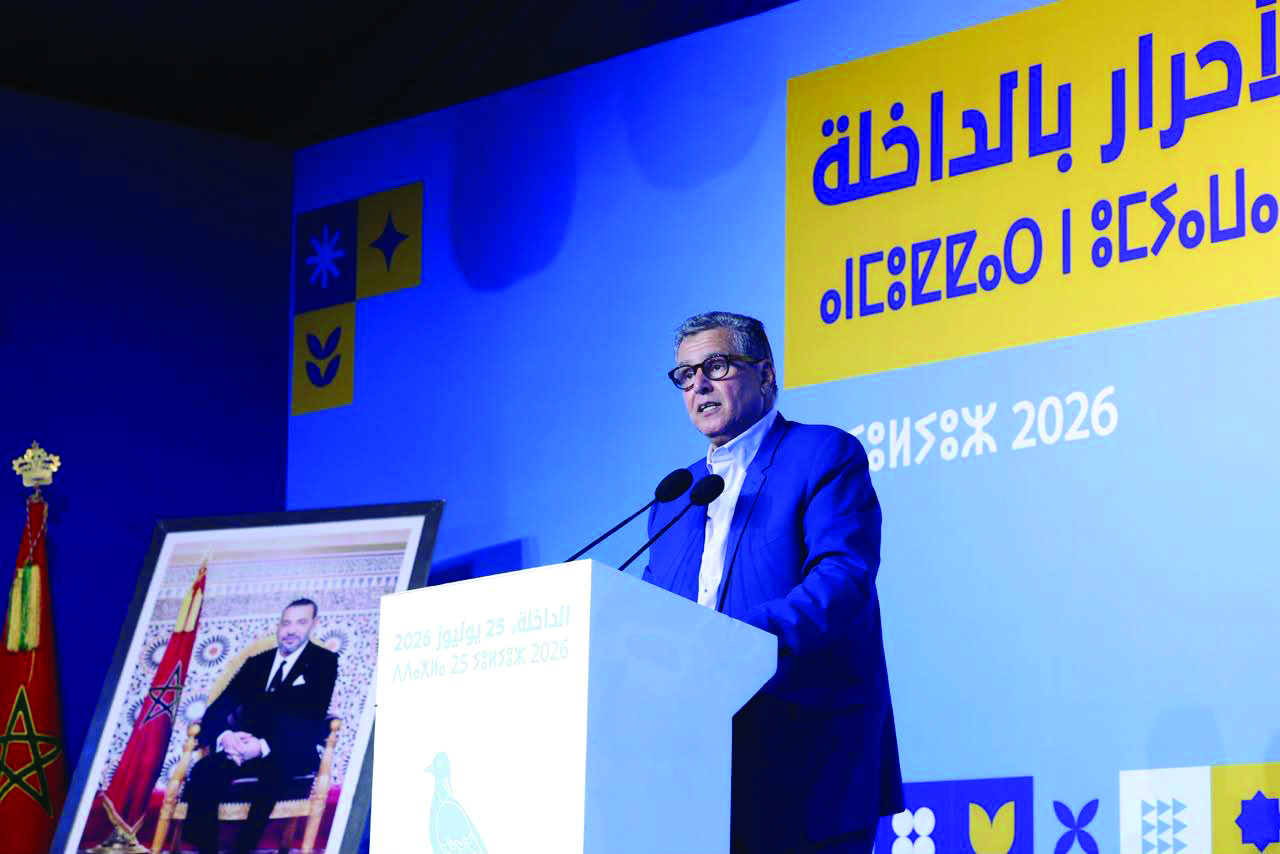
A communication rally in Dakhla, a political meeting in Laâyoune, a party gathering in Tan-Tan… this is the extensive tour of the southern provinces just carried out by the RNI (National Rally of Independents).
A significant delegation from the “party of the dove,” marked by the presence of the party’s former president, Aziz Akhannouch, alongside Mohamed Chaouki, as well as several ministers and members of the political bureau, made the trip to give greater visibility to this visit. This tour is part of the continuity of field actions that the party is conducting across the entire national territory.
These successive speeches, which come in the context of preparations for the upcoming electoral deadlines, articulate three complementary messages: the presentation of a new program for the next stage, the defense of the government’s record in terms of social policy, and the reaffirmation of the party’s commitment on the Sahara issue and the development of its provinces.
The very choice of these three cities is not insignificant. The southern provinces constitute both a national sovereignty issue and a terrain where the RNI intends to demonstrate, through concrete examples of infrastructure and public services, the on-the-ground translation of its government policy. By moving there successively, the party leadership seeks to build continuity of discourse between the national level—the party’s program and the government’s record—and the local level, embodied by the candidates and regional officials highlighted during these gatherings.
The joint presence of Aziz Akhannouch, Mohamed Chaouki, several ministers, and members of the political bureau also reflects a desire to display the unity and mobilization of the party apparatus as a whole. This type of collective trip, bringing together both the government level and the militant apparatus, allows the RNI to give substance to its presence in a region where several parties are seeking to establish themselves on a lasting basis in the run-up to the next electoral deadlines.
A Program of Dignity and Opportunity
Before militants, notables, and residents of the southern provinces, RNI officials presented the main lines of the party’s new program in Laâyoune. It is described as a renewed text, designed to meet the socioeconomic expectations of citizens, while accompanying the Kingdom’s development, with the stated aim of bringing “an ambitious new program for dignity and opportunities for all,” carrying orientations intended to transform the face of Morocco in the coming years.
It was also affirmed that Moroccan citizens are able to distinguish between parties that act concretely and those that limit themselves to communication: “Moroccans know perfectly well who works tirelessly and who does nothing; who spends their days behind a microphone making speeches and who comes with serious programs to implement them on the ground,” it was hammered home. The development of cities and infrastructure observed over the past five years was cited as a central element of this record.
Several figures and party officials representing the region were also saluted on this occasion, described respectively as the mobilizing engine of their province, as a rigorous and methodical profile, and as a personality associated with loyalty and proximity service to citizens—so many profiles that the RNI intends to highlight at the local level.
This highlighting of local personalities alongside the party’s national leadership illustrates how the RNI seeks to articulate its campaign discourse: a national framing carried by the party’s top figures, broken down locally by candidates and officials presented as best able to embody, on the ground, the priorities of the new program.
A Social Record with Telling Figures
RNI officials also said they were satisfied with the state of the party and defended the Executive’s record in terms of social protection, affirming that they have found the way to consolidate the foundations of the social state despite harsh and difficult circumstances.
The figures put forward are eloquent regarding the generalization of social coverage: around four million families benefit from regular social assistance, to the benefit of around 11 million people, and around 10.5 million people now have free compulsory health coverage.
This quantified aspect constitutes one of the central arguments put forward by the party to justify its record. By thus linking program and record, the RNI seeks to demonstrate an overall coherence between the commitments made and the achievements actually recorded during the past government term.
Territorial Integrity and Regional Development
This tour of the southern provinces was also an opportunity to reaffirm attachment to territorial integrity and the national cause. The development dynamic observed in the regions of Oued Ed-Dahab, Laâyoune-Sakia El Hamra, and Guelmim-Oued Noun was praised, with mention of several structuring projects, starting with the Dakhla Atlantique port, road infrastructure, as well as investments in industry, tourism, and renewable energies. Proximity developments were also mentioned: sports grounds, public spaces, local markets, drinking water and sanitation networks.
However, it was indicated that these achievements do not yet meet all the expectations of the local population, particularly in terms of job creation, improvement of public schooling, quality health services, and strengthening of social justice. These priorities were presented as needing to continue to guide the RNI’s action in the coming years.
Taken together, these three stops outline a coherent dynamic: a renewed program, a social record supported by concrete figures on social and health coverage, and a territorial anchoring affirmed in the southern provinces, carried by a top-level delegation associating the former party president, ministers, and members of the political bureau.
The recognition of the shortcomings still present, in the health system as in the response to local expectations, testifies to a desire for lucidity which, far from weakening the message, reinforces its credibility by placing it in a logic of continuity and progressive improvement rather than simple self-satisfaction.