Kingdom
Souss-Massa: Structuring projects to reduce disparities
New investments serving more balanced regional development, with a focus on employment, attractiveness, and cohesion.

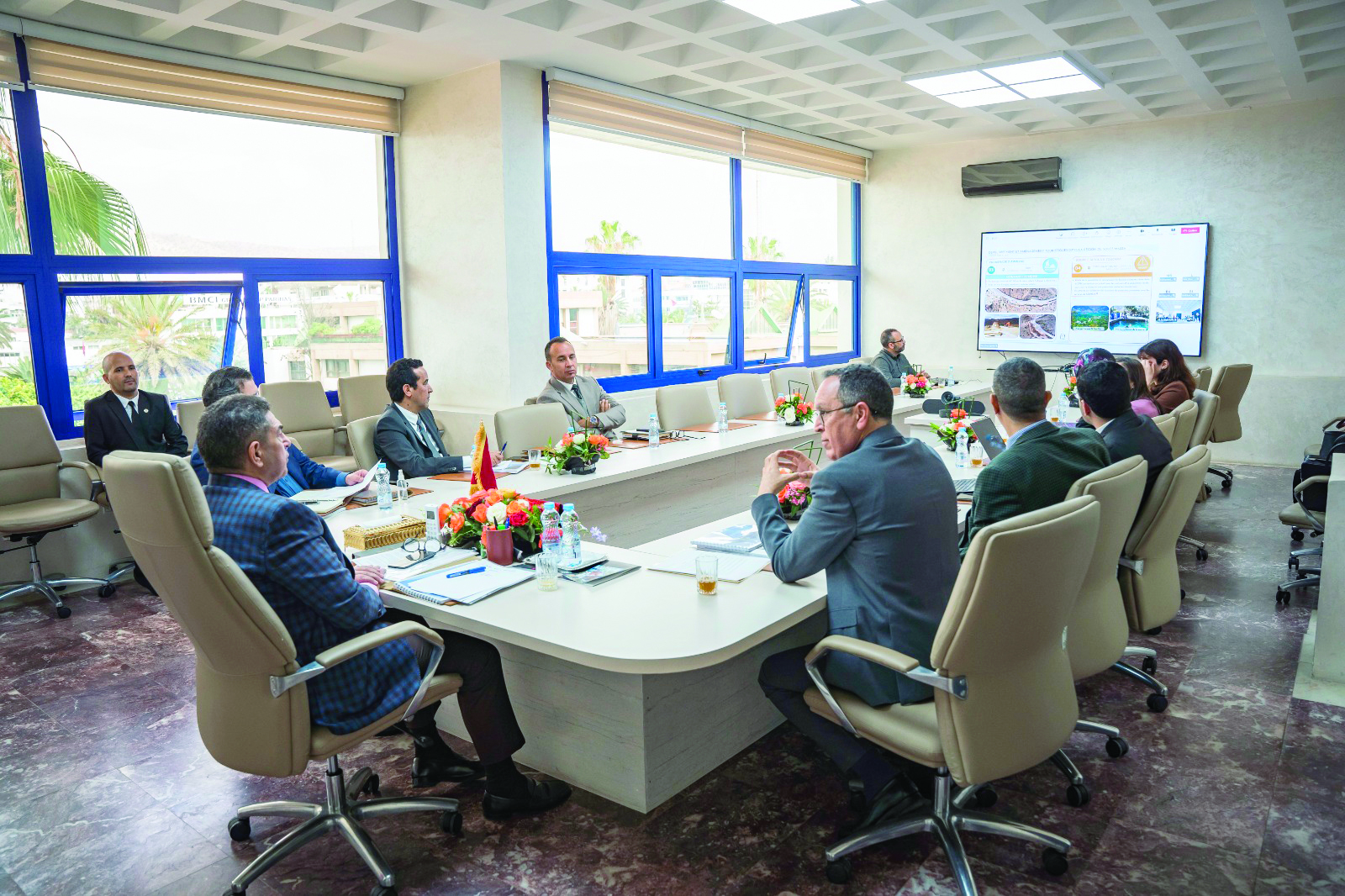
Creating activity is no longer enough. In a region like Souss-Massa, the real question now is where to invest, for whom, and with what impact on territorial balance. Through the flagship projects led by the Regional Council, this very issue emerges in the background: how to make public investment a lever for rebalancing in a territory marked both by its economic potential and by the persistence of strong disparities between urban areas, rural zones, and peripheral provinces.
The strength of the current programming lies in its diversity. Industry, tourism, health, sports, vocational training, social and solidarity economy: the region is acting on several fronts at once. But behind this apparent dispersion, a single challenge takes shape—that of building development that is less concentrated and more widespread. In other words, it is no longer just about funding visible projects, but about correcting structural imbalances by acting on the drivers of local attractiveness, employability, and access to services. This is precisely the meaning, for example, of the economic activity zone project in Aït Baha. With a total cost of 22.5 million dirhams, this operation goes beyond a simple land development logic.
Bringing investment closer to living areas
Its real challenge is territorial: creating a space to host economic activity in an area that is not at the heart of the region’s major economic flows. By bringing investment closer to living areas, the region seeks to limit the concentration of opportunities in already attractive hubs. The challenge here will not only be to deliver plots, but to succeed in attracting viable activities capable of generating sustainable momentum. The Bab Al Marsa program follows a different, more qualitative logic.
With 8.9 million dirhams mobilized for 70 very small, small, and medium-sized enterprises linked to tourism, the issue is less about creating from scratch than about consolidating a fragile economic fabric. The stakes are high: in a context where tourism can create value but also precariousness, supporting beneficiaries in equipment, management, and commercial structuring means strengthening the conditions for sustainable local employment. Here, territorial development depends on the solidity of the micro-economy.
The same analytical framework applies to the “Moazara” program. Behind its 12 million dirhams over three years, it is not only the social and solidarity economy that is targeted, but a certain vision of territorial inclusion. Targeting associations, cooperatives, and local networks, with particular attention to rural women, shows that the region is trying to act on the margins of the conventional economy. The challenge here is twofold: to support activities that are often undercapitalized while giving concrete economic substance to social inclusion. The gamble is not insignificant, as it assumes that these initiatives can move from mere survival to genuine value creation. On the social front, the program supporting healthcare services in Chtouka Aït Baha reflects another reality of regional development: the persistent inequality in access to public services. The 6 million dirhams allocated for contracting general practitioners and organizing medical caravans reflects a pragmatic response to a shortage of supply.
Territorial cohesion and integrated development
Once again, the issue goes beyond healthcare alone. It touches on territorial cohesion itself: a region cannot claim integrated development if access to care remains unequal across territories.
Sport is also treated as a development lever. The rehabilitation of the Ahmed Fana stadium in Dcheira El Jihadia and, above all, the construction of the Tikiouine football stadium in Agadir, for 300 million dirhams, are part of a strategy to upgrade infrastructure. But beyond the infrastructure, there is an issue of attractiveness, youth engagement, and urban structuring. The risk with this type of project is always to remain at the symbolic level. Its success will depend on its ability to be integrated into a genuine sporting and territorial ecosystem.
Finally, the creation of a specialized institute in applied technology in Aït Amira highlights a central issue for Souss-Massa: the alignment between investment and human capital. In a region undergoing transformation, where attractiveness can no longer rely solely on land or infrastructure, training becomes a strategic lever. The real challenge is not simply to build an institution, but to develop the skills that territories will need tomorrow.
Ultimately, these projects reflect an important shift. Territorial development is no longer seen merely as an accumulation of infrastructure, but as an attempt to better align productive investment, spatial equity, and social inclusion. This is where the real test lies for the Regional Council: transforming sectoral projects into a coherent territorial dynamic capable of reducing disparities rather than merely displacing them.