Kingdom
Social Dialogue: A Driver Of Prosperity
With nearly 47 billion dirhams committed, social dialogue has never been more fruitful—not only for employees and civil servants, who have benefited from unprecedented wage increases, but also for a broad segment of the national economy.

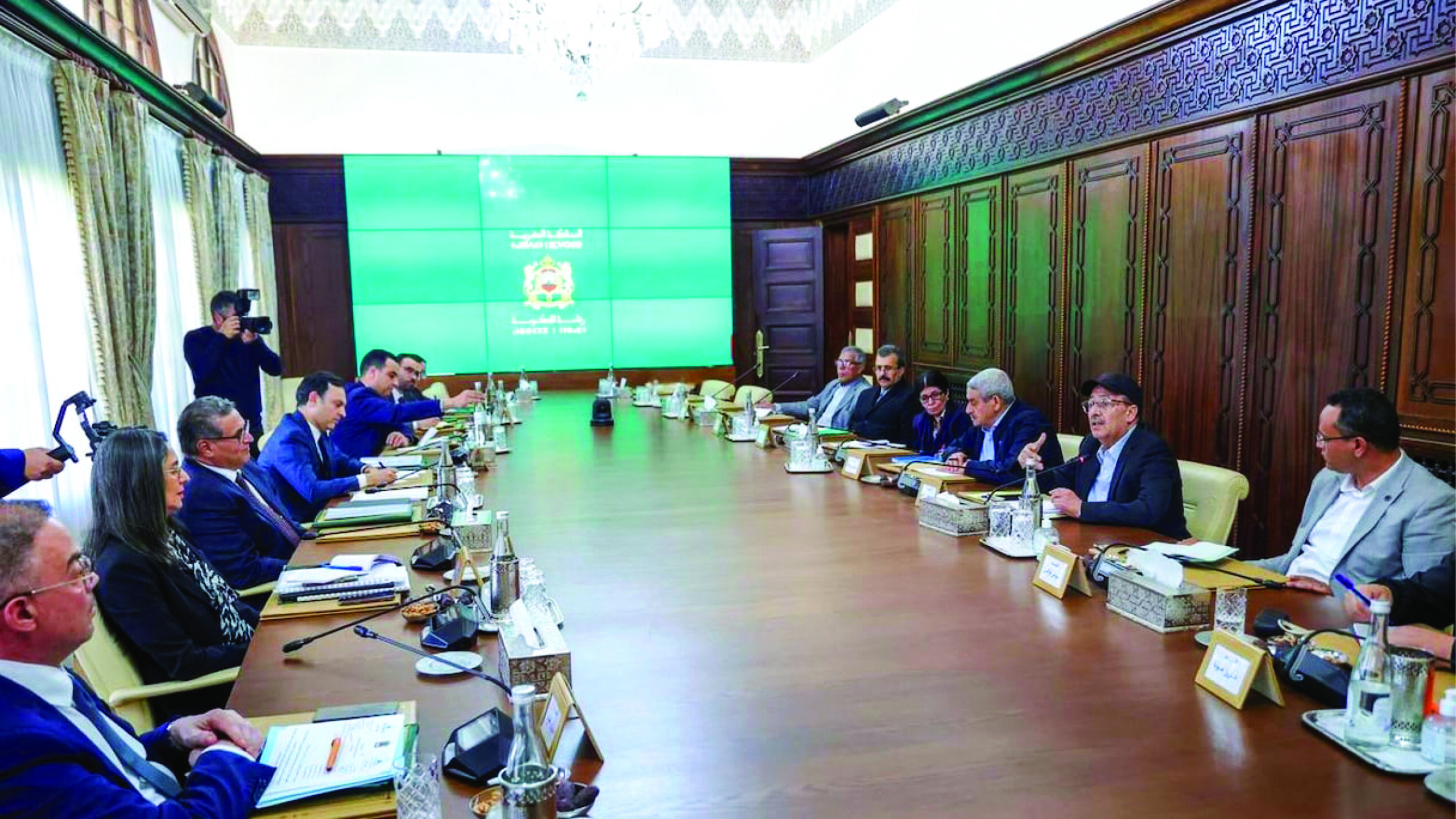
The past four years have clearly demonstrated this: social dialogue and its institutionalisation are not empty slogans.
The government’s openness to dialogue with social partners and the establishment of a climate of trust among the three parties have had a direct impact on citizens’ income and purchasing power, both for civil servants and private-sector employees.
In concrete terms, over four years, the SMIG and the SMAG have been increased by 20%. The stated objective is to achieve the gradual unification of the guaranteed minimum wage by 2028.
As for civil servants’ pay rises, the average salary in the public service has risen to around 10,100 dirhams, compared with just under 8,200 dirhams in 2021. The minimum public-sector wage has increased from 3,000 dirhams to 4,500 dirhams.
At the macroeconomic level, the significant improvement in purchasing power has fed through to the national economy in the form of higher household consumption and increased domestic demand, one of the most dynamic drivers of growth.
The 47 billion dirhams representing the overall cost of social dialogue have thus translated into growth points for the country as a whole.
From the outset, there was a political will to clean up the social situation.
The government proceeded in stages and in successive steps.
It is worth recalling that the earliest breakthroughs were made in sectors described as socially difficult—so-called “social time bombs”, as some analysts have put it.
Accordingly, upon taking office, the relevant ministers undertook to engage in open dialogue with representative trade unions in the education and health sectors.
This willingness to involve all representatives of civil servants goes beyond the logic of the “most representative unions”, which are three in number: the UMT, CDT and UGTM. This approach has led to the resolution of issues dating back several decades, both in education and within the medical profession.
The application of Index 509 for doctors and the abolition of contractual employment for teachers symbolise the social peace now established in both departments.
Purchasing power: a sharp rise
In the national education sector alone, no less than 27 billion dirhams have been mobilised to honour the government’s commitments to teachers, marking one of the most extensive wage and status reforms of recent years.
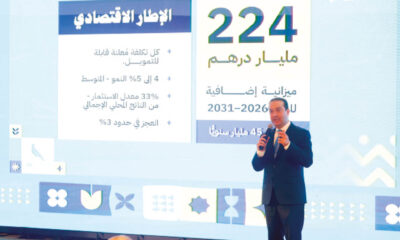
Since 2021, the cost of social dialogue will reach 45.738 billion dirhams in 2026 and is expected to exceed 46.70 billion dirhams in 2027. This substantial budgetary envelope is described as “exceptional and unprecedented in the history of social dialogue”.
In total, 1,127,842 civil servants have benefited from wage increases and improvements in their employment status. Other indirect measures, also having a significant impact on household purchasing power, have been implemented within the framework of social dialogue.
These include the extension of the right to receive a retirement pension to individuals who had not accumulated the required number of points.
The eligibility threshold for a pension paid by the CNSS has thus been set at 1,320 points.
Furthermore, the government has decided to exempt retirement pensions paid by the CMR from income tax, effective from 1 January 2025.
This measure was extended at the beginning of this year to private-sector retirees affiliated with the CIMR. The gradual reform of social protection is indeed one of the structuring pillars of social dialogue.
The objective is to include a broad segment of informal or precarious workers within the social protection system, thereby reinforcing the universalisation agenda promoted since 2021.
In short, the institutionalisation of social dialogue has resulted, first, in the signing of two agreements in April 2022 and 2024, but above all in a historic achievement that no government had managed to realise over more than 60 years.
A virtuous circle
For the first time, a law regulating the exercise of the right to strike has been adopted. One of its immediate effects has been to create strong bonds of trust between employers and employees.
Indirectly, it is trade union culture itself that is undergoing a historic shift, gradually moving away from confrontation, strikes and protest towards a culture of dialogue and consensus.
Thus, since the last agreement concluded in April 2024, specialised commissions bringing together representatives of all social partners have been set up, tasked with formulating “consensual proposals” on reforms relating to trade union organisations, the Labour Code, and pension reform.
Regarding the amendment of the Labour Code—now more than two decades old—the dedicated commission has already submitted its proposals to the Minister of Employment.
As for pension system reform, the national commission established for this purpose is still pursuing its work. Visits and meetings are being held at the premises of the CNSS, the CMR and the RCAR.
The aim of this process is to establish “a consensual vision of reform”. The same spirit now prevails in the private sector.
Over recent years, several collective agreements have been signed within major industrial groups, involving the main trade unions and the management of these groups and companies.
These initiatives seek to establish a calmer social climate within firms at a time when Morocco is attracting increasing numbers of foreign investors and is building new industrial ecosystems.
A sustainable social dialogue within companies inspires confidence among investors, as it reduces the risk of disputes and strikes and fosters a culture of cooperation, making Morocco an attractive destination for foreign direct investment.
In this regard, a joint ILO–OECD study has shown that companies which establish structured social dialogue record a 25% lower turnover rate and an 18% reduction in absenteeism, as well as improved productivity due to fewer conflicts.
This is the virtuous cycle the government has set in motion: a better social climate encourages investment—particularly foreign investment—which in turn generates growth and jobs, and therefore more wealth to be distributed or reinvested.
New Labour Code, new challenges
Labour Code reform is one of the major items enshrined in the social pact of April 2022. The process launched since then is still ongoing.
According to the supervising minister, a draft bill is expected to be submitted for validation by the social partners before the end of May.
The drafters of the new text face significant challenges, foremost among them the regulation of teleworking and the digital platform economy, particularly delivery workers.
There is also the need to respond to growing demands from businesses for greater labour flexibility.
The reform will also seek to provide a clearer definition and an appropriate legal framework for part-time work and other forms of employment.
The social dimension remains particularly pressing within the context of the generalisation of social protection, with stronger oversight of companies’ social obligations and reinforced measures to combat informality.