Kingdom
Social assistance: Lekjaa unveils ANSS’s new territorial strategy
The government aims to strengthen the effectiveness of the direct social assistance programme through a new territorial approach led by the National Agency for Social Support (ANSS). Social support workers will be mobilised to monitor beneficiary households and promote their sustainable socio-economic inclusion.

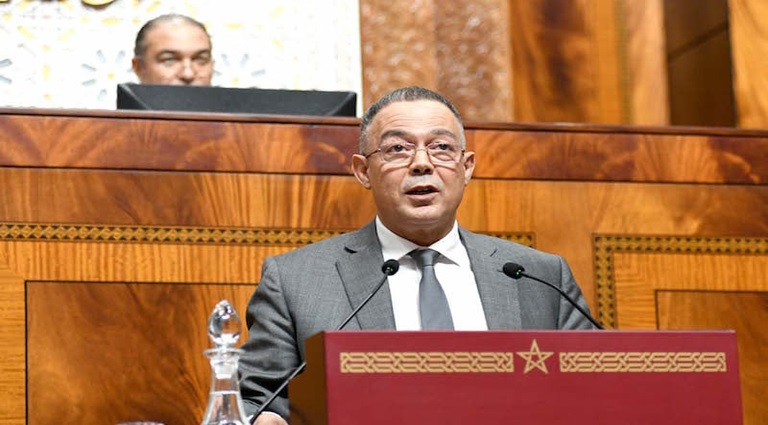
The National Agency for Social Support (ANSS) is adopting a proximity-based approach to strengthen the effectiveness of the direct social assistance programme, stated the Minister Delegate in charge of the Budget, Fouzi Lekjaa.
Responding to a written question in the House of Representatives regarding the evaluation of the programme’s effectiveness, the government official indicated that the government, through ANSS, is ensuring the implementation of the High Royal Directives in order to guarantee a tangible and lasting impact of the scheme on beneficiaries.
In this context, ANSS is relying on an approach that is both human-centred and territorial, with the aim of transforming direct social assistance from a simple financial support mechanism into a lever for integrated territorial development.
This strategy is based in particular on the creation of territorial branches where “social support workers” will operate. Their mission will be to monitor the situation of beneficiary households, support them in overcoming precarious conditions, and promote their long-term integration into socio-economic life.
According to the minister, these local structures will work in partnership with various territorial stakeholders involved in economic and social integration. They will also ensure compliance with the social commitments of families, particularly regarding children’s schooling and the health monitoring of mothers and children, in addition to other commitments adapted to local specificities.
These same entities will also contribute to the development of economic inclusion pathways aimed at strengthening beneficiaries’ capacities and removing obstacles to their professional integration. A first territorial branch has thus been established in El Jadida as a pilot experience, before possible generalisation following evaluation.
At the same time, ANSS is working on setting up mechanisms to assess the effectiveness and impact of the direct social assistance programme on development indicators, with the goal of adapting support measures to the needs and potential of different regions.
In terms of figures, the direct social assistance programme benefited more than 3.9 million families in April 2026, with a total budget of 2.17 billion dirhams. Since its launch in December 2023 until the end of April 2026, a total of 59 billion dirhams in aid has been allocated to disadvantaged and vulnerable families.
The programme covers nearly 43% of Moroccan families and provides monthly direct assistance ranging from 500 to 1,425 dirhams per household, in addition to birth and back-to-school allowances. According to Fouzi Lekjaa, evaluating the programme must also take into account the support initiatives and economic inclusion pathways progressively implemented across several regions of the Kingdom.