Kingdom
Social Assistance: A Programme Delivering Results
The PASD has made a significant contribution to improving the living standards of nearly 89% of households, including 31% in a particularly notable way. Moreover, the level of beneficiary satisfaction exceeds that recorded in some comparable international programmes.

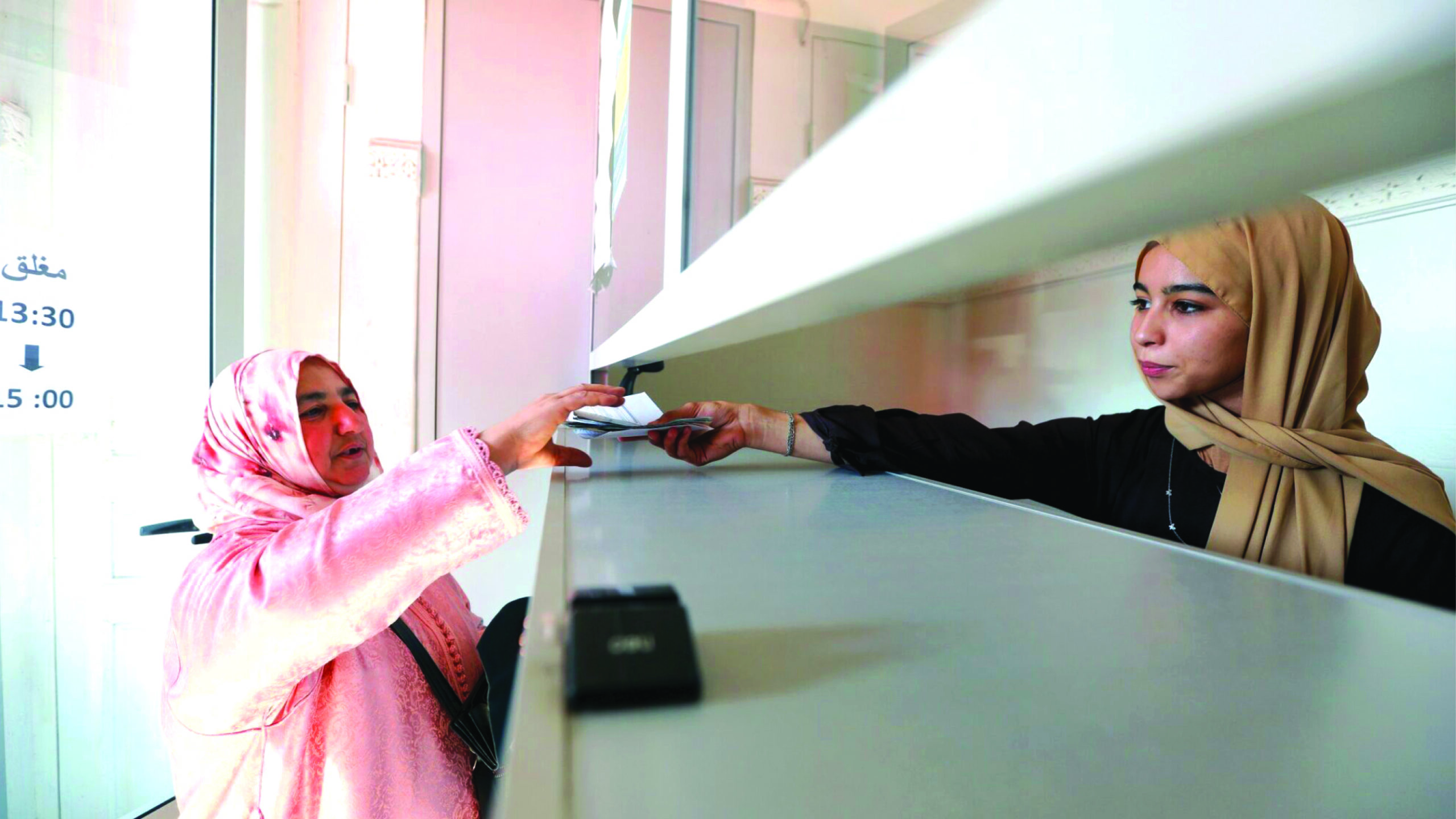
The National Observatory for Human Development (ONDH) published, last July, the results of a national satisfaction survey on the Direct Social Assistance Programme (PASD), launched by the government in December 2023 as part of the royal initiative to build the social state.
This survey constitutes the first structured evaluation of beneficiaries’ experience of the programme and falls within the Observatory’s missions of monitoring, evaluation, and support for the performance of social policies implemented in the Kingdom.
The primary objective of the survey is to assess users’ perceptions of the quality of services provided by the PASD, to evaluate its accessibility, equity, and operational effectiveness, to analyse its economic and social impacts, and to collect beneficiaries’ feedback in order to identify areas for improvement.
This approach also seeks to strengthen inclusion and citizen participation by enabling beneficiaries to express their expectations, concerns, and assessments, thereby contributing to improved public policy effectiveness and consolidating trust between the state and citizens.
The survey was conducted on a representative sample of 4,462 heads of household, distributed across the entire national territory, in both urban and rural areas, including 16% women.
The methodology adopted is based on a rigorous selection drawn from ONDH’s household panel, ensuring sociodemographic representativeness and the credibility of the results.
Households were identified on the basis of their eligibility for the PASD, taking into account the Unified Social Registry (RSU) score and the absence of coverage by a contributory social protection scheme.
Tangible impact on living conditions
The survey results reveal a high level of overall satisfaction with the programme. More than 87% of beneficiaries describe themselves as “very satisfied,” “satisfied,” or “somewhat satisfied” with the support received, while dissatisfaction remains marginal, affecting only around 12.6% of respondents.
This satisfaction reflects the programme’s tangible impact on beneficiaries’ living conditions. In terms of socioeconomic effects, the PASD has made a significant contribution to improving the standard of living of nearly 89% of households, including 31% in a particularly notable way.
Moreover, 92% of beneficiaries report improved food security, while 82% highlight positive support for children’s schooling. These findings confirm the programme’s role as a lever for social protection and vulnerability reduction.
Regarding governance and transparency, the admission process is considered fair by more than 90% of respondents, and 95% view the handling of applications as transparent.
Information relating to the programme is generally perceived as clear and understandable, with a majority of beneficiaries considering that they have sufficient information to understand the objectives and arrangements of the PASD.
Eligibility criteria are also deemed clear by more than two-thirds of surveyed households.
However, the survey highlights certain limitations, particularly in relation to the programme’s operational accessibility. The registration process is perceived as complex by a large majority of beneficiaries: only 5% consider it simple, while 67% describe it as moderately complex.
This situation has led many households to seek external assistance to complete electronic registration, especially in remote areas or among populations less familiar with digital tools.
Measuring users’ perceptions
Alongside this survey, the ONDH developed for the first time a National Social Satisfaction Index (NSSI), composed of 17 sub‑indicators covering all dimensions of social satisfaction.
This index aims to measure users’ perceptions of services provided by social state programmes and to serve as a public decision‑making support tool.
For the PASD, the NSSI is estimated at 71 points out of 100, reflecting overall beneficiary satisfaction, assessed across five main dimensions: accessibility, impact, timeliness, relevance, and transparency.
An international comparative study conducted by the ONDH shows that the satisfaction level of PASD beneficiaries exceeds that observed in certain similar programmes, notably in Mexico and Indonesia, while approaching the South African experience.
However, it remains slightly below that of Brazil’s Bolsa Família programme, which is recognised for its effectiveness and strong social uptake.
Based on these findings, the ONDH puts forward a set of recommendations aimed at improving the performance and impact of the PASD. These include the development of a community‑level social assistance mechanism to strengthen communication and beneficiary support, greater involvement of local associations in facilitating access to digital services, and enhanced citizen participation in the programme’s territorial governance.
The Observatory also recommends regular updates to eligibility criteria to better reflect changes in household living conditions, the launch of skills development and economic empowerment programmes to promote sustainable effects, and strengthened integration of the PASD with other social state programmes—such as AMO Tadamon—to reduce overlaps and ensure more coherent coverage.
Finally, the establishment of a national monitoring and evaluation system and the development of action‑research on impact assessment are advocated to embed the programme within a logic of continuous improvement.
Overall, the survey highlights the generally positive and encouraging results of the PASD, while underlining the need to pursue efforts to adjust and enhance accessibility in order to maximise the programme’s social benefits and sustainably meet the expectations of vulnerable populations.