Kingdom
Sahara: The EU supports the autonomy plan under Moroccan sovereignty
During her working visit to Morocco, the EU High Representative for Foreign Affairs, Kaja Kallas, reiterated the main parameters of the Union’s position, which calls on all parties “to participate in discussions without preconditions and on the basis of the autonomy plan proposed by Morocco.”

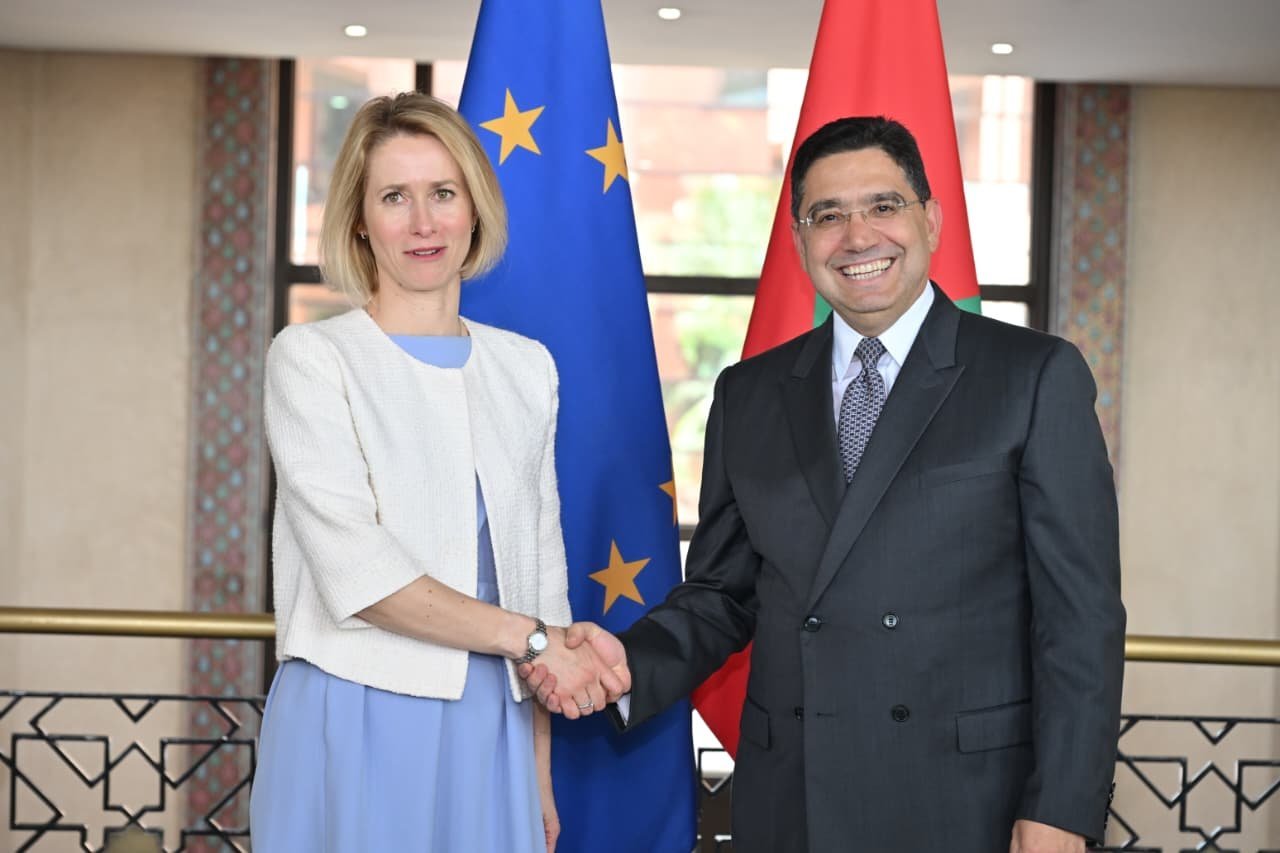
The High Representative of the European Union for Foreign Affairs and Security Policy and Vice-President of the European Commission, Kaja Kallas, stated on Thursday in Rabat the EU’s new position on the Moroccan Sahara, considering that “genuine autonomy could represent one of the most feasible solutions” for the definitive settlement of this regional dispute.
During her working visit to Morocco at the invitation of the Minister of Foreign Affairs, African Cooperation and Moroccan Expatriates, Nasser Bourita, Ms. Kallas recalled the main parameters of the EU’s position, which calls on all parties “to participate in discussions without preconditions and on the basis of the autonomy plan proposed by Morocco in order to reach a definitive political solution.”
This position, approved by the 27 EU Member States, was recorded in a Joint Communiqué adopted by Mr. Bourita and Ms. Kallas following their meeting.
In that same Joint Communiqué, the EU “welcomed” Morocco’s willingness “to clarify how autonomy under Moroccan sovereignty would be implemented.”
Furthermore, the EU “welcomed the adoption of United Nations Security Council Resolution 2797 (2025), which fully supports the efforts of the Secretary-General and his Personal Envoy to facilitate and lead negotiations, based on the autonomy plan proposed by Morocco.”
This EU position carries particular importance and represents a strong signal on the eve of the UN Security Council meeting scheduled in the coming days.
In addition to the European Union, many European countries had already expressed, at the national level, clear support for the Moroccan character of the Sahara and for the autonomy plan proposed by Morocco.
This international momentum, driven by His Majesty Mohammed VI, reflects a consensus among the 27 EU Member States in favor of a definitive settlement of this regional dispute, on the basis of autonomy under Moroccan sovereignty.