Influences
Sahara: The Consular Network in Permanent Consolidation
Whether from Africa, the Arab world, or the Americas, many countries have opened their general consulates in the Southern Provinces of the Kingdom. A total of 29 are now established. Two others are on the path to realization.

No later than October 29, Paraguay, while reaffirming its full support for Moroccan sovereignty over the Sahara, announced its decision to soon open a general consulate in the Southern Provinces.
Another step that, in fact, follows the continuity of Asunción’s withdrawal of recognition from the puppet entity in 2014. An act that solidifies the momentum of establishing diplomatic representations in the Sahara.
It also adds to the decision, repeatedly reiterated most recently by Washington, to establish a consulate in the Sahara. Indeed, in a few months, or perhaps a few weeks, we should witness a thunderclap.
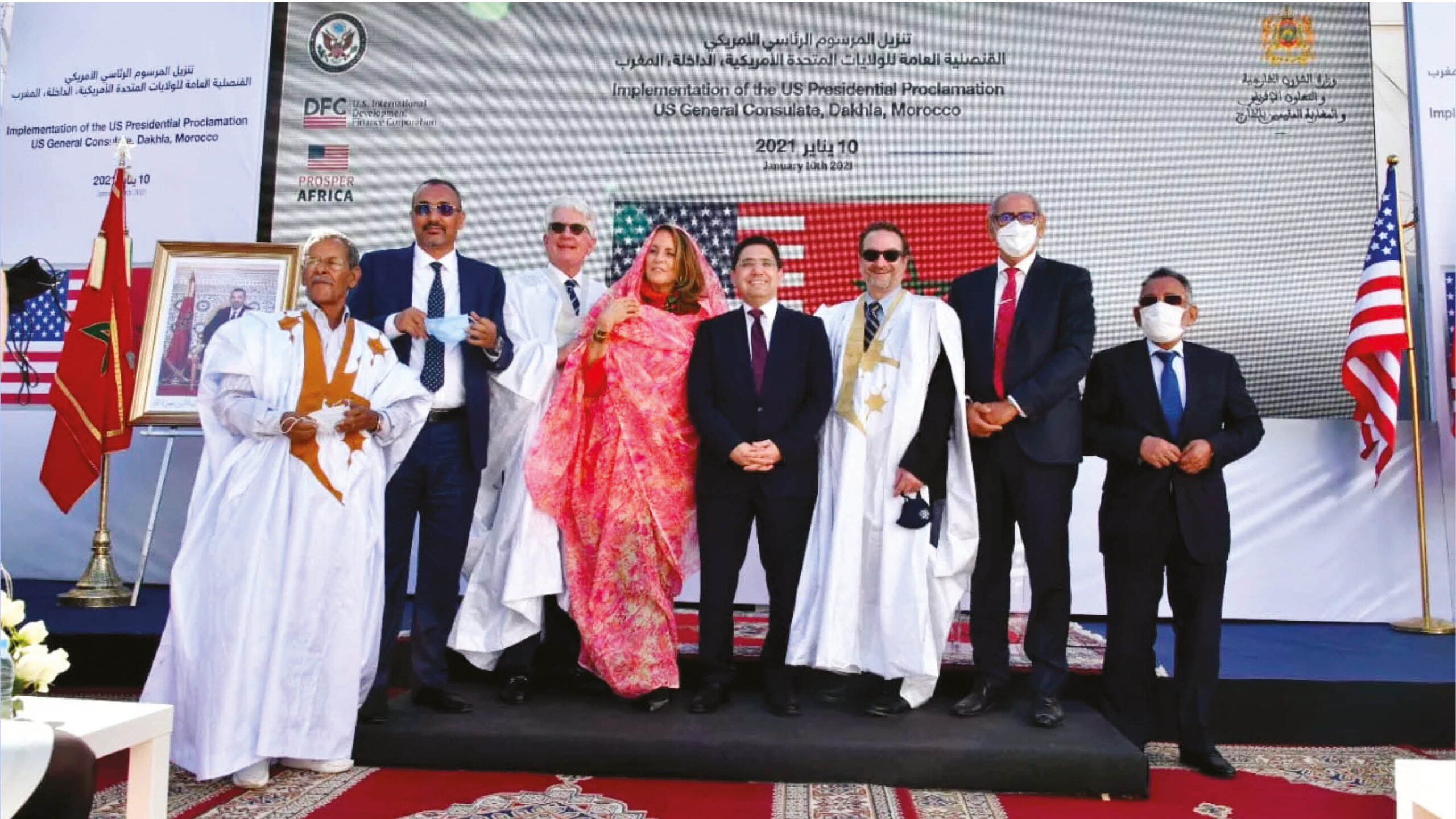
Indeed, Massad Boulos, advisor for Africa and the Middle East to U.S. President Donald Trump, confirmed the intention of the U.S. Administration to open a consulate in the southern provinces of the Kingdom.
This was during an interview granted to the Saudi channel “Asharq,” where the American official emphasized that “the project to open a consulate in Dakhla is still ongoing.”
An intention, it should be recalled, that is not new but refers back to the announcement made by the occupant of the White House on December 10, 2020, in his “official proclamation recognizing Morocco’s sovereignty over its Southern Provinces.”
A few days later, it was the former U.S. Secretary of State Mike Pompeo who reiterated the move by announcing the establishment of a “Virtual Presence Post” (VPP), considered “an important first step in the process of creating a new American diplomatic mission,” to quote the terms stated in an official U.S. document.
An intention that was confirmed, even reinforced, in January 2021 by the former U.S. Ambassador to Rabat, David T. Fischer, during his visit to Dakhla. His statements were as clear as possible when he said: “It is such an honor for me to visit this region of Morocco (…) and to begin the process of establishing a U.S. diplomatic presence here.”
This resulted in the establishment of the “virtual consulate,” the VPP, announced by the Secretary of State.
This VPP, as stated in an official U.S. document, “provides important information on consular services, opportunities for cultural exchanges, and announcements from the U.S. government regarding new programs aimed at promoting economic and commercial investments in the region.”
Similarly, the document adds, this VPP “allows for the necessary time to meet the regulatory and security requirements needed to open a consulate.”
Irreversible Momentum
Now, with the very recent announcement by President Trump’s advisor, everything suggests that this meticulously conducted process is nearing its end. And thus, the imminent opening of the U.S. general consulate in Dakhla is taking shape.
According to the latest news, it is learned that a U.S. consular delegation was visiting Dakhla to meet with local authorities and, along the way, initiate the first steps toward the official inauguration of this diplomatic representation.
Implementation is underway. This signifies a “pivotal moment” in strengthening the international diplomatic network in the southern provinces of the Kingdom, which will undoubtedly lead to other openings or announcements of openings of foreign diplomatic representations, particularly from the many countries and powers that, if they do not yet recognize the Kingdom’s sovereignty over its Southern Provinces, support its Autonomy Plan.
The “hesitant” ones may also follow suit.
It is important to recall, moreover, that the process of establishing foreign diplomatic representations, whether in Dakhla or Laâyoune—which currently host 17 and 12 general consulates respectively—dates back to December 2019, with the inauguration of the first honorary consulate of Côte d’Ivoire in Laâyoune.
The irreversible momentum gained new impetus that same year with the opening of the general consulate of the Union of the Comoros. Other “brotherly and friendly countries” followed.
And with the inauguration, in August 2024, of the general consulate of Chad in Dakhla, the number of states with a diplomatic representation in the Southern Provinces now stands at 29, including 22 African countries.
Economic Levers
In addition to the diplomatic dimension that these consulates embody, which support Morocco’s indisputable sovereignty over its Southern Provinces, the massive presence of sub-Saharan African countries in both cities also undoubtedly serves as high-impact economic levers.
Particularly in terms of developing bilateral and multilateral trade exchanges. And, undoubtedly, Morocco’s Atlantic Initiative—which aims to provide landlocked sub-Saharan countries with access to the Atlantic coastline—will benefit from this.
Furthermore, this dynamic will also undoubtedly enhance the attractiveness of the Southern Provinces in terms of foreign investment. Without losing sight of the fact that these diplomatic representations provide important administrative services to African communities established in the region, including the growing number of sub-Saharan students choosing the Southern Provinces to pursue their studies.
Ultimately, these are diplomatic breakthroughs that crown relentless efforts to establish a Moroccan vision that reaps successes. Moreover, this does not concern Morocco alone but also contributes to the development of the entire African continent, from which African populations stand to benefit.