Influences
Sahara: A Quarter Century of Agile and Proactive Diplomacy
In 26 years, the Sahara issue has undergone major upheavals. At every moment, Moroccan diplomacy has been proactive, thwarting maneuvers and stringing together victories, leading up to this historic turning point of October 31.

The final days leading up to the Security Council vote were among the most tense for all Moroccans. Undoubtedly even more so for our country’s diplomacy.
And finally, deliverance came through this unequivocal vote, largely in favor of Resolution 2797, which crowns 26 years of constructive royal diplomacy.
Because it must be acknowledged, we have come a long way, a very long way. A little over a quarter century ago, the Sahara file was, so to speak, slipping through Morocco’s hands.
The Baker II Plan (named after the personal envoy of the then UN Secretary-General), endorsed by the Security Council in 2003 but rejected by Morocco, provided that the Sahara be governed by a “local Authority” for five years.
After this period, a referendum on self-determination was to be organized, with the option of independence included. Four years later, the Kingdom took the initiative to present the Autonomy Plan in April 2007.
This diplomatic shift, inspired by a clear-sighted royal Vision, would establish, less than two decades later, Morocco’s preeminence on this file.
Proof of this today is the number of states that have recognized, and supported as such, this plan as the most credible, most realistic solution, the only one for a great many of them, to resolve this dispute.
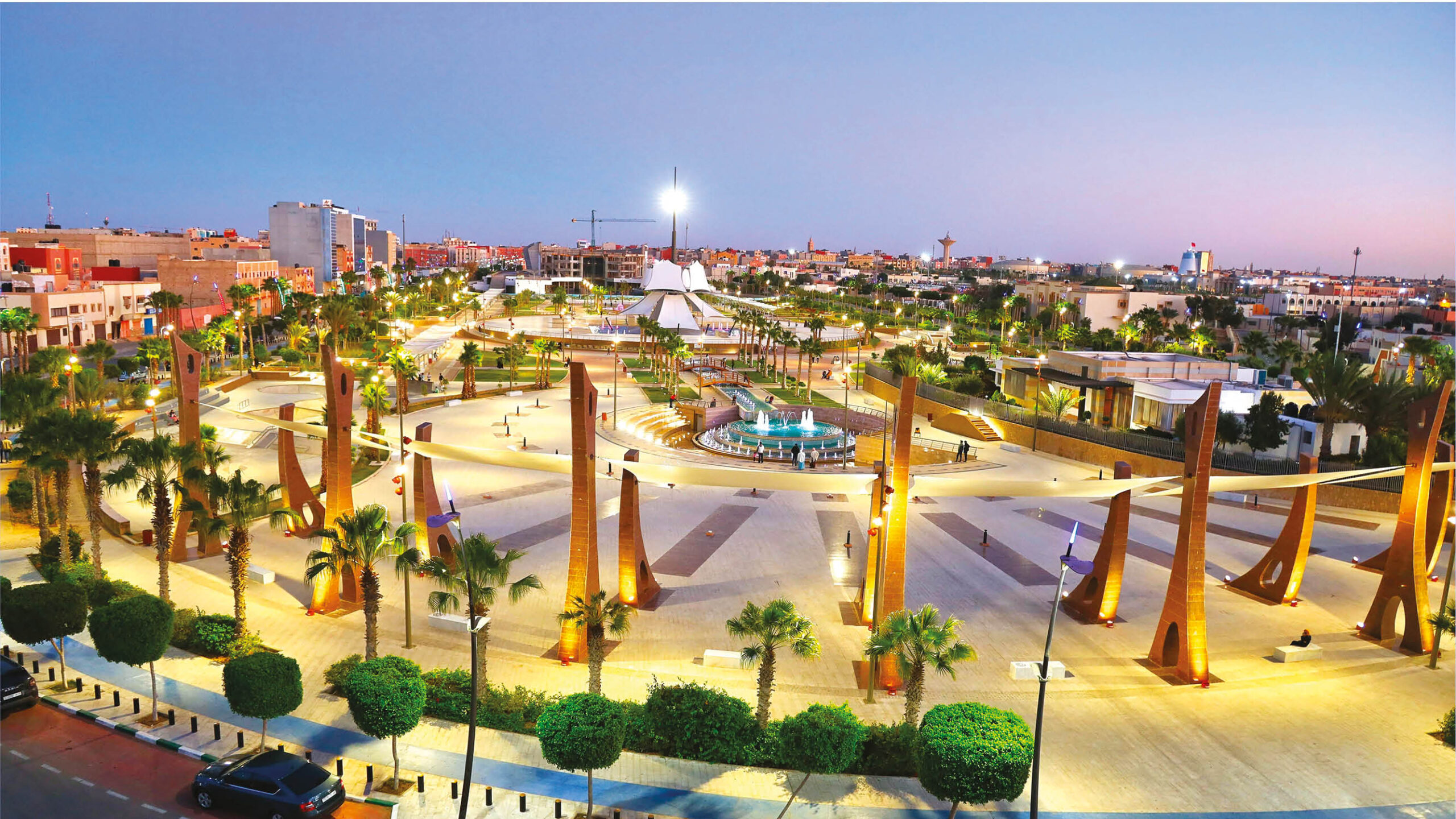
Others, today nearly thirty, have taken the step of opening a consular representation in Dakhla or Laâyoune (see p.20). Paraguay being the latest to have materialized, on October 29, its recognition of Moroccan sovereignty over the Sahara by announcing the opening of a general consulate.
In parallel, and over the years, this autonomy proposal has become one of the foundations integrated into the resolutions of the Security Council. This has precisely allowed states to freely express their position in support of the Autonomy Plan.
Sustained and Methodical Work
One can measure the scale of the diplomatic work, conducted under the leadership of His Majesty King Mohammed VI, which has been deployed over these last 26 years to thus reverse the trend.
A sustained, patient, and methodical work where vigilance and reactivity were essential at every moment.
We remember how in 2013, when U.S. Ambassador Susan Rice had requested that the mandate of MINURSO be extended to human rights monitoring in the Sahara, Moroccan diplomacy reacted to block this proposal.
And these are just examples. Experts of all stripes are unanimous on this subject, “Morocco, thanks to the vision and diplomatic choices of His Majesty King Mohammed VI, has managed to consolidate the growing support of the international community for the Moroccan identity of the Sahara.”
It is an observation. Over the last two decades, the Kingdom has completely changed its doctrine in matters of foreign policy. Indeed, one of the main characteristics of Moroccan diplomacy under the leadership of His Majesty Mohammed VI is the diversification of partnerships, including strategic partnerships. Morocco has thus broadened its relations beyond the circle of its traditional partners in Europe.
The sphere of action of its diplomacy has gradually extended to other countries in Africa, Asia, and Latin America. This strategy where the economic factor remains predominant, but with spillover effects in terms of support and backing for the Sahara file.
The Decisive Turn
In Africa, Morocco thus adopted a proactive policy, by reintegrating into the African Union in 2017 after more than three decades of absence. This reintegration allowed it to strengthen its ties with African states and even play a central role in continental issues.
The impact on the Sahara file is undeniable. Since 2018, the issue has ceased to be part of the agenda of the various bodies of the Union. In parallel, the number of supporters of the theses of Algeria and its proxy, the Polisario, began to shrink visibly.
In Asia, Morocco has developed strong relations with economic powers such as China, India, and Russia, but also with the emerging countries of ASEAN. Strategic partnership agreements have been signed.
In Latin America, the Kingdom has strengthened its relations with countries like Brazil, Argentina, and Chile and with countries in Central America.
All this has contributed to building the near-unanimity of the international community, which we witness today, around the justice of our national cause and the relevance of the autonomy proposal presented by the Kingdom.
A journey marked by brilliant diplomatic victories. And the telephone conversation between His Majesty King Mohammed VI and the President of the United States of America, Donald Trump, in December 2020, is part of it.
It is a breaking point in this file. Trump had then informed the Sovereign of the promulgation of a presidential decree concerning the decision of the United States of America to recognize the full sovereignty of the Kingdom of Morocco over the entire region of the Sahara.
The United States was followed later by Spain, Germany, France – whose recognition of the Moroccan identity of the Sahara in July 2024 also constitutes a turning point – then the United Kingdom which also supports the Autonomy Plan, among others.
Diplomatic victories continued through the initiatives and changes of position of states, but also groups of states and regional organizations.
The assertion of the Kingdom’s African dimension, its openness to new partnerships, and its activism within international institutions have not only consolidated its sovereignty over its Sahara but have also elevated it to the level of a top-tier regional economic actor.
This connection between economy, politics, and economic diplomacy has been, over the years, beneficial and profitable for Morocco. It has generated significant political gains, especially on the Sahara issue.
Moroccan diplomacy, which is long-term, with a thoughtful and unhurried roadmap, has finally borne fruit, on all fronts.