Business
Royal Air Maroc Highlights its Expansion and Connectivity at a Brazil–Arab Countries Seminar
The meeting was marked by the signing of a memorandum of understanding aimed at attracting Arab investments into Brazil’s tourism sector, positioned within a market estimated at 384 billion dollars by 2028.

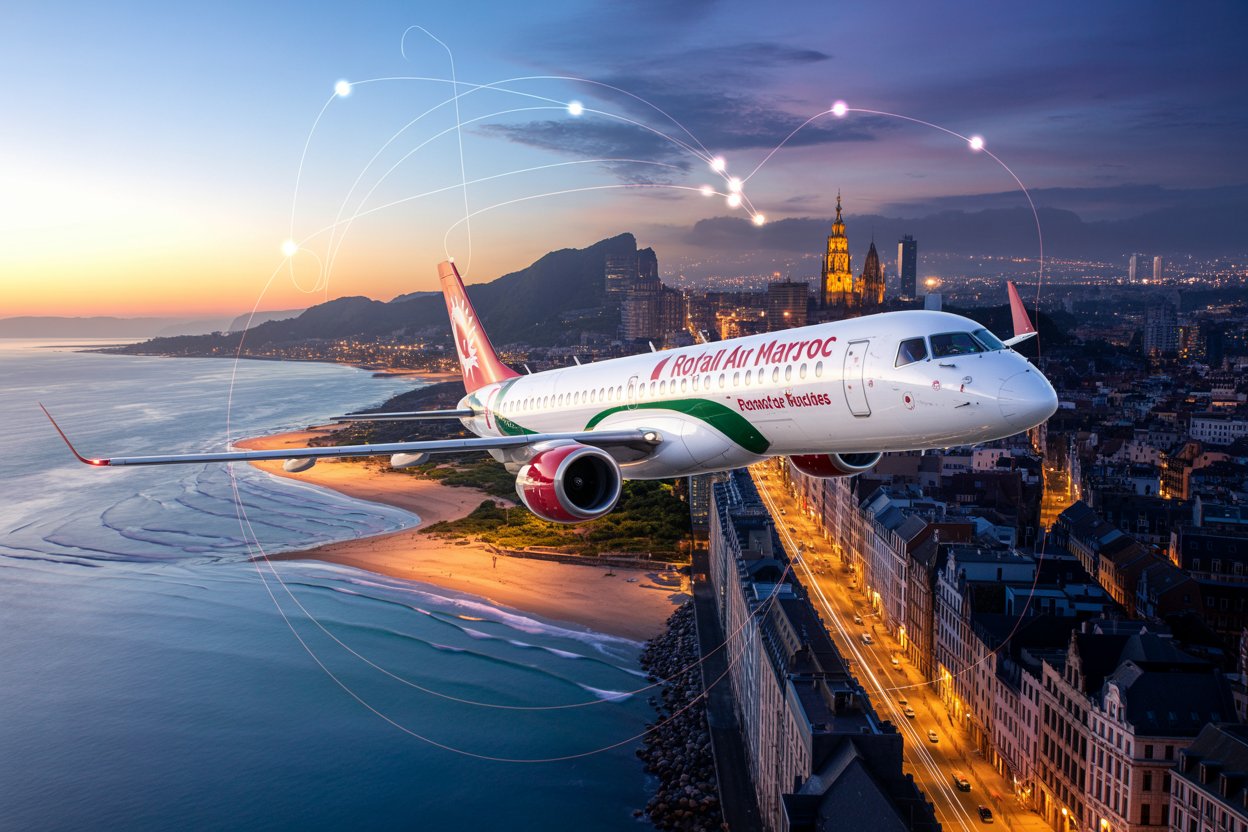
The national airline Royal Air Maroc (RAM) highlighted the expansion of its network and the strengthening of its international connectivity during a seminar dedicated to tourism and business between Brazil and Arab countries.
The meeting, which brought together public and private stakeholders, the financial sector, as well as representatives of the United Nations in São Paulo, was marked by the signing of a memorandum of understanding aimed at attracting Arab investments into Brazil’s tourism sector, positioned within a market estimated at 384 billion dollars by 2028. Priority areas notably include tourism infrastructure, hospitality, and the development of new hubs.
Within this context, Royal Air Maroc, which has been investing in Brazil since the resumption of the São Paulo–Casablanca route in December 2024 with four weekly frequencies operated by a Boeing 787-9 Dreamliner, reaffirmed its strategic role as a gateway between that country and the Arab world, helping to stimulate tourism and trade flows, the airline said in a statement on Tuesday.
“In 2025, we offered around 85,000 seats between Morocco and Brazil, with three weekly flights. Since December, we have increased to four weekly frequencies, representing around 130,000 seats in 2026, with a growth of 30%,” said Othman Baba, RAM’s regional director for Latin America, as quoted in the statement.
According to the same source, this development reflects demand and the profile of travelers, particularly those from Arab countries, who are seeking experiences combining culture, nature, and high-quality hospitality.
The airline also emphasized the expansion of its global connectivity from its Casablanca hub, with the opening of new destinations, thereby strengthening its position as a transcontinental operator linking Brazil, Africa, Europe, and the Arab world.
Speaking at the seminar, Brazil’s Minister of Tourism, Gustavo Feliciano, highlighted the strategic nature of relations with Arab countries, describing them as a priority lever for the internationalization of Brazilian tourism.
“We are structuring an integrated ecosystem, organized around several pillars (air connectivity, infrastructure, promotion, and investment facilitation) in order to position Brazil as a competitive destination ready to welcome this audience. The memorandum consolidates this momentum and lays the groundwork for transforming this relationship into sustainable flows of tourism and business,” he stated.
For the president of the Arab-Brazilian Chamber of Commerce, William Adib Dib Junior, this agreement represents a concrete step forward in bilateral relations.
“We are transforming a historic relationship into real opportunities. This memorandum strengthens institutional cooperation and paves the way for joint promotion, investment attraction, and the creation of new business partnerships between Brazil and Arab countries,” he said.
The growth dynamic was also highlighted by the representative of the Moroccan National Tourist Office, Mohamed Amine Eljoudani, who emphasized the results of the destination’s internationalization strategy.
“We went from around 34,000 Brazilian tourists in 2023 to nearly 60,000 in 2025. This progress is the result of a structured strategy, based on an active presence in the market, training of sector professionals, and partnerships with operators. Brazil is a priority market, and we remain confident in the continuation of this expansion,” he noted.
From Mohammed V International Airport in Casablanca, Royal Air Maroc connects Africa, Europe, Asia, North America, and South America, serving 100 destinations in 46 countries.
The airline is undergoing a phase of expansion aimed at transforming it from a regional player into a transcontinental operator. Its 2023–2037 strategic plan includes increasing its fleet to 200 aircraft, with a target of 32 million passengers per year by 2037, compared to 7.5 million in 2024.
Commitment to a sustainable future is also a priority: in 2025, the airline carried out its first flight using sustainable aviation fuel (SAF).