Kingdom
RNI: “The Path of the Future” in a Feminine Mode
“The Path of the Future” of the RNI is written in the feminine. On Saturday, April 4, the women’s summit of the dove party outlined its contours beyond the 2026 deadlines. Consolidating through continuity.

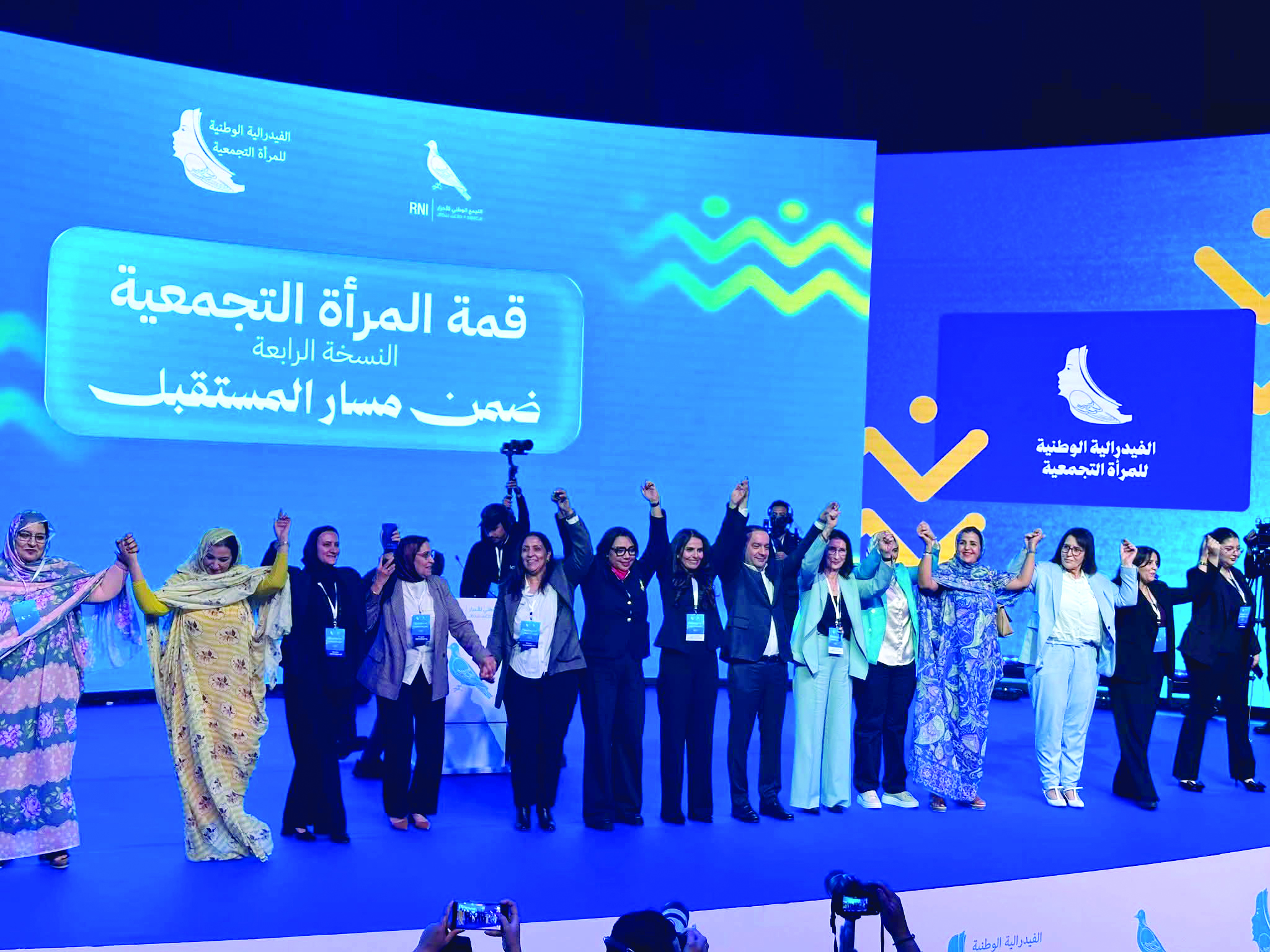
More than 1,600 RNI activists gathered for the 4th edition of their Summit. On the agenda: the achievements made over recent years, as well as outlining ways to improve women’s lived conditions.
This is a habit the National Rally of Independents is not about to change. At every event it organizes, mobilization is at its peak—both in terms of the number of participants and the enthusiasm that fills the venue. The 4th edition of the Women’s Summit of the dove party, held on Saturday, April 4 in the ochre city, was no exception to what has become a rule of conduct. In the auditorium of a Marrakech palace, RNI activists gathered as part of the “Path of the Future” initiative. Activists came from all four regions of the Kingdom, along with a strong حضور of women from the Moroccan diaspora. Not to mention the significant presence of the party’s leadership, including ministers, members of parliament, and members of the political bureau.
This speaks volumes about the importance the party places on women’s rights—a cause that, since 2017 under the leadership of Aziz Akhannouch, has been one of its top priorities, as party president Mohamed Chaouki emphasized in his speech. A speech that served as a “strong marker” of the new president’s “discursive approach,” keen to remain in continuity with his predecessor’s vision while adopting a “narrative strategy” that had the desired effect on his audience.
An illuminating storytelling approach…
From the outset, Chaouki sets the scene by structuring his speech.
He chose storytelling. The man, who received a standing ovation accompanied by ululations, built his address around five portraits of women. First, Ghizlane Choudani, a rural elected official deeply committed to the development of her commune while raising her children. Chaouki then moved on to Nawal El Moutawakkil, a party activist and former minister, recalling her historic achievement in 1984 when she won the gold medal at the Los Angeles Olympic Games before eventually becoming vice president of the International Olympic Committee.
Next came the portrait of Leïla Bouasriya, an academic specializing in sociology and anthropology and a feminist activist. The speaker further broadened the scope to include Aïcha Edoss, a street vendor who, he stressed, symbolizes “the dignity of women in the face of precarity and everyday verbal violence.” Then came a deeply personal and poignant moment of recognition: the part of the speech devoted to Fatima El Ghiati—an Amazigh المقاومة fighter who hid anti-colonial fighters and carried the body of her husband who fell in battle. Fatima, who is none other than his own grandmother. From these portraits, he concluded—and invited his audience to conclude as well—that these women have been the driving force behind his continued political engagement in defending women’s causes and promoting development in its broadest sense. Step by step, he connected these stories to some of the achievements of Aziz Akhannouch’s executive government.
Ghizlane, who suffers from a chronic illness, benefits from the generalization of mandatory health coverage. Aïcha was able to open her own kiosk thanks to the “Forsa” program. As for widows, more than 390,000 now receive direct monthly support. This is far removed from what was claimed by those who held power for about a decade—statistics that clearly contradict those assertions.
These figures were also highlighted by Amina Benkhadra, president of the National Federation of RNI Women, who noted, among other things, that 4 million families benefit from direct support—amounting to 12.5 million beneficiaries nationwide. This is in addition to all that has been undertaken in major programs related to education, housing, and the various pillars of the social state envisioned by the Sovereign.
This particular focus is reflected not only in symbolism or in the achievements made during the current government’s term, but also in the significant positioning of women within the party’s structures and in the roles they occupy—whether in government or in territorial governance at both local and regional levels, as noted by political bureau member Lahcen Essaadi.
While all speakers agreed, with a sense of pride, on the importance of the progress achieved, it remains true that there are still “challenges” to be addressed, as pointed out by the president of the RNI Women’s Federation. The event itself provides an opportunity to preserve and strengthen these gains.
In particular, by producing ideas and outcomes aimed at identifying expectations and the means to meet them. The goal is clearly to move in line with Article 19 of the Constitution, while supporting women in both political and economic inclusion.
Mohamed Chaouki’s commitment added a personal touch when he stated: “I want you to be convinced that I am not only the president you have chosen; I am your brother, your son. I am proud of you, and I will always stand by your side.” A renewed pledge of continuity. The aim is not only to sustain momentum within the party, but also to inspire other political formations to move beyond slogans and translate so-called “commitments” into action.
International anchoring
The Marrakech event, organized under the leadership of the National Federation of RNI Women, was not exclusively Moroccan in character. The Federation welcomed three figures from the European People’s Party (EPP): Alexandra Maria Kefala, former Greek MP and minister; Dutch politician Ria Oomen-Ruijten; and Doris Pack, honorary president of the EPP Women. Influential personalities who carry weight both in their national institutions and across Europe. Parallel diplomacy in action.