Business
Risma–Accor: The strategic shift to franchising
The French hospitality giant and the Moroccan group are opening a new chapter in their thirty-year partnership. Between a change in operating model and the launch of large-scale projects, the two partners are preparing to accelerate their development in Morocco.

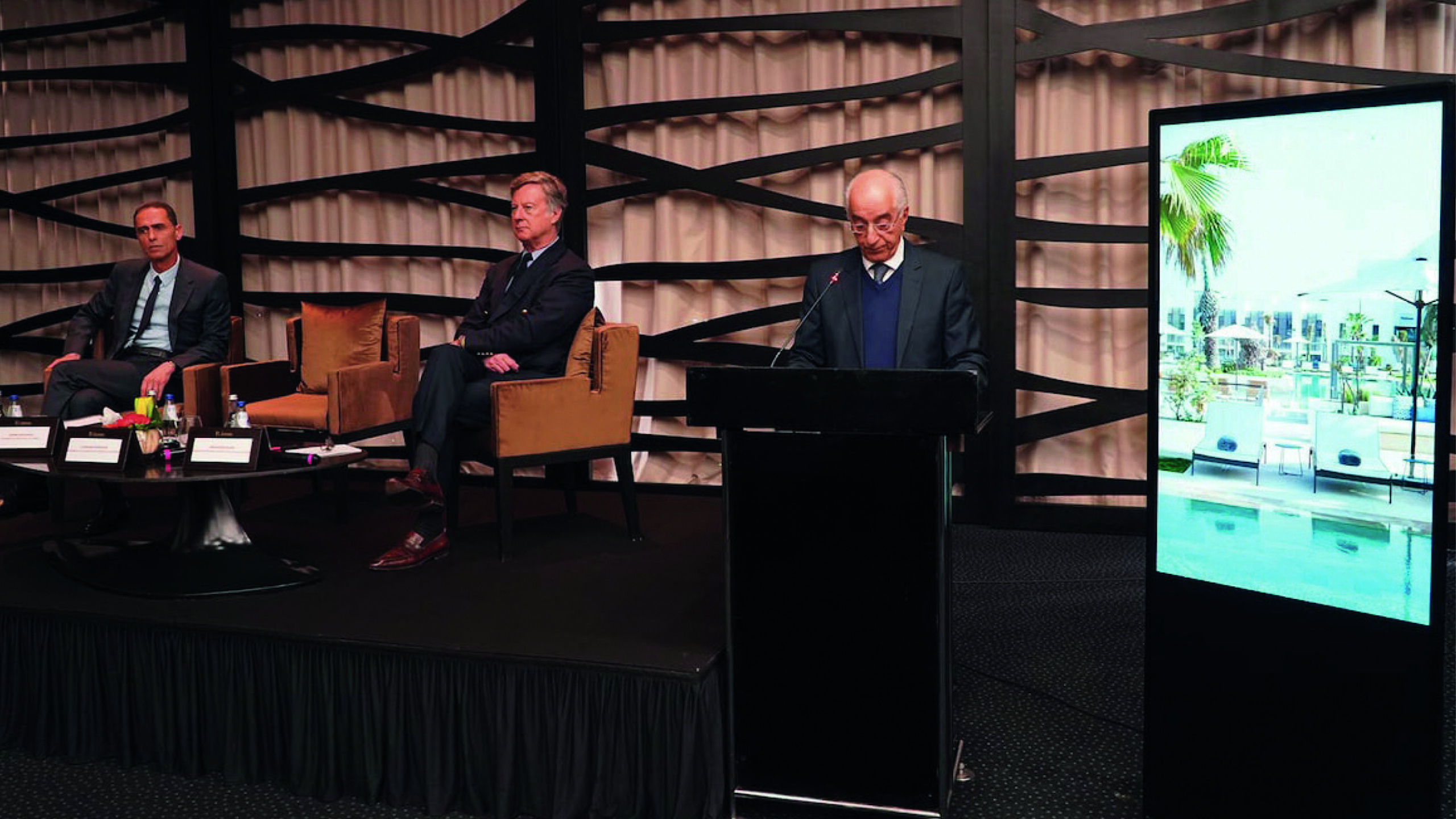
The recent visit to Morocco by Sébastien Bazin, CEO of the Accor Group, and his participation in Risma’s supervisory board meeting, was marked by the announcement of a major shift in the contractual relationship between the two groups.
The Moroccan hotel group has in fact signed a new framework agreement with its long-standing partner of 30 years, initiating a major change in its operating model: the conversion to a franchise model for 21 hotels owned by Risma, which had until now been operated under management contracts by the French group.
Since 1996, Risma, as a hotel owner, had entrusted the management and operation of all its establishments to the Accor Group.
Concretely, under this model—proven over three decades—Accor managed teams, standards, and day-to-day operations, while Risma remained the asset owner and paid Accor management fees.
A model that was certainly secure, but left little operational autonomy to Risma. The shift to a franchise model now allows the Moroccan group to directly manage its hotels, while continuing to benefit from the international recognition of Accor brands, the French group’s distribution systems, and its strong commercial reach.
At stake are greater operational independence and increased agility for Risma, as well as improved margins, since the franchise model is structurally less costly than the management model.
This change in operating model should therefore result in reduced fees paid, with an expected positive impact on EBITDA (earnings before interest, taxes, depreciation, and amortization) as well as on Risma’s net income.
Beyond the financial gains, the transition to franchising reflects the maturity and expertise acquired by Risma—and more broadly by Moroccan operators—who can now do without an international operator to manage their establishments.
“We have gained experience, we have invested in training, we now fully understand the business and, therefore, we can manage hotels perfectly well without Accor,” said Azeddine Guessous, Chairman of Risma’s Supervisory Board, during a press meeting.
But he was quick to add, “we still need to maintain this partnership with Accor, because it is present in more than 100 countries. They have exceptional commercial and marketing strength.
So, our partnership continues on new foundations. It is not a breakup, nor a distancing from one another. On the contrary, it is an even closer relationship between our group and the Accor Group, which has always trusted Morocco.”
Accelerating hotel portfolio expansion
As part of this new partnership, Accor and its Moroccan partner aim to accelerate the development of their activities in the Kingdom, in order to capitalize on a booming tourism market, with the 2030 horizon in sight.
“Morocco will move faster in the coming years, with major international events. To be ready, we need to be more agile and for each party to focus on its core business,” Bazin explained.
Now relieved of hotel management responsibilities, the group can fully focus on expanding its offering in Morocco.
“We will spend more time on initiatives to be taken in this country—on experience, vision, and the various destinations where there are not yet enough hotels for Accor brands to expand more quickly,” Bazin stated.
Risma, which carried out a capital increase of 450 million dirhams at the beginning of 2026, also plans to step up its pace in terms of expansion and modernization of its hotel portfolio.
The more flexible franchise model allows for faster expansion and better adaptation to local specificities and on-the-ground realities.
A Sofitel in Tangier and an academy
With this in mind, Accor and Risma have announced the launch of several major projects. Among them is the future Sofitel in Tangier, a new flagship establishment located on the new corniche, which will enrich the luxury hotel offering of the Strait city.
According to initial information released, the hotel is expected to have 175 rooms, with an opening planned for the first quarter of 2029.
This project is part of a broader dynamic aimed at strengthening high-end offerings in Morocco, particularly in high-potential destinations such as Tangier, which is expected to play a key role in upgrading the national tourism sector.
An ambitious program to renovate and reposition existing hotels will also be implemented. These investments aim to modernize the hotel stock, optimize the portfolio, refine segmentation, and enhance competitiveness.
Finally, a training academy for tourism professions will be created, with the mission of promoting local talent and training future generations of tourism professionals.
Co-financed by Accor and Risma, this academy represents, according to its initiators, “a strong commitment to human capital development,” a key driver and lever for the sector’s growth.
The objective is to train more than 1,000 employees over three years, covering all levels, from operational staff to management roles.
“To achieve the Kingdom’s 2030 ambitions, we need people—and trained people,” emphasized Amine Echcherki, Chairman of the Management Board of Risma.
World Cup 2030, a catalyst
The update of the partnership between Risma and Accor and the launch of several joint projects come at a particular moment for Moroccan tourism.
As co-host of the 2030 FIFA World Cup alongside Spain and Portugal, Morocco faces the imperative of expanding hotel capacity and structuring its offering across the entire territory.
Accor, as the country’s leading hotel group, with 43 establishments in 15 cities and 6,600 rooms, is positioning itself to capture a significant share of the expected additional demand.
The franchise model, which is less time-consuming to deploy than negotiating management contracts establishment by establishment, fits precisely into this logic of accelerating hotel projects.
For its part, Risma aims to increase its portfolio to 28 hotels by 2030 (compared to 23 currently), exceeding 5,000 rooms.
According to Sébastien Bazin, the 2030 World Cup “represents a major opportunity for visibility” for Morocco as a destination, with billions of viewers set to discover the country.
However, he insists on the importance of looking beyond this milestone. Based on his experience, the years following such events are often decisive in firmly anchoring a destination on the global tourism map. “We must turn visibility into lasting appeal,” he said.