Kingdom
Red meat: How imports have improved supply
Faced with the gradual collapse of the national livestock herd, exacerbated by drought and Covid-19, Morocco turned to importing cattle for slaughter. This emergency strategy, centred on the temporary suspension of import duties and VAT, has helped support supply and curb the surge in prices. An explanation.

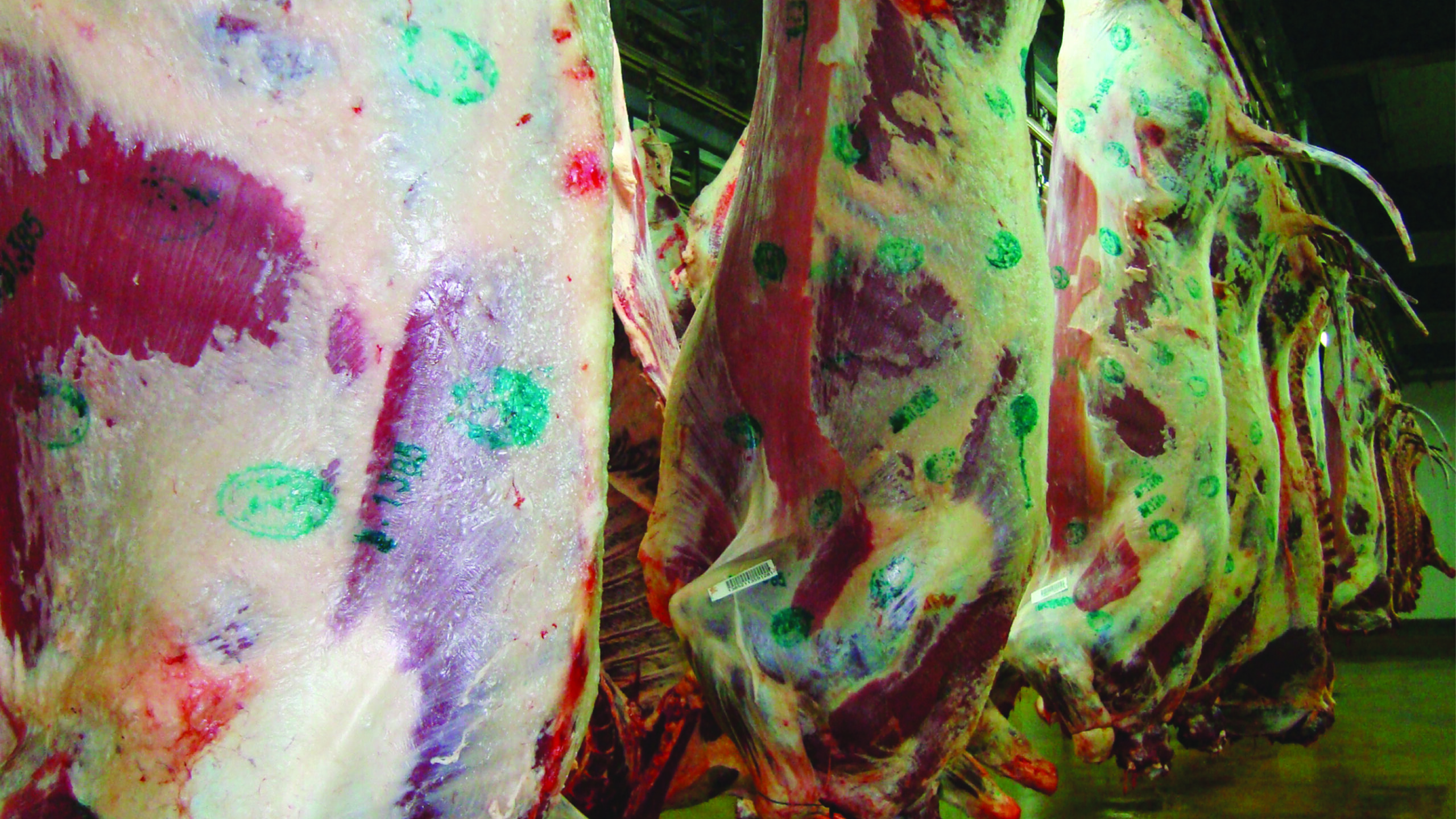
For more than a decade, Morocco’s red meat sector followed an upward trajectory. Driven by the Green Morocco Plan, national production rose from 375,000 tonnes in 2008 to 606,000 tonnes in 2019, representing an increase of more than 60%.
This growth was the result of improved livestock performance, supported by the modernisation of farming systems.
This period of expansion was also accompanied by a significant rise in controlled cattle slaughter, thanks to strengthened sanitary oversight. Volumes increased from 92,000 to 181,000 tonnes between 2008 and 2018, peaking at 185,000 tonnes in 2016.
“This evolution reflects efforts to develop the red meat sector, improve supply, and gradually modernise production and distribution channels,” explains an expert at the Ministry of Agriculture.
In short, all indicators were positive. However, this momentum was disrupted by the effects of the Covid-19 pandemic, followed by several years of severe drought, which deeply destabilised the sector.
The mass slaughter of breeding females, carried out to cope with breeders’ economic difficulties, accelerated the contraction of the national cattle herd. As a result, local production entered a deficit zone, paving the way for an unprecedented decision: the large-scale importation of cattle for slaughter.
A strategy that stabilised supply
In 2023, the Kingdom authorised, for the first time, the importation of 200,000 cattle to supply the domestic red meat market. The objective was clear: to avoid a price surge and prevent shortages.
Between 2023 and 2026, more than one million head of cattle were opened to import through various regulatory measures.
In total, over 591,000 cattle were actually imported by dozens of operators, mainly from Spain, France, Ireland, Portugal, Brazil, and Uruguay. The increase was rapid, rising from 101,690 imported head in 2023 to 257,000 two years later. This trend continued during the first five months of 2026, with more than 94,000 head imported.
The operation, open to all Moroccan importers, naturally attracted operators with strong financial capacity and logistical expertise who were able to position themselves. Statistical data show that only 58% of the authorised quota was actually imported.
According to the Ministry of Agriculture, this is due to gradually rising prices in Europe and the closure of that market following health crises in 2025 and 2026, as well as the significant investments required for receiving livestock—such as quarantine infrastructure, port logistics, and maritime transport—combined with the distance of Latin American markets, particularly Brazil.
“Over these four years, 153 companies participated in this operation, which is complex and requires experience and know-how.
Most of these companies are sector operators who were already importing breeding cattle or animals for fattening under the agreement with the EU,” the Ministry of Agriculture states. Many companies also had to adapt their business scope to respond to these new market conditions.
This has been presented as suspicious by MP Abdellah Bouanou and certain media outlets, even though the operation was marked by transparency: notices to importers were systematically published to ensure open access to all potential operators. The procedure was even progressively refined to remove any conditions related to importers.
“Only sanitary requirements have been maintained since 2025,” the Ministry emphasises.
Despite the unfounded criticism it has faced, this market opening has acted as a buffer against the decline in the national herd and rising price pressures.
Evidence shows that imported cattle accounted for 12% of slaughtered livestock in 2023, rising to 16% in 2024, and then to 31% in 2025. Data also indicate that beef production in controlled slaughterhouses increased from 178,000 tonnes in 2023 to 202,000 tonnes in 2025, a 14% rise, despite a reduction in the total number of animals slaughtered during the same period.
This development reflects a gradual return of production volumes to pre-crisis levels.
The “imaginary” 13 billion in exemptions
Contrary to what some critics suggest, no subsidies are granted to importers of cattle intended for slaughter. This category benefits instead from a temporary suspension of import duties and VAT, which previously stood at 200% and 20% respectively.
Historically, these customs barriers were introduced to protect the national sector—which involves 1.2 million producers—from foreign competition.
In reality, the national treasury has never collected revenue from these taxes since Morocco’s independence, as they would have made the final price unaffordable for Moroccan consumers.
For example, a cow purchased in Europe at 52.5 dirhams per kilogram live weight would have exceeded 115 dirhams/kg after taxation, translating to 254 dirhams/kg of red meat at retail prices.
In other words, none of the 590,000 imported cattle would ever have interested Moroccan operators under such conditions. The “fiscal exemptions” estimated by Bouanou and others at 13 billion dirhams are therefore purely hypothetical. At most, this amount can be seen as a transfer benefiting consumers, aimed at supporting their purchasing power.