Kingdom
Real Estate: Beyond the Supply-and-Demand Duality
According to several real-estate professionals, demand is showing annual growth of 5%, while supply is struggling to keep up. Beyond the mismatch between supply and demand, the sector is subject to a combination of contrasting factors. Insights.

Several macroeconomic determinants are contributing to the acceleration of economic activity in 2026. In fact, the High Commission for Planning (HCP) is forecasting 5% growth in 2026, driven, among other things, by a good agricultural season (boosted by abundant rainfall) and by domestic demand.
This positive economic momentum, taking shape for the current year, provides a legitimate reason to look at the real-estate market, regarded as a leading indicator and a key barometer of the national economy.
Asked about the major underlying trends in the real-estate market at the start of 2026, Amine Nokta, Vice President of the National Federation of Real Estate Developers in Morocco (FNPI), reports annual growth of around 5% in demand, believing that the available supply is trying to keep pace with the evolution of that same demand.
From this angle, the view of a second professional, who prefers to remain anonymous, differs to some extent. “Demand is there, but the prices of properties available on the market are very high and sometimes far exceed buyers’ purchasing power,” he says.
Moreover, unlike the FNPI Vice President, our expert speaking anonymously reports a decline in production, which, in his view, is below demand for real-estate assets. “In large urban areas, there is a clear discrepancy between the capacity to produce apartments and the strong demand,” our expert asserts.
However, among the reasons he gives to justify this drop in production, our seasoned interlocutor points to the end of the 250,000 DH social-housing program, which he says accounted for 70% to 80% of demand.
High prices are spreading to certain areas
Regarding apartment prices, Nokta reports high costs in certain areas. He links this situation to the surge in construction-material prices, high urban concentration, and a lack of available land.
In this respect, one of the most telling examples is Greater Casablanca which, paradoxical as it may seem, serves as the showcase for a cluster of successful—indeed, model—urban development projects (CFC, Auda, etc.), to be replicated in large and mid-sized metropolitan areas. Such development projects also have the advantage of helping to free up substantial land reserves and to limit the impact of pressing housing demand on prices.
The FNPI Vice President is categorical: in a city like Casablanca, housing demand is higher than supply. Clearly, this configuration is conducive to rising housing prices.
Beyond the supply-demand duality, another deep trend in the real-estate market over 2025–2026 is the existence of strong competition on the supply side in large urban areas.
“This dynamic stems in part from infrastructure investments, which have boosted the real-estate market,” Nokta explains, in essence.
In line with the FNPI member’s analysis, public investments for organizing AFCON 2025 and the 2030 World Cup have, in a way, played an accelerating and catalytic role in the real-estate sector’s momentum over 2025–2026.
What about Daam Sakane?
Analyzing the real-estate sector while omitting the impact of the public housing-aid program “Daam Sakane” amounts to a partial exercise. For good reason: this housing aid, overseen by the Ministry of Housing, benefited more than 71,000 buyers up to the end of October 2025.
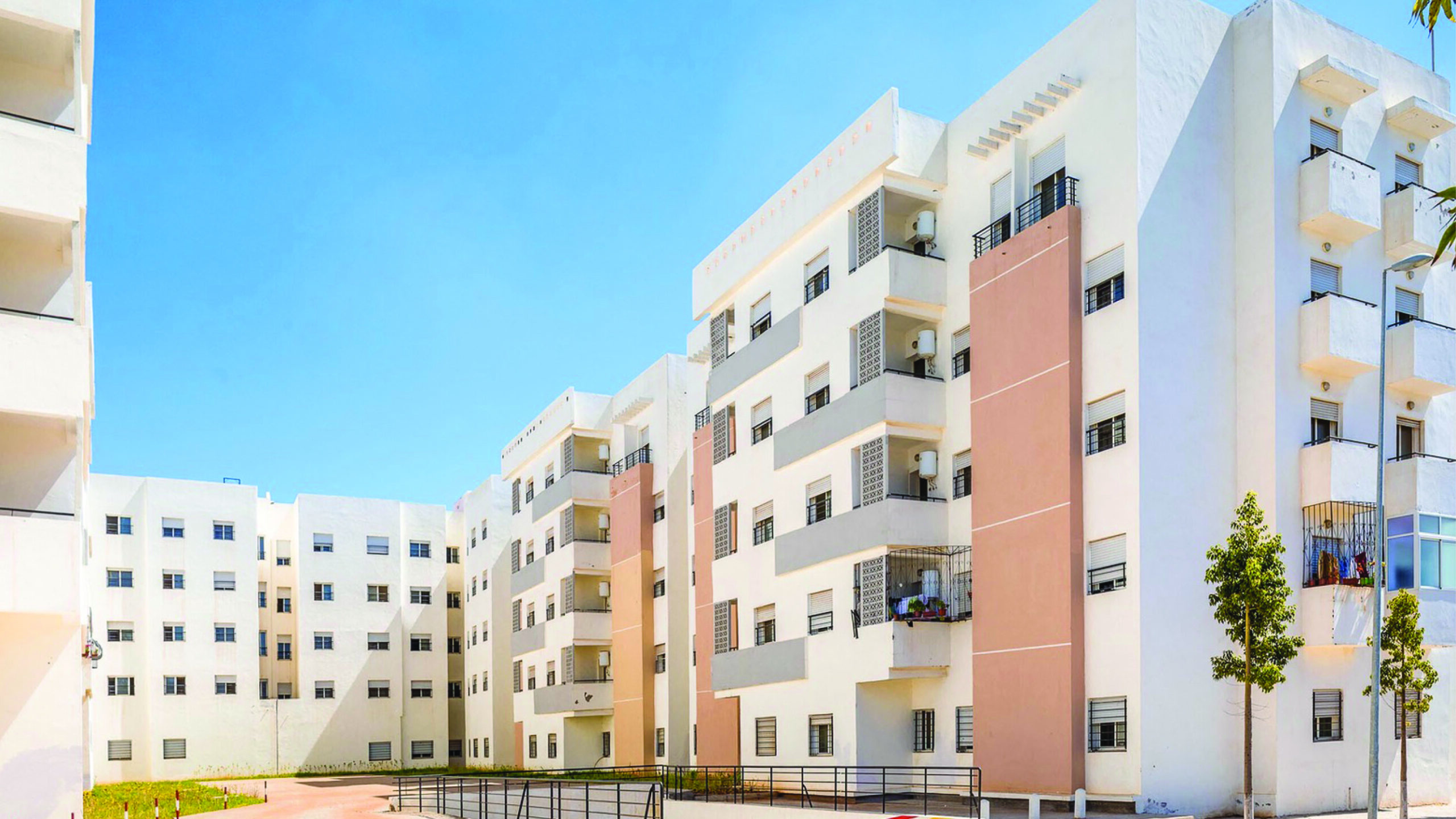
As a reminder, this support scheme covers homes priced at or below 300,000 DH including tax (TTC), and those priced above 300,000 DH including tax and at or below 700,000 DH including tax.
While Nokta is highly enthusiastic about public aid for homes priced above 300,000 DH TTC and at or below 700,000 DH TTC, the real-estate developer is less complimentary about the support scheme covering properties priced at or below 300,000 DH TTC.
“You should know that in a city like Casablanca, it is very difficult—indeed, impossible—for a developer to offer a home for 300,000 DH.
However, some older 250,000 DH projects that switched to the new 300,000 DH housing-aid program are working today,” our source explains, adding that the program’s success for this economic segment is relative and varies from one city to another nationwide.
With a few nuances, the professional speaking anonymously shares Nokta’s analysis of the direct-aid scheme for economic housing priced at or below 300,000 DH.
“The prohibitive cost of land, the increase in construction-material prices, and the rise in labor costs are weighing on the development of supply in the economic segment in large and mid-sized urban areas,” he notes.
And he adds: “In addition to these factors, other obstacles also remain, including taxation and other rising ancillary expenses (increase in the TTNB, higher fees charged by local utilities and the Land Registry), as well as certain urban-planning provisions, such as the requirement of one parking space and two water points per dwelling.”
Still according to our interlocutor, housing supply in the economic segment can be revitalized by making it easier to obtain building permits, simplifying administrative procedures, and genuinely relaxing urban-planning provisions. In this regard, he mentions the need to reconsider, for example, the obligation for developers, in certain zones, to offer a floor area between 70 and 80 m².
“Demand for low-cost housing is strong. Devices in urban planning and architecture should therefore be put in place to enable an expansion of supply in this area,” our source summarizes.
Asked about the momentum of the mid-range apartment market, in connection with public housing aid, our interlocutor—like Nokta—confirms that this segment is doing better than economic housing.
Bright prospects
The FNPI Vice President states bluntly that the prospects ahead are much more favorable to the growth of the mid-range and high-end segment.
As for economic housing, Nokta is expecting stable growth over the coming years. “The increase should differ from the strong growth recorded between 2010 and 2018,” our expert predicts, describing that period as the peak of economic housing in Morocco.
It should be noted that Greater Casablanca (the Kingdom’s economic lung), which—like other sought-after major metropolitan areas (Rabat, Marrakech, Tangier, Agadir)—is characterized by high land prices, concentrates most of the demand for social housing, which is better suited to the purchasing power and needs of employees with modest incomes.
Ultimately, for now, there would appear to be a conjunction of not-very-encouraging factors likely to sharpen real-estate developers’ appetite for the economic-housing segment, especially in the coming years.
Current—and emerging—economic momentum is more favorable to the mid-range and high-end housing market. Another promising niche: professional and industrial real estate.
Industrial growth, embodied by the development of “Made in Morocco” and the proliferation of industrial zones nationwide, should, according to some experts, drive industrial real estate growth over the coming years.
Urban verticality: the panacea?
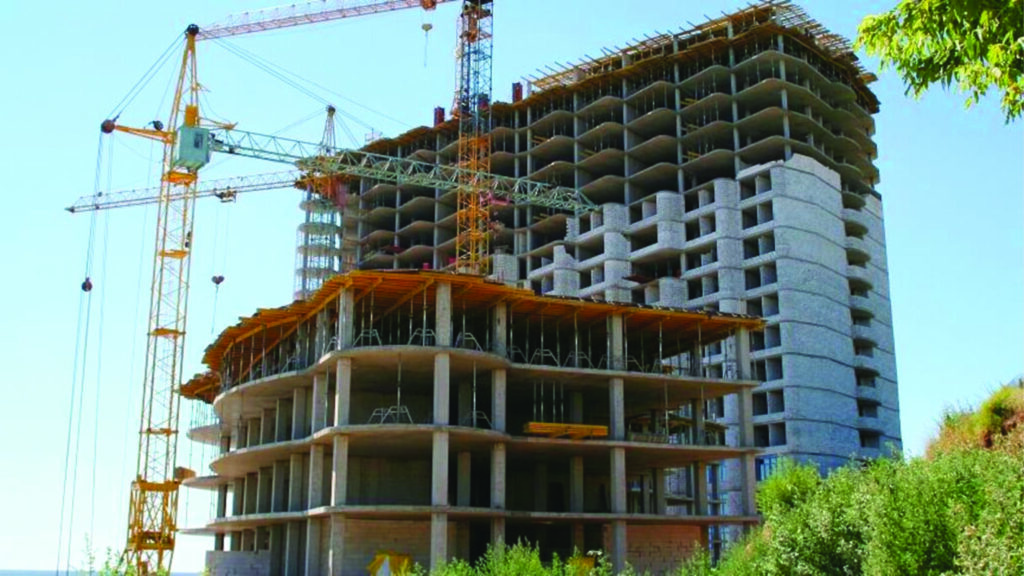
In the view of several professionals, urban verticality (building upward) is an optimization lever and a solution to address the scarcity and prohibitive cost of land in the Kingdom’s most sought-after large urban areas.
It bears repeating: Moroccan cities cannot expand endlessly. Hence the usefulness of urban verticality, viewed as an appropriate solution by certain metropolitan areas.
That said, according to Nokta, the engineering of vertical building pushes up the price per square meter (up to 34,000 DH per square meter in certain areas of Casablanca).
This can obviously be an obstacle, given the purchasing power of the majority of buyers. But this limitation for the developer can be offset by the large number of buildable floors (up to a maximum of 30 stories).
By way of comparison, in Dubai, the purchasing power of a large segment of the population allows developers to frequently build 50-story towers while preserving their profit margins.