Kingdom
Railway Development Program: An Unprecedented Growth Booster
According to Mohamed Rabie Khlie, the impact of ONCF’s ambitious 96-billion-dirham investment program will bring about a true “evolution-revolution” in many aspects—economic, social, industrial, and environmental.

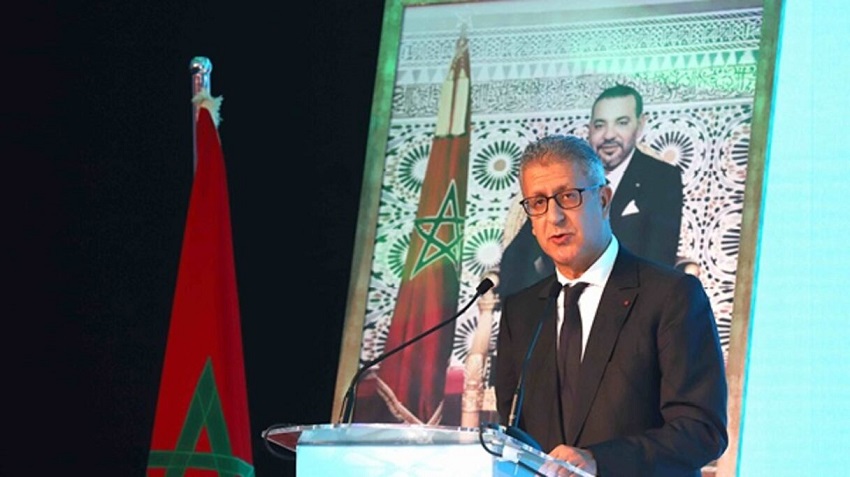
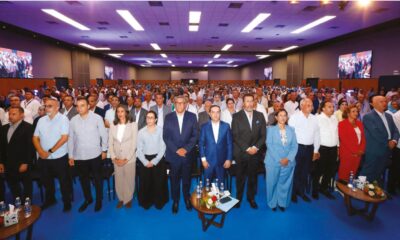
During the 4th edition of the Rail Industry Summit Morocco, the Director General of ONCF devoted a large part of his address to the major advances in the railway industry ecosystem and the Office’s titanic investment program.
“It is important to recall that since the Sovereign’s accession to the throne, Moroccan rail has been able to achieve remarkable progress through the completion of several structuring projects, most notably the flagship high-speed train project Al Boraq,” stated, in essence, the head of ONCF during the international event. An annual gathering which recently brought together over 1,400 participants, 300 companies, and 185 exhibitors (representing 20 countries) in the city of El Jadida.
It is useful to specify that rail transport is now positioned in Morocco as the backbone of sustainable, low-carbon mobility, with a real socioeconomic impact on the community. This is evidenced by the number of passengers transported in 2024 exceeding 55 million customers, compared to 38.5 million in 2019 (including 5.5 million on Al Boraq compared to 3 million in 2019).
Even better, according to projections for the current year, the national railway network of approximately 3,350 km (the second largest in Africa) should, by the end of 2025, set a new record with nearly 56 million passengers, thus marking a significant increase in ridership and demonstrating the vitality of the sector.
An “Evolution-Revolution”
Mohamed Rabie Khlie is unequivocal: the first high-speed line (LGV) of the Moroccan railway network has indeed played the role of a catalyst for the transformation of the entire national railway system. The current railway development program will be an unprecedented growth booster.
“The impact will no longer be a simple matter of improving service quality, but it will bring about a true ‘evolution-revolution’ in many aspects—economic, social, industrial, and environmental,” explains the Director General of the public Office.
To recall, ONCF is embarking on a new development cycle by 2030, with an ambitious investment program of 96 billion dirhams enabling an unprecedented modernization of the Moroccan railway system.
In detail, the national program covers the implementation of the LGV extension project from Kenitra to Marrakech, with an investment of 53 billion dirhams in infrastructure and equipment, and the acquisition of 168 new trains for an amount of 29 billion dirhams, intended for the renewal of ONCF’s existing fleet and to support development projects.
To this should be added the continuation of the performance maintenance program for 14 billion dirhams. And this, with the aim of supporting the LGV extension project, the development of RER-type commuter train infrastructure, and the preservation of the existing assets.
Parallel to the mega-construction site of the LGV extension and the strengthening of the conventional network to accommodate a network of commuter lines (RER) in three major regions (Casablanca, Marrakech, Rabat), it should be noted that ONCF’s order book, which also includes fleet renewal, includes a strong industrial offset component.
Furthermore, Mohammed Smouni, Deputy Director General of ONCF, confirmed to La Vie Éco during the Rail Industry Summit Morocco in El Jadida, that the first “made in Morocco” RER trains are expected to roll off the production lines of the Hyundai Rotem factory in Benguerir before 2030.
This feat on a regional and African scale significantly reinforces the Kingdom’s attractiveness in the railway industry. Moreover, the South Korean leader recently reiterated its decision to make its Moroccan industrial platform a regional hub for export to Africa, the MENA region, and Europe.