Kingdom
Publication: Mohamed Ben Abdelkrim El Khattabi — a biographical work between myth and reality
At the heart of a historiography often trapped by myth or political appropriation, one book makes a powerful impact. Drawing on previously unseen archival material, it dismantles the statue of Mohamed Ben Abdelkrim El Khattabi to recover the man of flesh and blood, with his contradictions and his calculations. Neither an untouchable icon nor a sanctified figure, “the Rifian” regains his human complexity. A richly documented biography that frees the hero from his own myth.

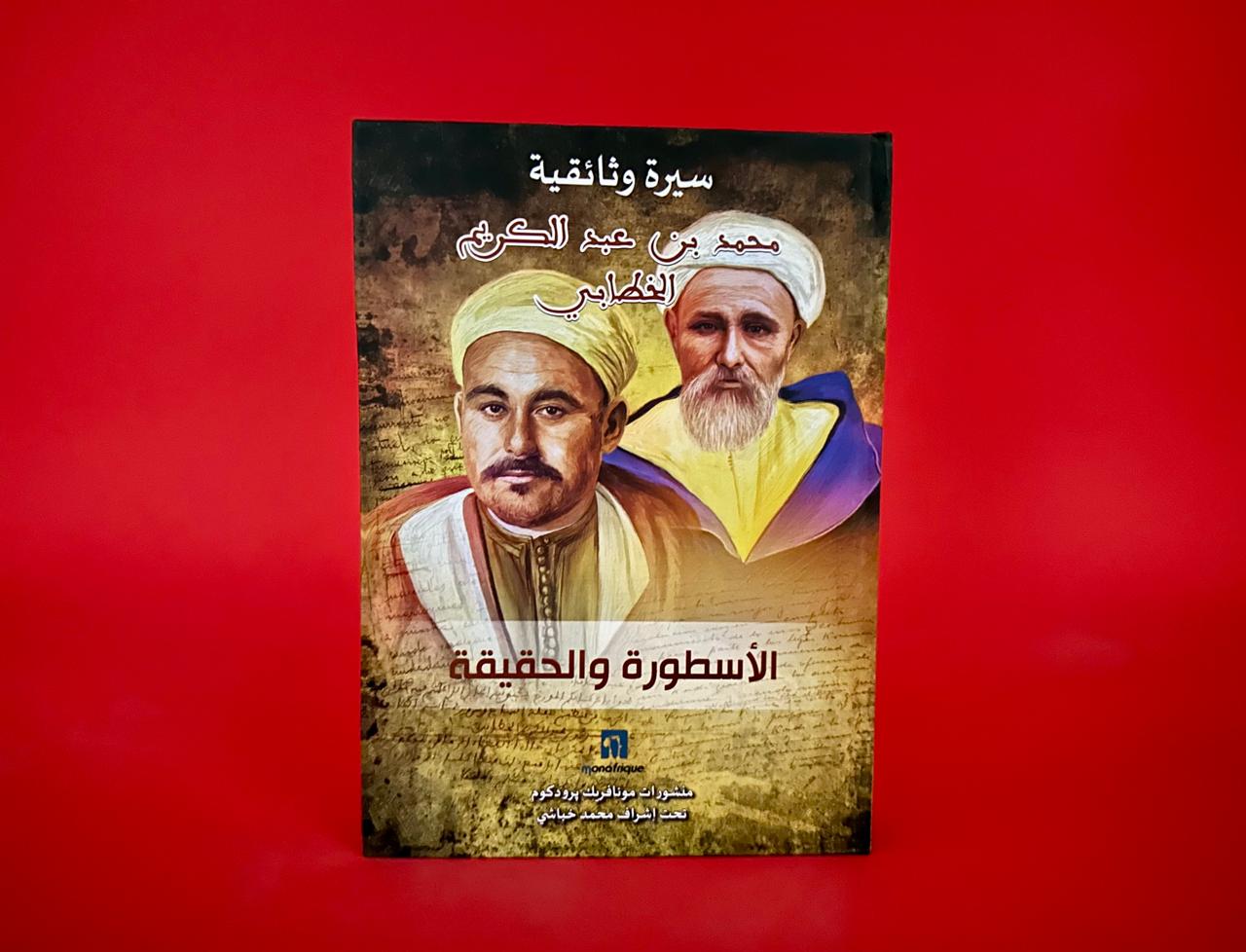
Amid the unceasing flow of works devoted to Mohamed Ben Abdelkrim El Khattabi, known as Moulay Mohand, one book stands out for its rigour and radical approach. Rather than adding another layer of legend to an already mythified figure, it seeks to restore him in his full human complexity, drawing on an impressive body of previously unseen or little-known archival material. This biography, far removed from conventional hagiographies, gives back substance, ambiguity, and historical depth to one of the greatest leaders of anti-colonial resistance in the twentieth century.
Among the unearthed documents, one scene alone encapsulates the ambition of the book. In Cairo, in the 1960s, the former emir of the Rif meets Sultan Mohammed V. Abdelkrim, aged but still upright, reaffirms his allegiance to the Alaouite monarchy and expresses his wish to return to Morocco under the Sovereign’s legitimacy. This encounter, confirmed by archival sources, sharply challenges separatist or instrumentalised readings that have at times sought to appropriate his memory. It is not a mere anecdote: it is a living political act that reinscribes the man within his time and his nation.
It is precisely this desire to “liberate the hero from his myth” that animates this collective work, the result of the rigorous efforts of Moroccan and international historians under the direction of Mohamed Khabbachi. Its principal weapon? Archives. Thousands of pages drawn from Spanish collections, the League of Nations, Egyptian press sources, private correspondence, and diplomatic reports. Letters from the colonial administration, internal notes from the Khattabi family, recent translations of original documents: here, evidence takes precedence over received narratives.
Intellectual honesty
What strikes one first is the scale and diversity of the material. We follow the young Abdelkrim who, like many Rifian notables of his generation, initially integrates into the Spanish administrative apparatus before challenging it. We discover family tensions, including the burning of his father’s house, which remind us that the history of the Rif is not a monolithic block. We observe the Rif Republic not as a romantic utopia, but as a bold political experiment embedded within the broader international chessboard of the interwar period, shaped by competing influences among the Spanish, French, and British, as well as echoes of Kemalist and even German movements.
The archives of the League of Nations, long underexplored, cast a stark light on Rifian diplomacy, its room for manoeuvre and its limitations. They reveal a pragmatic leader, capable of navigating between realism and the ideal of liberation, while remaining deeply rooted in his Moroccan identity.
The stakes of this book go far beyond scholarly erudition. By refusing both hagiographic glorification and sterile polemics, it raises a fundamental question: how can a great national figure be honoured without freezing them into an inhuman posture? By sacralising Abdelkrim, he has at times been stripped of his humanity—of his hesitations, his strategic calculations, and his grounding in the very real Rifian society of the 1920s. By restoring him to his earthly dimension—man of his time, son of an influential family, strategist confronted with relentless power dynamics—his greatness is paradoxically returned to him in full.
This approach signals a new maturity in Moroccan historiography. After the necessary founding narratives of independence, the time of complexity has arrived. The documents do not destroy the hero; they render him more truthful, and therefore more inspiring.
However, the book does not claim to settle every debate. On the contrary, it nourishes them with intellectual honesty and scientific rigour—and this is undoubtedly its greatest strength. It restores a voice to the past in order to better illuminate the present, without instrumentalisation.