Kingdom
Public Service: Between Budgetary Rigor and Social Revaluation
Behind the numbers lies a true balancing act: controlling expenditures without breaking the social contract with state employees. Between rationalizing staffing, accelerating digitalization, and salary revaluation, the government seeks to reconcile budgetary discipline and social ambition.

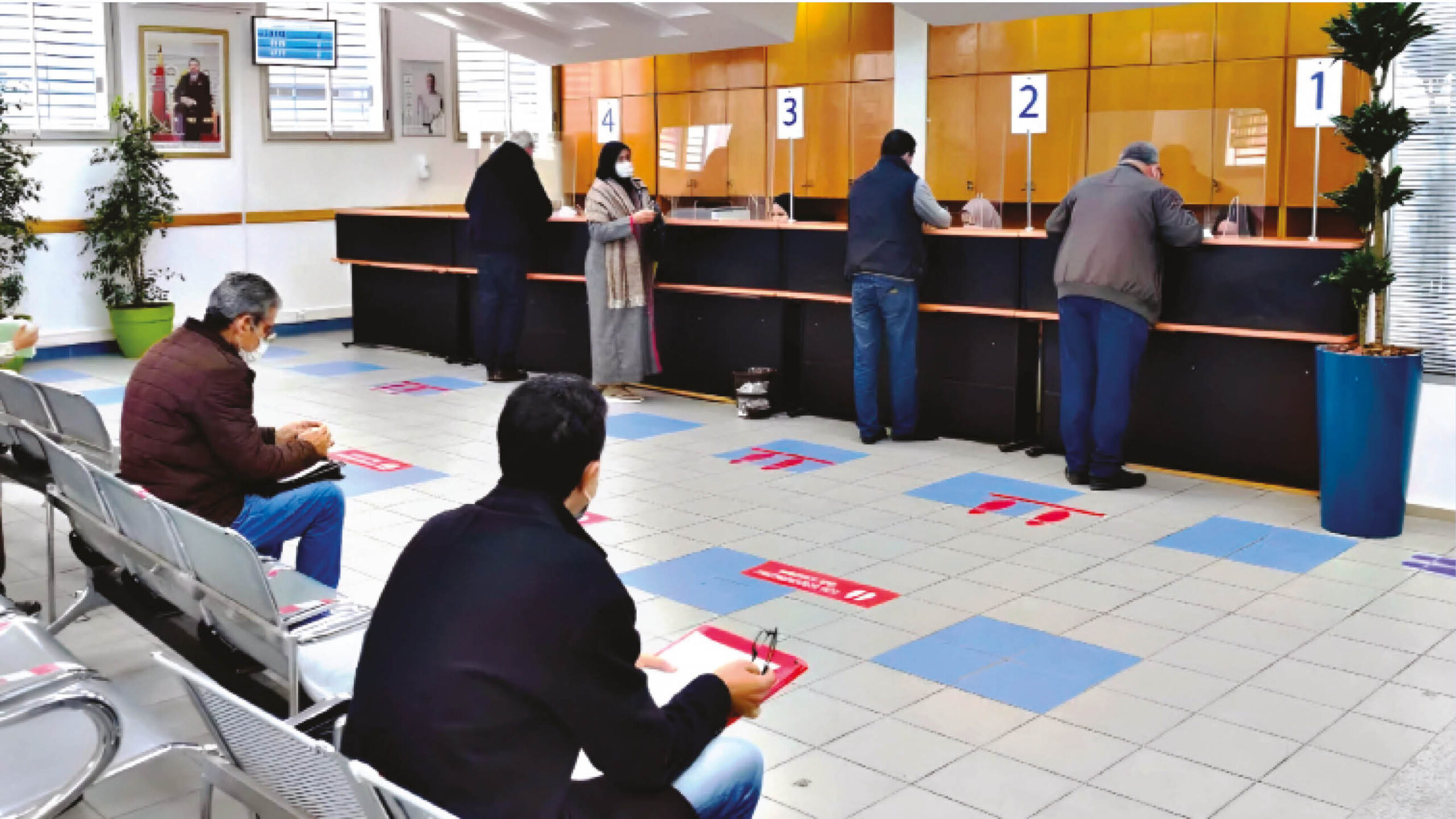
The Finance Bill for 2026 confirms a now clear guideline in Moroccan public policy: controlling the wage bill while responding to social expectations.
Through its human resources report, the government expresses the will for more rational management of its workforce and better allocation of its expenditures, in a context of pressure on public finances and growing social commitments.
With over 576,000 civil servants in 2025, the state remains one of the country’s main employers. Yet this number has remained stable for several years, reflecting a rebalancing of recruitment toward strategic sectors.
Priority is given to security, health, and education, which account for nearly 70% of the positions created under the 2025 budget.
Thus, 28,906 new positions were opened, including 7,744 for the Ministry of the Interior, 6,500 for Health, and 5,792 for National Defense. These additions offset massive retirements, particularly in National Education, which account for over 60% of position reductions over the past decade.
Between 2015 and 2025, 275,000 budgeted positions were created in the Central Administration, in addition to 175,000 recruitments in the Regional Academies of Education and Training.
Social needs, especially for teachers, nurses, and security personnel, continue to largely dictate the directions of the public service.
A Wage Bill Under Pressure
While the number of civil servants is stabilizing, the wage bill continues to grow. In 2025, it stands at 180.3 billion dirhams, compared to 116.8 billion dirhams ten years earlier—an increase of 54%.
The causes are multiple: revaluation of the minimum wage, increases in pay scales, internal promotions, tax reforms, and successive social agreements.
The measures from the social dialogue of April 2024 had a significant impact: a net increase of 1,000 dirhams per month for public employees and a revision of income tax to lighten the tax burden on workers and retirees.
The government also raised the tax-exempt bracket for income tax from 30,000 to 40,000 dirhams, a measure favorable to lower incomes.
Despite these social efforts, the question of sustainability remains. In 2025, personnel expenditures represent 10.6% of GDP and over 32% of the general budget—a still high burden compared to international standards.
They absorb nearly 60% of the operating budget and half of ordinary revenues. Faced with this budgetary reality, the government seeks to modernize the public service management model.
The strategy relies on three levers: digitalization, rationalization of staffing, and skills enhancement.
The digital transformation of the administration, embodied by the Digital Morocco 2030 program, aims to improve the quality of public service while reducing costs.
The Idarati platform now centralizes over 2,700 administrative procedures in a logic of simplification and transparency. At the same time, continuous training of staff is expected to play a key role in upskilling the public sector.
This modernization is accompanied by a gradual feminization of senior management. Out of 1,422 appointments to senior positions between 2015 and 2025, nearly 16% involve women—a steadily rising rate. The positions of director and inspector general show the most notable progress.
An Evolving Pay Policy
The average net monthly salary in the public service now stands at 10,600 dirhams, compared to 7,381 dirhams in 2015.
An evolution that reflects the upskilling of staff: managers (scale 10 and above) represent 38% of positions created over ten years, while execution staff, still the majority, now benefit from a minimum wage of 4,500 dirhams.
This revaluation aligns with a logic of fairness and motivation but raises the question of productivity. The government thus intends to more closely link compensation and performance, particularly through more rigorous human resource management indicators.
The 2026 Finance Bill implements a basic principle: do more with the same. The overall number of agents is stabilizing, but staff are being redeployed toward high-impact services. Controlling personnel expenditures becomes imperative to preserve public investment capacity, essential for growth.
In the long term, the state aims for a more agile, citizen-focused public service capable of responding quickly to territorial needs.
The generalization of social coverage, tax reform, and the digitalization of the administration are part of this same vision of an effective, socially responsible, and fiscally sustainable state.
The human resources report of the 2026 Finance Bill outlines a path of budgetary and administrative transition.
Between necessary financial discipline and social commitment, Morocco is seeking to build a modern, balanced, and high-performing administration model.
The success of this transformation will now depend on a major challenge: reconciling expenditure control and improvement of public service without breaking the social pact that binds the state to its citizens.