Business
Public Finances: The Situation is Under Control
The Government maintains macroeconomic stability while securing sufficient fiscal space to fund major reforms, social welfare, and public investment.

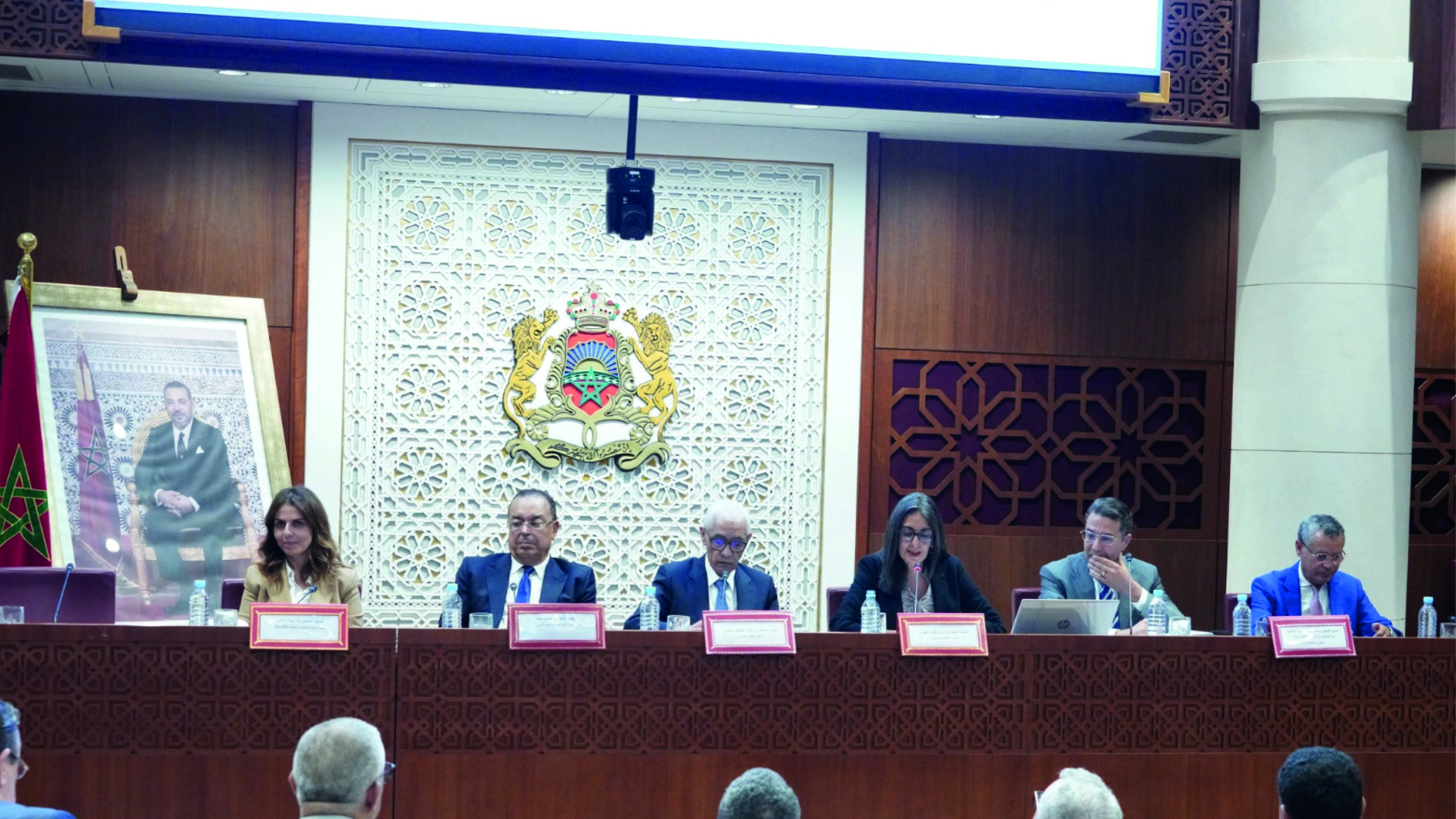
How can the growing financial demands of consolidating the social welfare state be reconciled with budgetary stability, without overburdening the national budget? This is the challenge the government is tackling as it prepares and finalizes the 2026 Finance Bill.
On the one hand, financial resources must be secured to fund key priorities, starting with the healthcare reform project—particularly the AMO-Tadamon program—improving direct aid programs, and expanding access to pioneering primary and secondary education.
All this must be achieved while reducing the budget deficit to its lowest possible level (3.5%), keeping inflation and other macroeconomic indicators at an acceptable—or even comfortable—level. Given the positive economic trajectory since the start of the year, part of an upward trend initiated during the government’s first year in office, this goal is already seen as attainable.
This optimism was echoed in the highly positive remarks of Economy and Finance Minister Nadia Fettah during her presentation of the overarching framework for drafting the 2026 Finance Bill to a joint session of parliamentary committees.
True to its commitments upon taking office, the government will continue implementing the pillars of the social welfare state in 2026 through flagship measures. The minister emphasized that completing the effective universalization of social protection remains a top priority.
A key focus is healthcare reform, including the rollout of regional health clusters, boosting human resources, and digitizing services. This major initiative will be complemented by partnerships with the private sector to expand healthcare access.
Another priority is improving public education by expanding preschool access and supporting pioneering schools. Employment also remains critical: the government recently launched a national plan, but closing the gap is challenging amid profound structural shifts in the labor market.
The agricultural sector exemplifies this challenge. Prolonged drought has led to the loss of approximately 905,000 rural agricultural jobs since 2019, mostly unpaid roles.
Modernization efforts—such as shifting production methods, increased mechanization, and digitization—have further reduced the sector’s labor demands. This necessitates alternative solutions to absorb the influx of young jobseekers entering the market annually. Stimulating investment is one such solution.
To this end, the government plans to sustain high levels of public investment, leveraging the Mohammed VI Investment Fund and accelerating projects in productive sectors like industry, agriculture, tourism, and housing.
Investment and Sovereignty
The government also aims to bolster private investment through the rollout of the new Investment Charter, streamlining administrative procedures, implementing regional one-stop shops, and enhancing support for SMEs and startups. Notably, these measures have already begun yielding results.
During her address to lawmakers, the minister highlighted a “gradual improvement” in the labor market, even noting a “reversal of the downward trend in employment levels starting in Q3 2024, with 82,000 jobs created that year, and particularly in Q1 2025, which saw 282,000 jobs created—the highest quarterly rate since 2007.”
This progress has led to a decline in the unemployment rate. After a slight increase of 0.3 percentage points in 2024, the rate dropped by 0.4 points to 13.3% in Q1 2025 (16.6% in urban areas, down 1 point, and 7.3% in rural areas, up 0.5 points).
Another key focus of the 2026 budget is advancing national sovereignty in economic, energy, and strategic domains. Budgetary programming will reinforce Morocco’s sovereignty across several critical areas: Food Sovereignty: Strengthening agricultural irrigation, expanding food storage capacity, and promoting local value-added production; Energy Sovereignty: Developing the national energy mix, renewable energy sources, green hydrogen, and accelerating the gas sector plan; Water Sovereignty: Implementing water basin interconnections, desalination plants, water conservation initiatives, and wastewater treatment projects.
The government also commits to improving governance and state efficiency through administrative reforms, including digitization, process simplification, and decentralization.
All these efforts will adhere to strict fiscal discipline. The government has set a target to gradually reduce the budget deficit to 3% of GDP starting in 2026 and stabilize it at that level. For context, the deficit stood at 3.8% in 2024 and is projected to reach 3.5% in 2025.
As the minister emphasized, “The drafting of the 2026 Finance Bill and the three-year budgetary program (2026–2028) takes place against a backdrop of persistent global uncertainty, driven by escalating geopolitical tensions, slower worldwide economic growth, and the impacts of climate change on the national economy.”
Despite these challenges, she underscored that “public finances have demonstrated remarkable resilience and sustainability, thanks to proactive government measures and strategic choices aimed at preserving macroeconomic stability while ensuring continued funding for social programs, investment support, and job creation.”
In line with royal directives, the minister concluded, “The government remains committed to advancing strategic priorities, accelerating major reforms, and adapting public policies to evolving national and international dynamics.”