Influences
Press Council: End to a 20-Year Status Quo
The passage of a new National Press Council bill is not merely a legislative formality. It marks a decisive break from a status quo that endured for over two decades—and the end of systemic chaos.

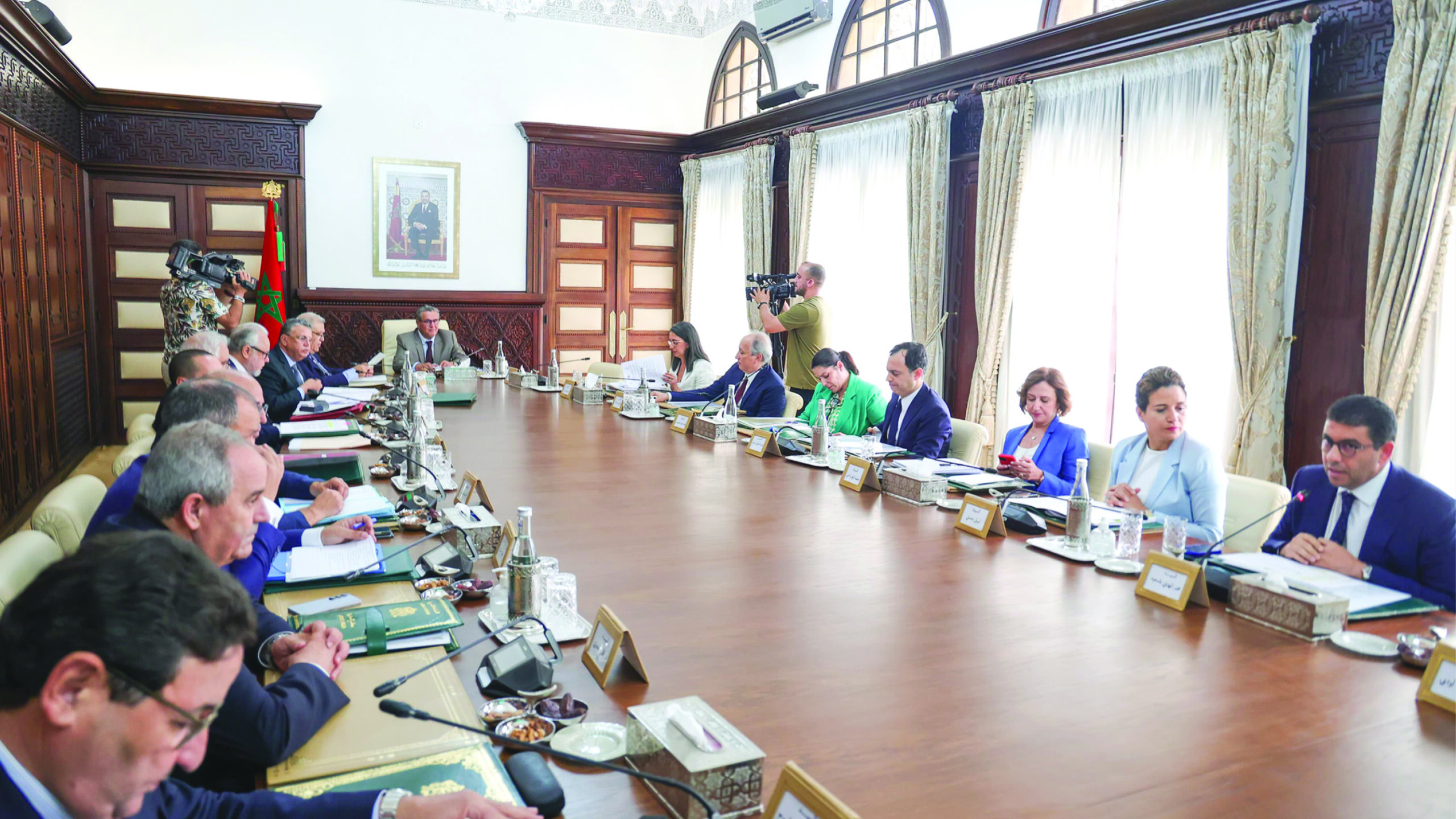
The trajectory of Bill 26.25 reflects the government’s clear resolve to expedite reforms in the press sector. Adopted by the Government Council on July 3, the bill to reorganize the National Press Council was presented to the First Chamber’s committee by Minister Mohamed Mehdi Bensaid on July 9.
Over four meetings and 15 hours and 45 minutes, committee members meticulously reviewed and amended all 98 articles of the bill. Legislators submitted approximately 250 amendments, with the most relevant retained—45 amendments in total.
The bill was voted on in a plenary session just before the closing of the parliamentary term on Tuesday, July 22, and will now move to the House of Councillors. It is set to be definitively adopted when parliament reconvenes. This legislation represents a major reform. Notably, it aligns directly with the 1958 Public Liberties Decree, the 1993 National Press Conference, and the 2005 performance contract. This latest reform is transformative, driven by the sector’s accelerated evolution, particularly since the COVID-19 pandemic.
As in the past, the legislative process initiated by the Executive was accompanied by open public debate. However, it faced attempts at obstruction and interference, often from parties wholly unrelated to the press industry or its institutions.
Yet, as noted within the profession itself, the Ministry of Communication—and the government at large—“did not impose a top-down text but worked with representative professional institutions and organizations (not marginal voices or opportunistic platforms), adopting a democratic and participatory approach that accounted for past debates and addressed their structural shortcomings.”
Unlike previous experiences, the minister neither compromised nor negotiated concessions. “He chose to listen to the profession’s internal stakeholders, no easy task amid a complex political and media landscape.” This mirrors the government’s approach to all reforms—and there have been many—undertaken since its inauguration nearly four years ago.
Participatory Approach
That said, during his address to Parliament on the bill, the Minister championed press freedom while emphasizing “the need for responsible regulation in the face of chaos and exploitation.” This mindset also shaped the broader public debate among directly affected stakeholders.
The National Press Union (SNPM), while not rejecting the bill outright, disputes certain aspects—particularly the introduction of “open individual voting,” which sidelines union representation. Predictably, the sector’s other union outright opposes it. On the publishers’ side, the ANME (National Association of Media Employers) applauds the sector’s reorganization initiative, asserting that the collaborative approach taken during the bill’s drafting was “flawless.”
The ANME did, however, submit proposals absent from the final text. Its primary critique—regarding the “temporary suspension of press outlets”—was addressed via an amendment tabled by majority parliamentarians.
The same applies to the Provisional Commission for Sector Management, which, while endorsing the bill, stressed its contributions to its development. These proposals emerged from benchmarking international best practices in nations with advanced press and media ecosystems.
Both the ANME and the Commission—alongside journalists themselves—agree on the imperative of ensuring press outlets’ financial viability. After a thorough assessment of Morocco’s media landscape, the Commission concluded that “any sector reform must prioritize the economic health of outlets, their human resources, and their commercial environment.”
It highlighted the “structural fragility” of most media enterprises, “particularly in digital press, which suffers from a lack of financial safeguards, investment programs, and development prospects.” A situation widely acknowledged as exacerbated—if not directly caused—by the previous PJD-led government’s management of the sector.
This governance, as some professionals describe it, led to “a veritable tragedy”: an “indefensible media landscape, fictitious press companies reduced to mere facades, a proliferation of unprofessional platforms at the expense of serious journalism, and public funds squandered on projects with zero accountability.”
It’s no coincidence the reform centers on reinventing media enterprises in the broadest sense. The Provisional Commission endorsed this by proposing legal reforms requiring investors to meet financial, logistical, and organizational standards ensuring content aligned with journalistic integrity—a measure incorporated into the bill passed by the First Chamber.
The ANME reinforced this, arguing that “only robust enterprises can guarantee journalists’ independence” and calling for support to professional structures while “combating fraud and impersonation.” These demands resonate in the bill’s provisions for protecting the profession, particularly through stricter criteria for issuing professional press cards (covering legal, academic, and administrative qualifications).
“A strong, independent journalist can only thrive within an equally strong, professional, and independent media company,” the ANME stressed, underscoring the symbiosis between journalists and their institutions.
While the association acknowledges that the current form of the bill “constitutes an effective tool to end the disorder and anarchy plaguing the profession—which has at times become a refuge for unqualified individuals, owing to the absence of oversight and accountability mechanisms”
It now falls to the National Press Council (NPC), in its redefined role as regulator, to advance the process of reorganizing, streamlining, and modernizing the profession. This must be done with the understanding that the NPC’s purpose is not to silence debates on freedoms or exclude stakeholders, but to guide the sector’s evolution in step with international developments.
Like other self-regulatory bodies, the NPC’s true work—self-regulation, modernization, and the transformation of Morocco’s media landscape—has only just begun under its new structure.