Influences
Social Season Kickoff: Strikes and Calls for Dialogue
Higher education and local government unions take the lead in initial actions. A wave of strike notices emerges as the executive branch moves swiftly to launch negotiations. A pivotal year for labor relations begins.

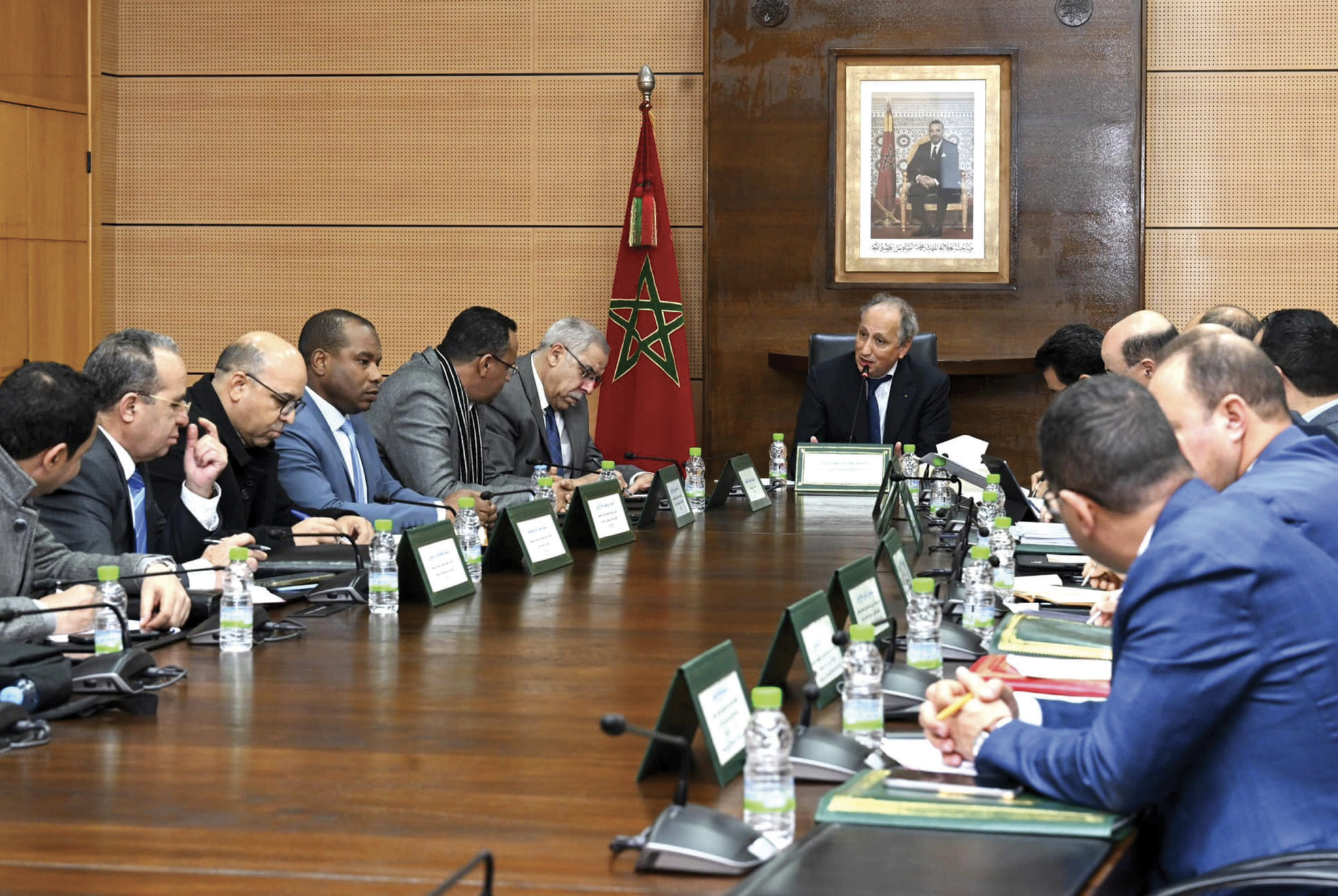
The social year opens with unions’ ritual displays of protest. Three sectors are particularly active. In higher education, the UMT (public servants) has joined forces with the National Union of Higher Education (SNESup), largely dominated by the USFP, to form a united front against the government’s ongoing sector reforms. The UMT considers the government’s adoption of a draft bill for this reform – now before Parliament – as a ‘flagrant violation of social dialogue and participatory democracy.’ In response, the union has announced a 48-hour strike on September 10th and 11th, while leaving the door open to other ‘forms of mobilization.’ The CDT’s higher education public servants branch is also participating, with announced work stoppages spanning September 2nd to October 2nd, including four strike actions and sit-ins. UGTM, FDT, and UNTM (the PJD’s union wing) have likewise joined this protest.
Still the UMT, but this time through its territorial government workers’ union, has decided to conduct two nationwide 48-hour strikes on September 16th-17th and 23rd-24th in the sector, along with new work stoppages during October.
At first glance, yes. All social protest is inherently concerning. Particularly in higher education, where the government is counting on reforms to combat unemployment (of graduates, specifically) and to provide the human resources needed to sustain an economy in full takeoff – primarily in cutting-edge sectors like electric mobility, renewables, and the digital economy, among other critical areas.
The reform, incidentally, aims to increase corporate involvement both in training processes (through internship programs) and decision-making processes (via economic stakeholders’ presence on university boards). Undermining this reform’s implementation by obstructing the enactment of Bill 59-24 concerning higher education and scientific research could disrupt public policies in academic training and employment.
Similarly, the implementation of next-generation development programs – whose design was announced by the government and led by the Interior Ministry – partly depends on territorial government personnel. A toxic social climate in municipalities, regions, and other prefectural/provincial councils will likely hinder the deployment of these programs to combat social/territorial disparities and unemployment through stimulating income-generating activities.
The Executive Branch Stays the Course
Therefore yes, the strike movements announced by unions in both sectors give pause for thought, though not yet cause for alarm. Moreover, the Executive Branch didn’t wait for the situation to deteriorate further before reacting. The government swiftly responded with a call for dialogue. In higher education, Minister Azzedine El Midaoui notably held an initial meeting in this vein on Monday, September 8th, with concerned unions. The stated aim being, sources emphasize, ‘to ease tensions and restart constructive dialogue.’
This approach has borne fruit over the past four years – even in the most challenging sectors where the government inherited decades-old unresolved issues and social time bombs. In any case, the bill in question hasn’t even reached Parliament’s review phase. Nevertheless, among this year’s protests, National Education Department administrators have timed their actions to coincide with the school year’s start to reaffirm their demands. A national coordination body claiming sector representation has announced a September 10th sit-in outside the ministry, followed by another on the 23rd of the month. They too promise escalation.
In either case, these protest movements’ impact remains limited – certainly less concerning than those in higher education and local governments. These are indeed corporatist demands of purely material nature (as with pharmacists), which the government can manage through the two relevant ministries. This is precisely the purpose of sectoral dialogue that each ministry – per the Head of Government’s directive – is encouraged to maintain with social stakeholders.
This indicates, as demonstrated in recent years, that announced protest actions often remain within the bounds of pressure tactics against the government. Especially since the Executive Branch – naturally inclined toward dialogue to the point of institutionalizing it – must keep sight of the greater priority: consolidating the social state. On this front, a major undertaking awaits this season: pension reform. A technical committee meeting with union federations is scheduled for September 18th.
As for other matters, the Executive Branch stays the course: Unemployment reduction programs continue; Slum clearance plans progress steadily; New University Hospitals, general hospitals, and health centers slated for imminent opening and social aid system restructuring planned for better targeting and efficiency. The ultimate goal: transitioning from an assistance framework to an empowerment lever.
Animated Legislative Restart at the Second Chamber
The Council of Advisers’ resumption likewise unfolds amid social tensions and dissent. The draft bill concerning the National Press Council continues to fuel debate. After being adopted by the first chamber just before the session’s closure, the text has now been presented to committee members by the minister. In certain media outlets and on social networks, controversy resurfaces – and intensifies. All indications suggest this text will inevitably be definitively adopted and enacted immediately after the new (and final) legislative year commences.
That said, advisers are also expected to deliberate from the session’s outset on other purely social legislation. These texts align directly with the government’s stated aim to consolidate the social state’s foundations. Notably, these include bills related to: Social Works Foundations for judges and Justice Ministry officials; Social Works Foundations for the Superior Council of Judicial Power and Social Works Foundation for personnel of the General Delegation for Prison Administration.