Kingdom
Portugal joins the agricultural debate
Guest of honor at SIAM 2026, it is emerging as a partner of choice for Morocco in the agricultural sector. Faced with similar climate constraints, the two countries aim to strengthen their exchanges in terms of innovation, water management, and sector resilience, in a context marked by profound transformations in the industry.

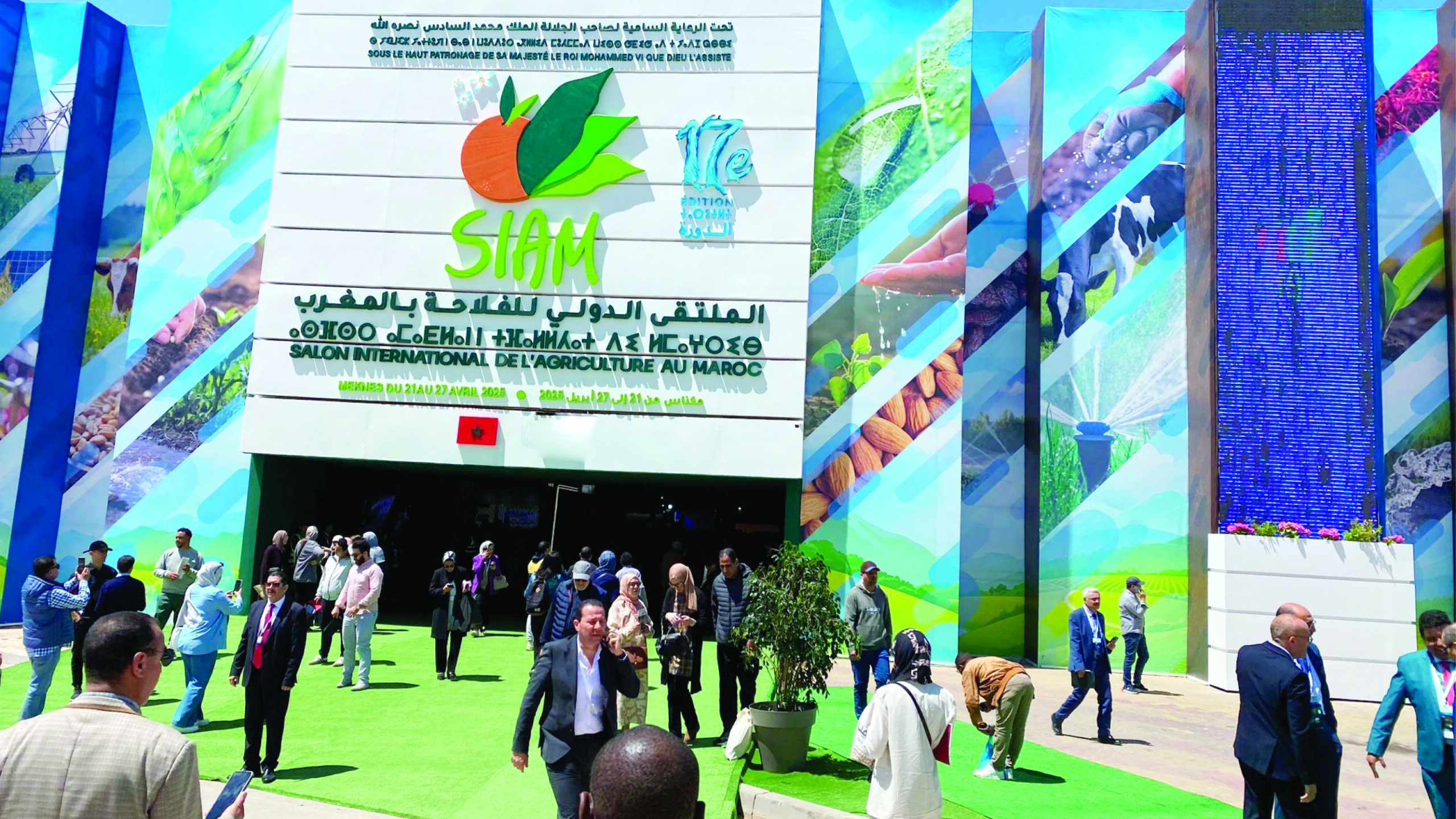
After the United Kingdom and France, the 18th edition of the International Agriculture Show in Morocco, held from April 20 to 28, is welcoming Portugal as the guest of honor.
This event, one of the largest in Africa, revolves around major agricultural challenges, including sustainable productivity in both livestock and crop production, food security, agri-technology, value chain development, and international cooperation.
Building on recent themes that highlighted the challenges of sustainability and resilience in the agricultural sector, SIAM 2026 will showcase achievements in the development of animal production sectors, particularly in terms of health and welfare, sanitary safety, and the economic and zootechnical performance of livestock farming.
Beyond that, the exhibition has framed its themes within an international agricultural context, emphasizing, among other things, precision agriculture and digitalization, integrated water management—which is becoming a priority given the various climate episodes affecting many countries worldwide—as well as sustainable value chains.
All these themes reflect the profound transformations currently shaping agriculture, which is facing climate, economic, and technological challenges simultaneously.
A European leader in sustainable Mediterranean agriculture, Portugal shares similar climate constraints with Morocco, notably variable rainfall, recurring water stress, and the need to adopt more resilient crops.
This alignment of challenges opens the door to exchanges of expertise and best practices, particularly in optimizing irrigation, adapting crop varieties, and ensuring efficient farm management.
It is worth noting that Portugal stands out for its expertise in high-performing family farming. About 85% of Portuguese farms have an area of less than 20 hectares. Despite this fragmentation, they achieve yields comparable to large farms.
This is made possible through the pooling of agricultural equipment and the structuring role of processing cooperatives.
Dominance of animal feed
Overall, utilized agricultural area represents 42% of Belgium’s total land area, or 4 million hectares. More than half is devoted to animal feed, with production reaching 840,000 tons.
Hence the choice of Belgium as the featured country, aligning with the theme selected for this edition of SIAM. Meanwhile, Portugal is a major producer and exporter of pears, cherries, apples, table grapes, processing tomatoes, and rice.
Olive growing is also a key crop. In fact, Portugal ranks among the world’s top ten producers of olive oil and is the fourth-largest exporter. Like Morocco, the country places importance on cereal crops, including wheat, barley, corn, and rice.
Moreover, Portugal is the world’s leading producer of cork, accounting for around 50% of global production. Overall, the agricultural sector represents about 2.1% of Portugal’s GDP and employs 3% of the active population.
Cooperation between Morocco and Portugal has strengthened year after year. Trade exchanges are mainly facilitated by bilateral agreements at the European level and by the establishment of investment partnerships.
The agreement concluded between the European Union and the Kingdom has, since its entry into force in 2000, enabled the creation of a trade network between the two parties, boosting the momentum of these relations.
A trade deficit
However, the trade balance remains in deficit in favor of the Iberian country. In 2024, the deficit reached 12.5 billion dirhams, with exports amounting to 7.4 billion and imports to 19.8 billion.
Portuguese exports to Morocco consisted mainly of chemical products, industrial machinery, and transport equipment, while imports from Morocco were dominated by phosphates, agricultural products, and textiles.
In detail, according to the Foreign Exchange Office, Morocco imports soybean oil from the Iberian country worth 533 million dirhams, representing a 9.8% share of total exports of this product. Conversely, Moroccan crustaceans, mollusks, and shellfish were exported for a value of 363 million dirhams in 2024.
Moreover, Portugal’s share of exports to Morocco is only 1.5%, far behind major partners such as Spain, Germany, France, the United States, and the United Kingdom.
This situation is partly explained by the structure of trade, but also by direct competition between the two countries in several strategic agricultural segments.
Indeed, both Morocco and Portugal position themselves as exporters of fruits and vegetables, particularly to European markets.
This similarity places them in a context of increased competition, especially in terms of access to international markets, cost competitiveness, and compliance with sanitary and environmental standards.