Kingdom
Plastics, recycling becomes imposed as a strategic alternative
The surge in naphtha prices, amid geopolitical tensions in the Middle East, exposes the dependence of Moroccan plastics on imported raw materials. Facing this vulnerability, plastic recycling is progressively imposed, even if the transition still faces important challenges.

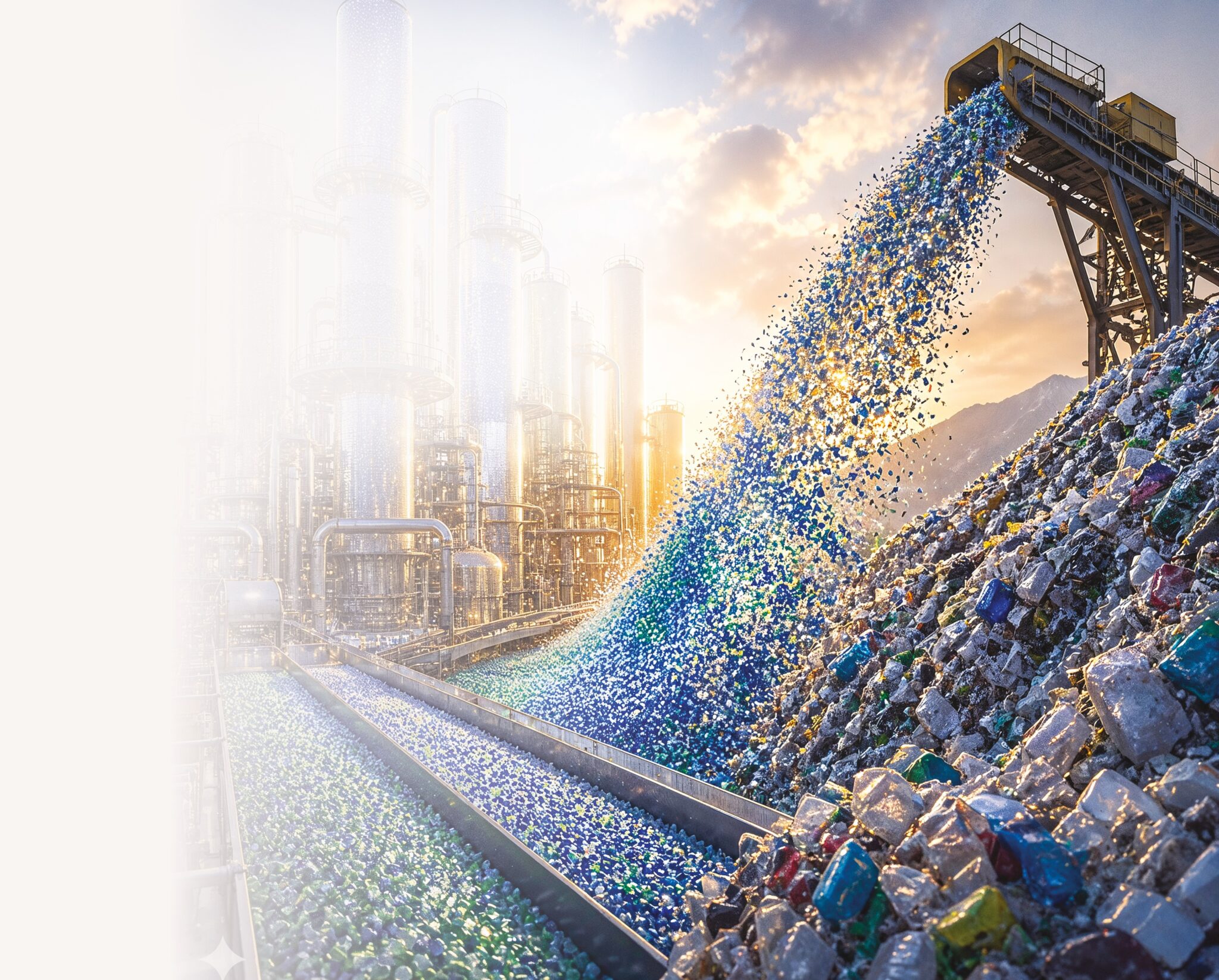
The equation is well known: when oil coughs, plastics catch a cold. In Morocco, this mechanism is verified once again. The sector absorbs fully the increase in petrochemical inputs, caused by the surge in naphtha, indispensable for the fabrication of plastic resins.
An important part of global polyethylene coming from the Gulf, regional tensions disrupt exports and increase supply costs.
For Moroccan industrial companies, the effects are immediate: production costs rising, margins compressed and increased market volatility. “Since the beginning of the conflict in February 2026, the price of polyethylene has recorded a stunning increase of more than 100%”, underscores Rida Taoudi Benchekroun, general director of Ouafa Plastique company, based in Fes.
“Given that raw material represents the predominant part of our production costs, we have been forced to partially reflect these increases on our selling prices to preserve the viability of our industrial facility,” he adds.
Same observation among distributors of technical materials. “We observe mainly increased market volatility and stronger attention focused on securing supplies. Increases have been noted both on transport costs of materials and on the material itself”, indicates Amine Berrada, Country Manager of AMP Morocco, subsidiary of French group AMP Polymix, specialized in technical materials and compounds destined for the automotive industry, cabling, electrification and export industries.
Recycling gains attractiveness
This situation illustrates the Kingdom’s structural dependence on imported plastic resins. Without an integrated petrochemical industry, the majority of raw materials comes from Europe, the Middle East or Asia, exposing the sector to fluctuations in international markets and the dollar.
The import bill for plastic materials and various plastic works had even reached 22.5 billion dirhams in 2025, according to the Office of Foreign Exchange. In some segments, raw material represents even up to 70% of production cost.
In this context, recycling gains attractiveness. Long perceived under the sole environmental angle, it becomes an industrial and economic lever to reduce dependence on imported virgin resins.
“This situation pushes many transformers to integrate more recycled materials in their production lines”, affirms Zakarea Errachid, Sales Manager at Catlim, company active in the fabrication, importation and distribution of products and accessories dedicated to the plastics sector.
“This dynamic is accompanied by a progressive evolution of mindsets. Approaches related to mechanical, chemical or bio-based recycling are now integrated into a broader reflection around sustainability, regulatory anticipation and reduction of industrial footprint”, underscores Berrada.
The sector structures progressively around collection, sorting, grinding, washing and transformation. “We observe growing demand for equipment allowing grinding and valorization of plastic waste, precise dosing of materials, separation of contaminants and quality control of production flows,” specifies Errachid.
Several industrial actors have also initiated internal circular economy approaches. At Ouafa Plastique, “100% of production waste is collected, recycled and transformed into granules within the factory,” explains Benchekroun.
“These granules are then reintegrated in the fabrication of waste collection bags destined for our industrial clients, thus guaranteeing that no internal waste ends in nature”.
Real potential, strong constraints
The Technical Center for Plastics and Rubber (CTPC) also accompanies this transition. Founded in 2005 within the framework of an agreement between the Moroccan State and the Moroccan Plastics Association (AMP), this national reference laboratory aims to strengthen the development and technological integration of industrial companies in plastics and rubber.
Its general director, Nassereddin Alanssari, estimates that the main barrier to recycling development remains the quality of deposits. “The absence of selective sorting at source and contamination of waste degrade certain properties, such as viscosity or shock resistance”, he explains.
He nuances however: “With adapted additives, performance can reach that of virgin resins”.
For producers, the question remains first and foremost that of quality and regularity of recycled flows. “Recycling is a strategic lever, but it is conditioned by the quality of the deposit”, insists the boss of Ouafa Plastique.
“To be substitutable for virgin material, the waste flow must be homogeneous and treated according to strict washing and control protocols”, he supports.
Persisting technical challenges
Mechanical recycling remains today the most mature solution in Morocco. Chemical recycling is generating growing interest, but remains limited by high costs and heavy investments.
In automotive and export sectors, technical requirements remain particularly high.
“The subject is not only to integrate recycled material, but to guarantee an equilibrium between performance, regularity, traceability and reduction of industrial and carbon footprint”, underscores Berrada.
Recycling still faces several technical constraints. Errachid notably evokes risks linked to metallic contaminants. “The presence of metallic particles in recycled materials represents today one of the main industrial risks for injection and extrusion equipment”.
This pushes industrial companies to invest more in filtration, drying and metallic detection systems to secure their production lines. Same observation at Ouafa Plastique.
“The major challenge resides in the thermal memory of the material”, explains Benchekroun. “On some heat-shrinkable films or industrial covers, recycled performance remains inferior to that of virgin material, notably in terms of resistance and stability”.
To this are added regulatory constraints. Moroccan legislation still prohibits the use of recycled materials for packaging destined for food contact.
Structure a true local value chain
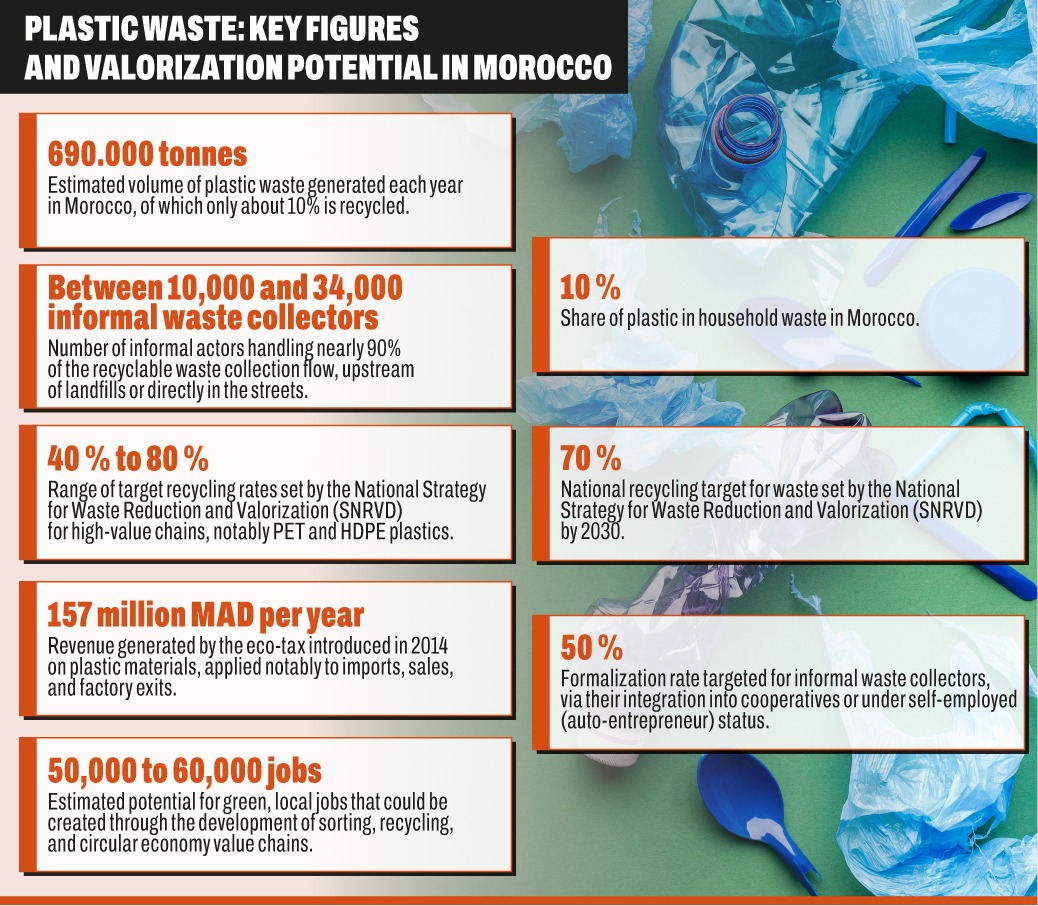
Morocco has also introduced an eco-tax on imports of plastic materials and manufactured plastic products to finance the development of recycling and waste valorization.
This mechanism aims to support collection, sorting and valorization infrastructures. Several initiatives are also emerging to accompany this transition.
The Moroccan Plastics Federation multiplies awareness actions around circular economy and integration of recycled material. On its side, the Moroccan Recovery and Recycling Company (SMRR) advocates for more advanced industrialization of collection and treatment of plastic waste.
For professionals, the sector’s future will depend on the capacity to structure a true local value chain. “The transition from waste management to secondary raw material management requires synergy between public policies and private operators”, estimates Benchekroun.
Industrial companies now rely on R&D, automation and improvement of flow quality to accelerate the transition. “The development of recycling will durably transform the plastics market in Morocco”, anticipates Errachid, who notes growing demand for intelligent equipment oriented toward circular economy.
Beyond the context, the current crisis reveals the limits of a model strongly dependent on imports. Between economic imperatives and environmental challenges, plastic recycling is now imposed as a strategic axis for the future of Moroccan plastics.
Which plastics are best valorized in Morocco?
All plastics do not present the same recycling potential. According to Nassereddin Alanssari, DG of CTPC, PET, notably transparent bottles, already benefits from collection circuits and relatively performing processing technologies in Morocco.
Monomaterial plastics, such as HDPE or polypropylene (PP), also recycle under good conditions and find outlets in industry, agriculture or household products.
However, multilayer plastics, PVC, polystyrene or even black plastics remain difficult to valorize, lacking adapted infrastructures and sufficiently advanced sorting processes.
In clear terms, the development of the sector will depend as much on industrial investments as on the improvement of source sorting and quality of collected deposits.