Kingdom
Pioneer Schools: A bold bet to reinvent public education
Launched in 2023, this large‑scale reform is gradually reshaping the landscape of Morocco’s public education system, balancing promises of improved performance, a pursuit of equity, and the challenges of nationwide rollout.

When discussing educational transformation in Morocco, one name consistently emerges: the “Pioneer Schools” programme.
This new educational model challenges the conventions of the traditional school system and positions itself as a laboratory for a more effective, more equitable public school system, firmly oriented towards the future.
Launched at the start of the 2023–2024 academic year under Chakib Benmoussa’s tenure as Minister of National Education, the project was conceived as a direct response to the historic challenges of Morocco’s education system: low levels of basic learning, worrying school dropout rates, and the difficulty faced by public education in reclaiming its primary role as a vehicle of social mobility.
Behind the political ambition lies a pedagogical urgency: ensuring that every child, regardless of background, acquires the fundamental skills needed to succeed academically and integrate into society in the future.
With an initial phase covering 626 public primary schools and nearly 322,000 pupils, the Ministry of National Education, Preschool Education and Sports sought to lay the foundations for a model that is both ambitious and structurally transformative, built on internationally proven pedagogical innovations and a rigorous support framework.
The aim is not to create a handful of showcase schools, but to initiate a systemic change capable of gradually spreading on a large scale.
At the heart of the initiative is the official “Pioneer Schools” label, established by Decree No. 2.44.144, which sets out precise criteria for quality, governance and pedagogical performance for candidate institutions.
More than 2,700 schools have already joined the programme in subsequent phases, including around 2,000 primary schools, 512 annexed school units and 232 lower secondary schools. This rapid scaling-up reflects the strong buy-in from educational teams and regional authorities to this new school philosophy.
Student-centred pedagogy
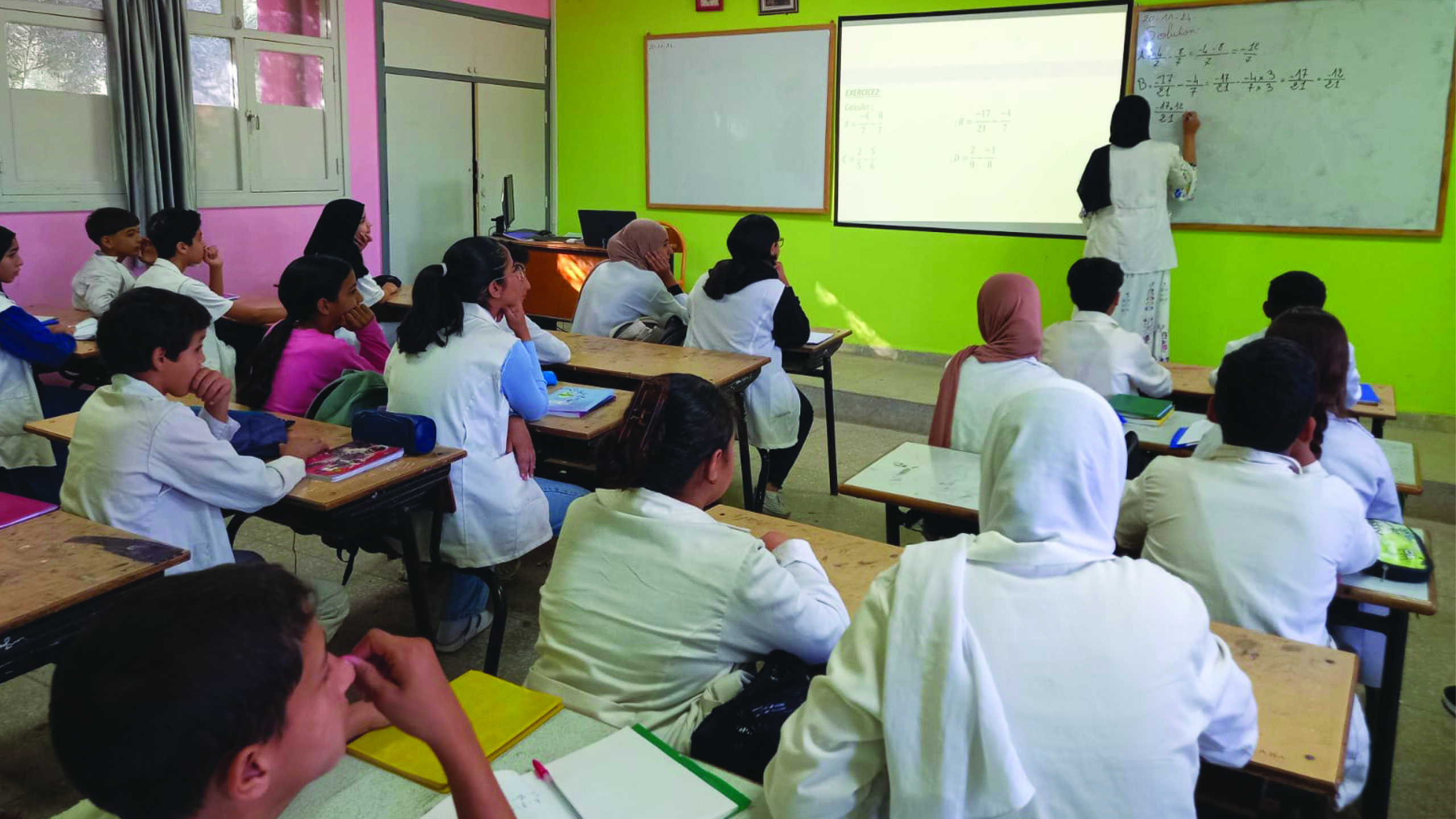
Innovation is not confined to policy documents; it is experienced daily in classrooms. The Pioneer Schools model rests on three inseparable pillars — the pupil, the teacher and the institution — with a concrete transformation of educational practices.
The objective is clear: to sustainably strengthen foundational skills (reading, writing and numeracy), combat school dropout and enable each child to progress according to their actual abilities.
A flagship method is Teaching at the Right Level (TaRL). This approach organises learning based on students’ actual competency levels rather than their age or administrative grade.
In practice, this translates into flexible learning groups, regular assessments, standardised teaching materials and ongoing teacher training to ensure effective use of these tools.
Far from a one-size-fits-all pedagogy, the model promotes a more attentive school environment, one that prioritises bridging learning gaps before building more advanced competencies.
Beyond pedagogy, the programme also encourages improvements to school infrastructure: refurbished classrooms, in-class libraries, modernised teaching materials and enhanced access to digital resources.
School heads receive tailored support in management, pedagogical leadership and performance monitoring, turning each school into a collective project rather than a purely administrative structure.
Early results and expansion
In less than a year, the first effects of the programme have already become visible. Evaluations conducted by the supervisory ministry and independent partners highlight a notable improvement in reading and mathematics levels, a calmer and more motivating school climate, and stronger involvement of parents and local communities in school life.
The programme’s ambitions extend far beyond the experimental phase. The stated objective is the gradual nationwide rollout of Pioneer Schools by 2028, encompassing not only primary education, but also lower and eventually upper secondary levels.
Pilot phases are already underway to test the model’s adaptation to these levels, where risks related to dropout and orientation are even more pronounced.
Like any large-scale reform, the programme has raised questions. Some parents and teachers point to the risk of excessive standardisation, which could fail to sufficiently stimulate higher-performing pupils.
Others emphasise logistical challenges, particularly with regard to ongoing teacher training, availability of teaching materials and increased workload for staff.
These concerns underline the reality that the success of the reform will depend as much on implementation as on its conceptual design.
Despite these challenges, the programme already stands out as one of the most structurally significant educational reforms of the past decade in Morocco.
By combining evidence-based pedagogy, teacher support, mobilisation of local communities and rigorous outcome monitoring, it advances a clear vision: a public school system that does more than enrol pupils — it guarantees learning.
As the reform unfolds, hope is growing that this model may inspire other public policies and restore confidence in the Moroccan school system’s ability to fully play its role.
Beyond figures and programmes, the challenge remains profoundly human: to provide every pupil, wherever they live, with the means to thrive, understand the world and build their future in a more just and inclusive society.