Kingdom
Pilot Institutions: ONDH Commits MAD 15.8 Million to Assess Compliance With Labeling
A total of 4,862 pilot institutions covering all regions of the Kingdom will be thoroughly examined to measure their performance against the set objectives and to address any gaps that may be identified.

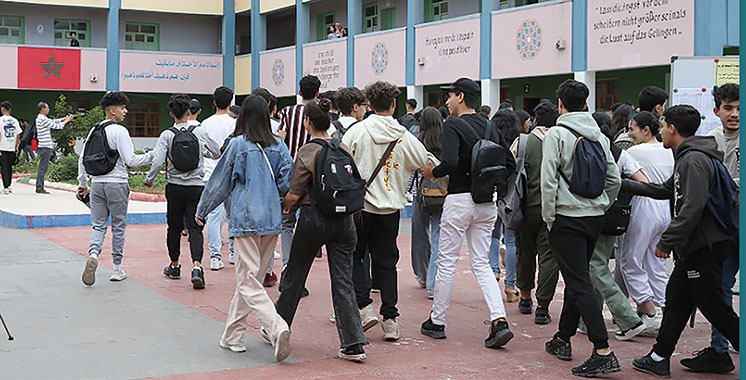
The National Observatory for Human Development (ONDH) intends to evaluate pilot institutions, including schools and middle schools. It has launched a call for tenders to select a service provider responsible for collecting data to measure the compliance of these pilot institutions with labeling criteria and to produce performance reports for each institution for the year 2026.
This assignment aims to assess the extent to which the pilot institution model has achieved its objectives in terms of alignment between the standards and quality benchmarks set by the Program and what is actually implemented and achieved on the ground.
The purpose of the assignment is to observe the educational dynamics within 4,276 pilot schools and 586 pilot middle schools, in order to measure their outcomes and inform the decisions planned as part of the labeling process for these institutions.
At the end of this assignment, the ONDH must have reliable quantitative data on the scheme and its effects. This should make it possible to identify any gaps between the Program’s guidelines and the reality of practices, in order to address them.
Regarding the specific objectives of the assignment, the study focuses on three key dimensions of the Pilot Institutions Program. At the school level, the ONDH plans to verify that each pilot institution complies with the required quality standards defined by the program (organization, supervision, learning conditions, etc.). The study examines, for example, the school environment, teaching equipment, and the implementation of new approaches within the institution.
At the teacher level, the Observatory will work to assess changes in teaching practices and teacher training within these institutions. This includes, in particular, observing the adoption of explicit instruction methods and new teaching tools by volunteer teachers, as well as the involvement of supervisory staff (inspectors) mobilized.
It also aims to measure the progress in learning among students benefiting from the program. Specifically, this involves analyzing the extent to which students improve their results in core subjects (Arabic, French, mathematics, physics, and life and earth sciences) compared to the set objectives.