Kingdom
Partnerships: Ten Years Later, Return on Investment
In the years 2014–2016, the Sovereign carried out a series of official visits to several countries. During these visits, strategic partnerships were concluded. These agreements are now beginning to bear fruit. Analysis.

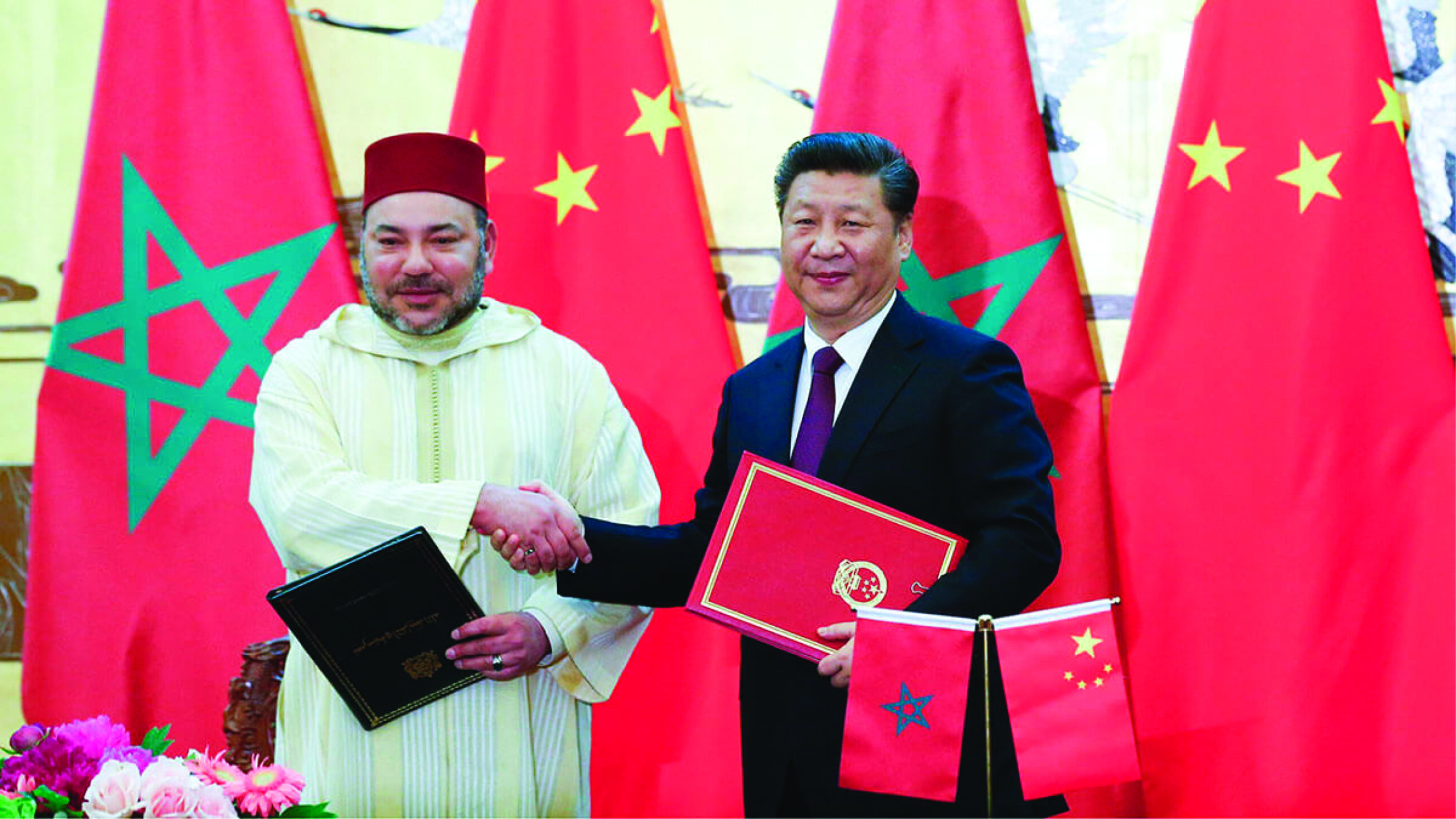
China, India, Russia, Brazil, Nigeria, the GCC countries… Aside from the first four, which form the backbone of the BRICS, nothing in particular links these countries and groups of countries. For Morocco, however, the connection is significant.
About ten years ago, between 2014 and 2016 (and a bit earlier for Brazil, in 2004), the Sovereign carried out official visits to these countries during which strategic partnership agreements were signed.
Between China, which has just surpassed the threshold of 10 billion dollars in investments, mainly in the automotive sector and renewable energies; India, which is announcing a second project in the defense industry; Russia, with a new fishing agreement that has just come into force and more ambitious prospects; Brazil, whose flagship aeronautics company Embraer is considering setting up an industrial presence in Morocco… the Kingdom is, so to speak, now reaping the benefits of this openness and of its economic diplomacy in general.
With Nigeria, the regional integration project is expected to reach the investment decision stage during the course of this year—the final step before the launch of the AAGP gas pipeline project. As for the Gulf countries, to cite just these two cases, the Emirati Taqa and the Saudi Acwa are now fully invested in two major pillars of the Kingdom’s economic takeoff: renewable energy and green hydrogen.
As a reminder, much like during the royal tours in Africa a bit earlier, the Moroccan model was already based on a well-established mechanism. During each royal trip, the Sovereign is accompanied by a large delegation made up of ministers, heads of major public institutions, and senior representatives of the private sector.
Each time, dozens of agreements or partnership conventions are signed across all fields: political, security-related, economic, social, cultural, and sometimes even religious. These were not merely diplomatic exercises, but the catalyst for a comprehensive repositioning that Morocco would experience nearly a decade later.
What emerges from all these visits is the coherence of a strategy. Triangular cooperation takes on its full meaning. A genuine geoeconomic shift of the Kingdom. So many concepts to describe a change in scale. The economy, first and foremost, seems to have been the guiding principle of this new policy of openness.
New positioning
Preceded years earlier by a series of visits to numerous African countries, resulting in hundreds of agreements and partnership conventions, the new direction of national diplomacy—now opening up to emerging powers, particularly the BRICS, with the aim of forging next-generation partnerships—has proven successful.
To simplify, each royal visit planted seeds (agreements, protocols, joint commissions, memorandums…) whose fruits are now being harvested. In this way, Morocco has managed, over the span of a decade, to build a multidimensional hub model capable of attracting high-tech foreign direct investment and securing its strategic needs in energy, raw materials, and food resources.
The figures confirm it. This year, the Kingdom achieved a historic record in foreign direct investment, reaching an unprecedented amount of 56 billion dirhams.
Today, the impact of this strategy is visible, among other things, in the emergence of cutting-edge industrial ecosystems, stronger integration into global value chains, and increased diplomatic influence along the South-South axis.
This, incidentally, has enabled it to reposition its relations with its historical allies, who now see it in a different light. The interest shown by France, Spain, and Germany—and more recently Italy—is completely different from before. These countries are discovering a long-standing ally from a new perspective.
Strengthened relations with Africa and with emerging Asian countries now make Morocco an attractive strategic intermediary for Western powers.
Proof of this: in October 2024, more than 10 billion euros in investments were committed following agreements signed in the presence of President Macron during his visit to the country, notably in green energy, new industrial ecosystems, sustainable infrastructure, and joint expansion into Africa. Then, in the following year, two other major investments in the aeronautics sector.
Germany, for its part, now considers the Kingdom as an alternative location for the relocation of part of its automotive industry, and also sees it as a future supplier of green energy. Italy ranks the Kingdom among its four priority markets and views it as “a hub of economic attractiveness.”
Belgium intends to explore the investment opportunities the country offers, particularly in the southern provinces. And the list goes on. Across the Atlantic, the United States has just announced that, in light of the current situation, it has approached OCP to secure part of its fertilizer supply and thus ensure its food security.
Taken separately, these indicators reflect the health of the national economy, its potential, and its ability to benefit from crises. Taken together, they point to a deeper trend—a major shift that is transforming the entire country and propelling it forward. A transformation that began slowly in the mid-2000s and is now accelerating.
One indicator speaks volumes: whereas in 2000 “medium-technology” products (mechanical parts, electrical components, cars) accounted for only 9.1% of exports, they reached 46.2% in 2023.
Structural shift
Indeed, since the mid-2000s, Morocco had already embarked on an active, export-oriented industrial policy, attracting massive foreign direct investment in high value-added sectors. This is how the country succeeded in diversifying its economy beyond phosphates, by developing efficient industrial ecosystems: automotive, aeronautics, logistics…
This resulted in a technological upgrading. The share of “medium-technology” products in exports surged dramatically—a major structural shift. This transition shows that the country no longer merely assembles products but manufactures critical components.
This strategy did not stop at attracting isolated factories, but aimed to create “ecosystems” where major contractors are surrounded by tier 1, 2, and 3 suppliers. This encourages local integration and reduces dependence on imported components. It has worked well for the automotive sector.
The Kingdom is now replicating the same strategy, but with a second level of upgrading, reflected in the establishment of an advanced chemical industry ecosystem: batteries, renewable energy and green hydrogen, the military industry, the railway industry, among other highly technological sectors, benefiting precisely from technology transfers from countries such as China, India, Turkey, and even South Korea.
This is in addition, of course, to its traditional European and American partners, particularly in aeronautics.
With the recent conflict in the Middle East, attention has once again turned to the Kingdom—but this time as a strategic logistics hub for fossil fuels, oil, and gas, similar to the Netherlands in Europe and Singapore in Asia.
These are non-oil-producing countries that nevertheless sit at the heart of the global hydrocarbons value chain. The upcoming commissioning of the energy-oriented port of Nador West Med further strengthens this new role.
All of this shows that this deep trend, rooted in a vision developed years earlier, is taking shape. As economic analysts point out, “in economic diplomacy, stability is the most valuable currency.” These high-level state visits have indeed sent a signal of long-term confidence.
Multinationals and other economic players are not choosing Morocco solely for its costs (it actually has the highest minimum wage in its region), but because the agreements signed ten years ago are being honored and expanded today.
Multidimensional openness
The same analysts point out that Morocco enables large companies to set up a supply chain organization based on a “production in one place, reach across three continents” model.
This essentially means designing in European—and increasingly Moroccan—R&D centers, manufacturing in Moroccan factories, and shipping to European markets, but also to African markets thanks to the AfCFTA, and even to North America.
As has been observed in recent years, Morocco is positioning itself no longer as a simple exporter of raw materials and agricultural products, but as a connectivity hub between Europe, Africa, Asia, and the Americas, leveraging its geography and stability for economic gain.
Much emphasis is placed on the association agreement with the EU and the free trade agreement with the United States as springboards for Chinese companies into those markets. It should also be noted that, starting May 1, European companies based in Morocco can access the Chinese market with zero customs duties, as well as the African market.
The diversification strategy initiated by the Sovereign a little over a decade ago has enabled the Kingdom to move beyond its status as a peripheral partner of Europe and become a central player in regional—and even global—geoeconomics.
The impact of these visits is now visible in record figures for industrial exports (automotive, aeronautics, chemicals… and soon military), in the resilience of supplies of raw materials and food products, and in the ambition of a gas pipeline that promises to reshape the energy map of West Africa.
Ultimately, if the years 2010–2016—particularly the period 2014–2016—were those of prospecting and agreement-signing, the 2020s are the years of implementation.
Morocco’s current industrial rise is not a coincidence, but the result of an economic diplomacy strategy launched more than a decade ago. This opening-up of Morocco marked a historic turning point: the shift from traditional dependence on Europe to multidirectional openness.