Kingdom
Olive Growing: Al Moutmir Boosts Yields by Over 25%
During the 2024-2025 season, the program deployed 391 demonstration platforms for the benefit of 241 farmers. The results are no longer in question, with yields of 7.9 t/ha instead of 6.3 t/ha and a profit margin increased by 27%.

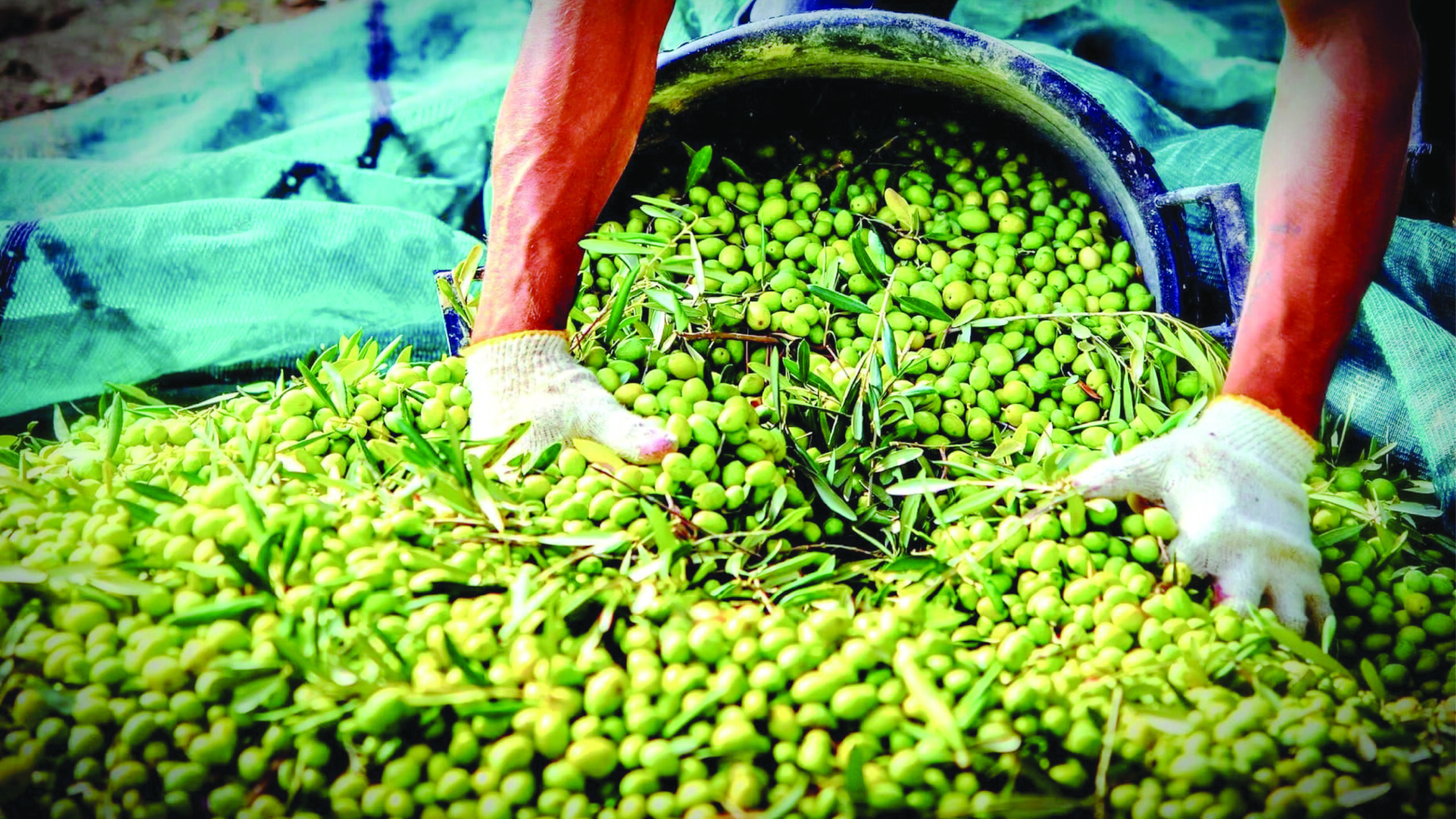
The Al Moutmir model continues to yield significantly more interesting results than traditional cultivation, given the use of best agricultural practices. The impact on yield, production quality, and generated income is no longer in question.
This model, which relies on demonstration platforms, is co-constructed with the agricultural and scientific ecosystem and enjoys the support of the Mohammed VI Polytechnic University (UM6P) of Benguerir. During the 2024-2025 agricultural season, 391 olive tree demonstration platforms (PFD) were set up across 23 provinces and 106 municipalities, covering all olive-growing areas of the Kingdom.
This initiative aims to support farmers in adopting optimized agricultural practices adapted to local specificities. Thanks to this program, more than 241 farmers have directly benefited from platforms and more than 4,000 have been indirectly supported through field schools, theoretical training, and exchanges on social media and on the @tmar platform.
The distribution of the platforms reflects territorial diversity, with 73% located in irrigated areas, 16% in rainfed areas, and 11% in mountainous areas.
During this season, the demonstration platforms at the national level confirmed their relevance. Compared to control plots, they recorded an average yield of 7.9 t/ha versus 6.3 t/ha, representing an increase of 25%.
In irrigated platforms, the yield stands at 9 t/ha, compared to 4.7 t/ha on rainfed platforms. This represents an improvement of 23% and 47% respectively. In mountainous areas, production improved by 31% to 5.5 t/ha.
A gain of 23,093 DH/ha
It should also be said that climatic conditions were particularly favorable, with well-distributed rains before budburst as well as during flowering and fruit set, and mild temperatures that supported optimal tree development.
The rainfall recorded at the beginning of the year in the main olive-growing regions of the north and center, supplemented by rainy episodes in spring and at the end of the season, as well as snowfall in mountainous areas, contributed to improving water reserves.
Despite a temporary deficit in some provinces, late rains allowed the situation to be restored, making this season a year of very good production on a national scale.
This performance was accompanied by a 14% increase in the weight of 100 fruits, reflecting the positive impact of the optimized agronomic practices implemented. For its part, water productivity also improved, reaching 1.98 kg of olives/m³ in the PFDs versus 1.51 kg/m³ for the controls, an increase of 31%.
On the economic front
the Al Moutmir program succeeded in improving the average profit margin of farmers. Overall, it reached 23,093 DH/ha, compared to 18,184 DH/ha for control plots, representing a gain of 27%. It rose to 26,779 DH/ha (+26%) on irrigated platforms, to 16,225 DH (+44%) at the level of rainfed crops, and reached 9,416 DH/ha (+12%) in mountainous areas.
At the national level, the highest performance of all platforms was observed in the province of Taourirt with production up 36% compared to the control at 25.2 t/ha. It is followed by Al-Haouz with 23 t/ha, an increase of 15%, then Guercif with 16 t/ha, an improvement of 33%.
These results confirm that adopting the Integrated Crop Program (ICP) constitutes a strategic lever, by optimizing mineral nutrition, rational water management, and phytosanitary protection.
They thus underline the importance of continuing the optimization and continuous adaptation of the PFD program in order to sustainably strengthen the productivity, resilience, and competitiveness of the Moroccan olive sector.
7,300 platforms since 2018
It should be known that the technical itinerary in the PFDs is based on an integrated management program called “Integrated Crop Program” (ICP), focusing on four pillars, namely rational water management, reasoned fertilization, integrated crop protection, and the use of specialty products.
In order to maximize the benefits of the demonstration platforms and promote the sharing of this information with sector stakeholders, the Al Moutmir team has set up a digital application called “Agritrial”.
This application allows for the digitalization of the agronomic management of demonstration plots and the real-time transmission of detailed information on the evolution of the platforms, such as phenological stages, colors, stress levels, pruning, photos and videos of plants, among others.
In any case, since its launch in 2018, the Al Moutmir initiative, which constitutes a bridge between the farmer and scientific research, has directly supported 40,000 farmers, through nearly 31,000 demonstration platforms, of which 7,300 are for olive cultivation alone.
Furthermore, 124 engineers and technicians have been mobilized to work with farmers, 11,000 training sessions have been conducted, and more than 167,000 soil analyses have been carried out through 7 laboratories covering an area of 565,000 hectares.
The experts’ recommendations
The experts of the Al Moutmir program provide several recommendations for successful olive cultivation.
Chief among them are the adoption of recommended fertilizer formulations, established based on soil analysis results, the rationalization of irrigation water use, and adherence to tree pruning operations, given its important role in rejuvenating the tree and ensuring the stability of its production.
In parallel, during base fertilization for drip-irrigated olive systems, it is appropriate to apply 40% of nitrogen requirements, 75% of phosphorus requirements, and 50% of potassium requirements. These specific formulations must be applied in accordance with the integrated olive crop management program at the opportune time.