Business
Offshoring: A new circular to boost job creation
The new circular from the chef du gouvernement giving a strong boost to the implementation of the Offre offshoring Maroc includes key provisions capable of boosting the creation of stable and qualified jobs in the sector.

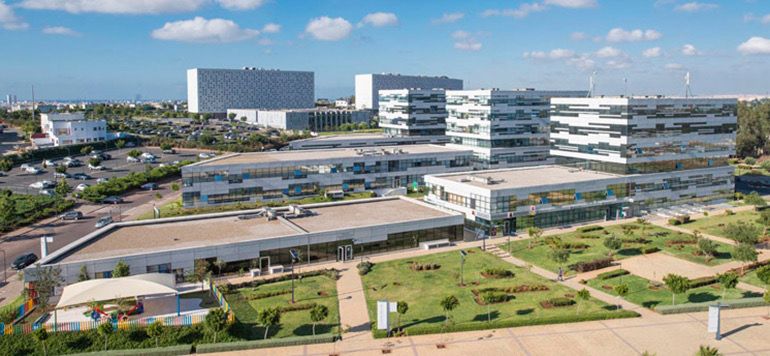
A new era opens for the ecosystem and the offshoring industry in Morocco, with the entry into force of the circular allowing the implementation of new incentive measures, validated within the framework of the Digital Morocco 2030 strategy.
As a reminder, a contrat-programme was signed in September 2024 (the day of the official launch of the Digital Morocco 2030 strategy) to assert the ambitions of public authorities and private players in terms of upgrading this vital sector for the national economy, especially for job creation.
Moreover, the circular facilitating the implementation of the Offre offshoring Maroc grants a central place to incentive measures promoting job creation by companies in the sector, which, according to the aforementioned contrat-programme , is expected to generate 130,000 additional stable direct jobs (including 50,000 by 2026), while achieving a turnover of 40 billion MAD (including 25 billion MAD in 2026).
New employment and training bonuses
In order to increase the chances of reaching the objectives of the contrat-programme in terms of creating stable and qualified jobs, the circular provides new incentive bonuses for employment and training.
Specifically, companies operating in offshoring activities, meeting the required eligibility criteria, benefit from a state contribution to training expenses. This takes the form of a training bonus of 3.5% of the annual taxable gross income for each new Moroccan national recruit, paid annually from the date of recruitment for five years.
Additionally, companies in the sector will receive an employment bonus of 17% of the annual taxable gross income for any new stable direct job created and filled by a new Moroccan national recruit, for a minimum continuous full-time duration of 18 months.
The circular also renews incentives regarding the capping of the income tax (IR), so that it does not exceed 20% of the gross taxable income per individual in the Casablanca-Rabat corridor (10% in other regions). The same applies to the corporate tax (IS) benefit: a state contribution covering 56% from the 6th year onwards.