Kingdom
NTI, Cloud AI… how Morocco can become a green tech hub
In the AI, cloud, and data center industry, the Kingdom offers an ideal environment: security, renewable energy, non-conventional water resources, proximity to submarine cables, and skilled human resources…

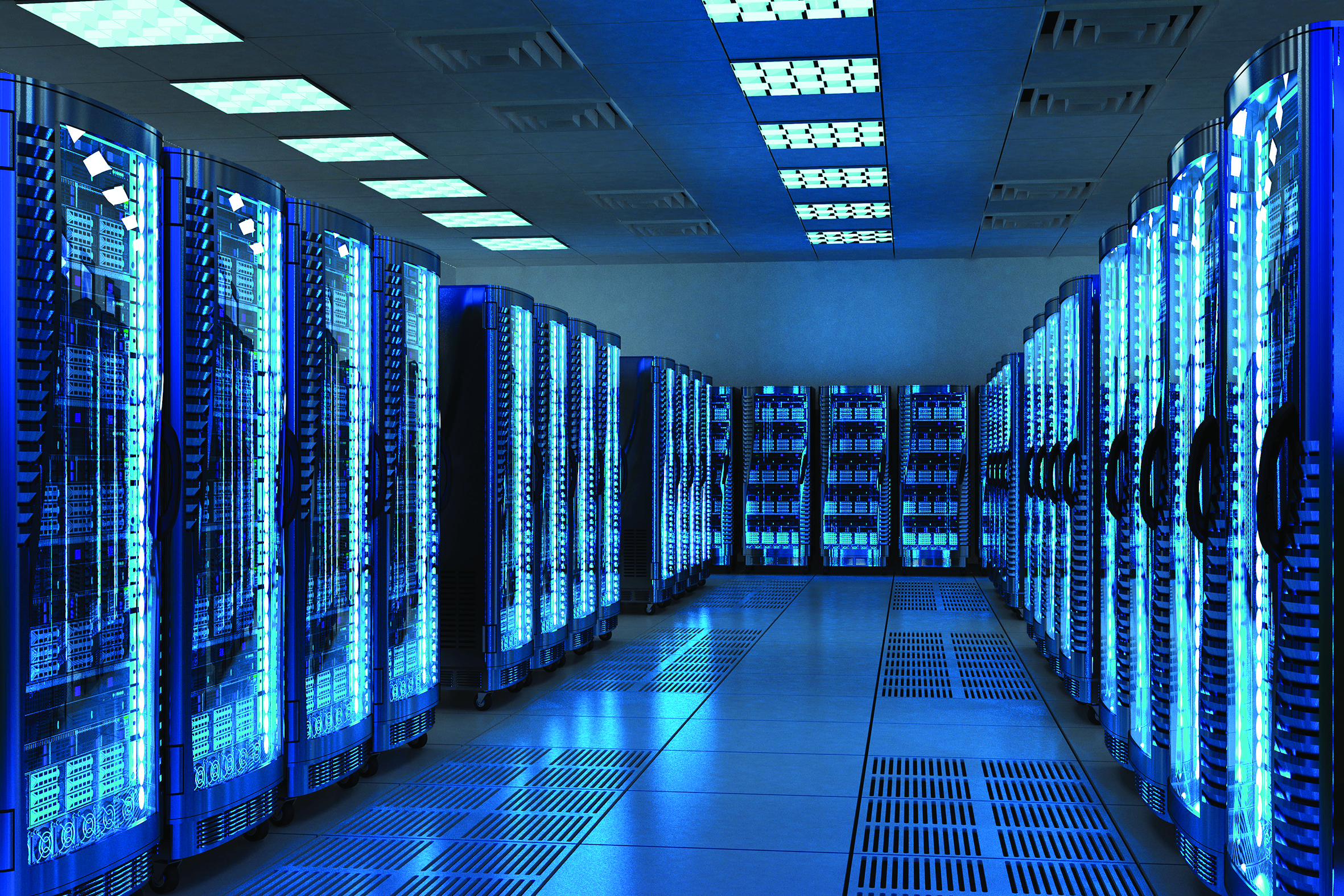
The 500-megawatt hyperscale data center project, led by the American company Nexus Core Systems and South Korea’s Naver Cloud, together with chip giant Nvidia, is moving toward realization in Nouaceur. Concretely, as previously announced, Naver Cloud will operate the platform, while Nvidia will supply next-generation processors, the Blackwell GB200 GPUs, at the core of AI architectures. The energy required for operations, entirely renewable, will be provided by Taqa Morocco. Cooling water should not pose a problem with the commissioning this year of the Casablanca desalination plant.
Financing is supported by Lloyds Capital, thereby consolidating an international setup that combines technology, energy, and investment. This is the second project of its kind, following the Igoudar project launched by the government in Dakhla. The name is not chosen at random and dates back centuries in Moroccan history; it refers to security, reliability, data inviolability, and service continuity. Another project has been announced, this time in Tetouan, with a capacity of 386 MW and primarily aimed at exporting AI computing to Europe. For its part, Oracle has just announced the opening of its cloud region in Casablanca.
In short, this $1.2 billion megaproject, located near Casablanca, aims to transform Morocco into a major technological hub by 2030, thereby strengthening its digital infrastructure capabilities at the regional level. And this is only the beginning. According to industry specialists, it is clear that Morocco has entered the radar of the global data center industry, with facilities to be built across the country, specifically dedicated to AI. Everything points in that direction.
As a sign—if any were needed—of Morocco’s potential in this field, consider this statement by the new United States ambassador to Rabat, Duke Buchan III, on the eve of the 2026 edition of Gitex Africa held in Marrakech from April 7 to 9: “Dozens of American companies are ready to showcase U.S. leadership in AI, cybersecurity, cloud, and secure digital infrastructure, and to establish partnerships here in Morocco,” he said. “For 250 years, the United States and Morocco have stood side by side. Morocco is emerging as a digital gateway to Africa, and American companies are putting down roots here,” the diplomat added. A statement that cannot be taken lightly in the current context.
Geography and climate as advantages
Indeed, the escalation of the conflict in the Middle East has profoundly altered risk perception for large-scale data center operators (hyperscalers). Traditionally, Gulf countries attracted billions of dollars in investment thanks to their sovereign wealth funds and abundant energy. However, the year 2026 marks a turning point where physical security and cyber resilience now take precedence over cost considerations alone.
These incidents that occurred during the conflict, which specifically targeted such facilities, reveal a critical exposure of data infrastructures to military escalation, calling into question the viability of projects built on the assumption of lasting regional stability.
Morocco may not have the financial means or fossil energy resources of Gulf countries (the United Arab Emirates and Saudi Arabia have entered the field), but it has a considerable advantage. In addition to security and political stability, the Kingdom has a long coastline that makes it an ideal investment environment for the data center industry. A long Atlantic coastline means security—the Kingdom having undertaken a program in recent years to modernize and equip the Royal Navy with advanced defense technologies—and it also means immediate proximity to a vast network of submarine cables. This results in very low latency levels. In other words: reduced costs and a massive increase in bandwidth, two crucial elements in the world of generative AI.
The Kingdom, and this is another comparative advantage, also has enormous potential in wind and solar energy and will soon reach significant desalination capacity, also powered by renewable energy, enabling it to provide clean energy that perfectly aligns with the energy transition policies of major international companies. This allows for substantial gains in this area. Indeed, while data centers in Europe are seeing their operating costs soar, the Kingdom protects its investors thanks to its growing energy autonomy, with 52% renewables in its energy mix by 2030. One thing is certain: in the face of this climate of uncertainty, Morocco presents itself as a “friendshoring” alternative—not only for the data center industry.