Influences
New York: Highlighting the International Support Momentum for the Moroccan Identity of the Sahara
Peruvian politician and jurist Martha Chávez Cossío recalled that 124 countries now support the Moroccan autonomy plan, which remains “the only path to guarantee stability, development, and shared prosperity in the region.”

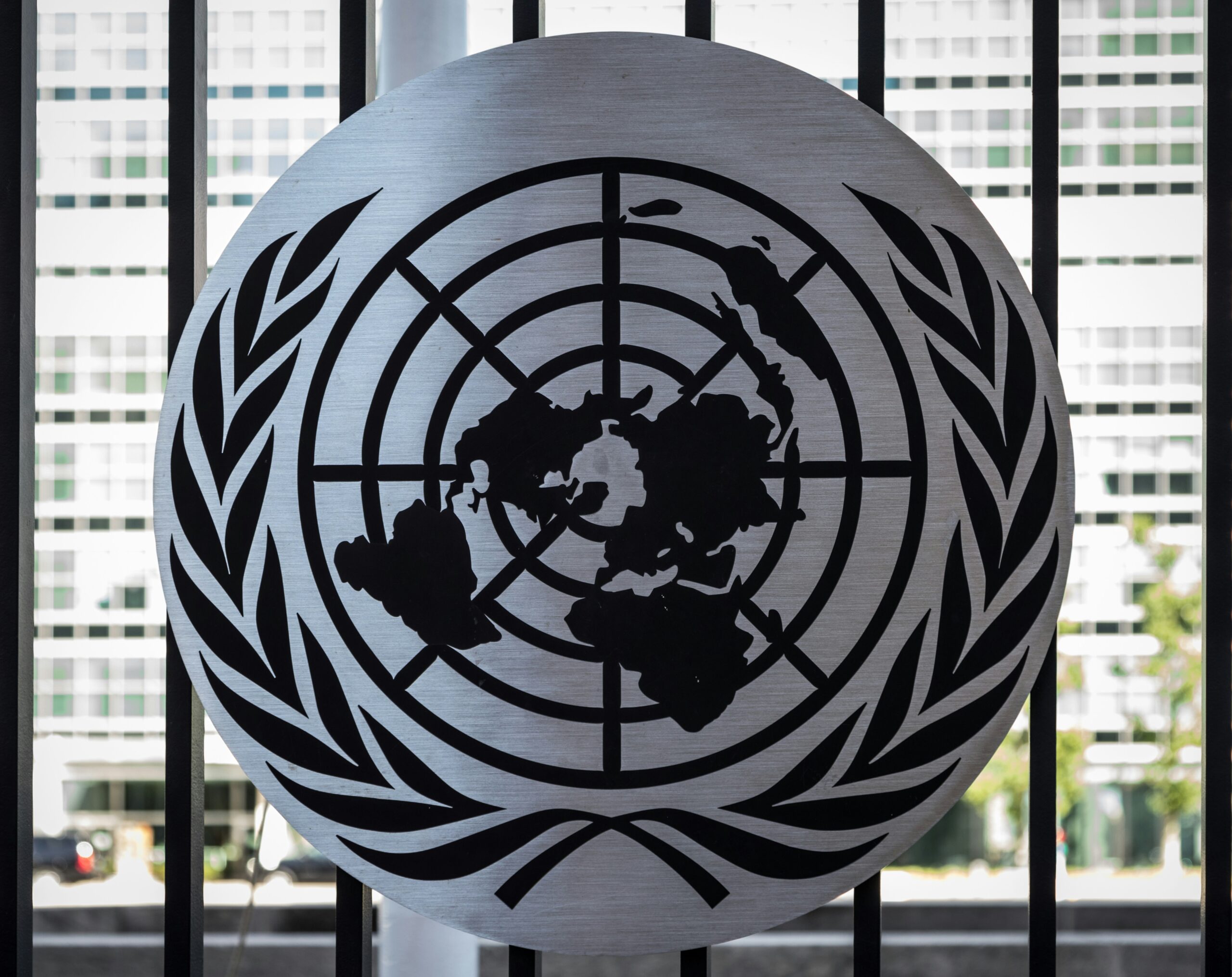
Before the 4th Committee of the UN General Assembly meeting in New York, petitioners highlighted the international momentum driven by His Majesty King Mohammed VI in support of the autonomy plan and Morocco’s sovereignty over its Sahara.
Speaking on this occasion, Peruvian politician and jurist Martha Chávez Cossío described an “unprecedented” momentum in favor of the Kingdom’s national sovereignty and territorial integrity, reinforced by a wave of international recognitions of the Moroccan autonomy plan as “the only solution” to definitively settle the regional dispute over the Sahara.
In this context, she recalled that 124 countries now support this realistic and pragmatic initiative, which remains “the only path to guarantee stability, development, and shared prosperity in the region,” adding that this growing momentum is also illustrated by the decision of around thirty countries to open general consulates in the cities of Laâyoune and Dakhla.
According to the petitioner, this is a clear and unequivocal recognition of the credibility of the Kingdom of Morocco’s position and its unquestionable legitimacy over its Southern Provinces.
Echoing this sentiment, Spanish journalist Javier Fernández Arribas praised a “global consensus” in support of the Moroccan identity of the Sahara, reaffirming that the Autonomy Initiative presented by the Kingdom in 2007 is the only political solution capable of putting an end to this artificial conflict fueled and maintained by Algeria.
He noted that major world powers such as Spain, Germany, France, the United States, and the United Kingdom, among many other countries, adhere to this international consensus in favor of Morocco’s legitimate rights over its Sahara.
For the director of the newspaper “Atalayar entre dos orillas,” countries that fully support the Moroccan autonomy plan are working toward the political solution advocated by the UN Security Council in its resolutions, including Resolution 2756.
For his part, petitioner Dr. Henri Diederich from Luxembourg stated that the Moroccan Autonomy Initiative “is much more than a political proposal—it is a human project, born from decades of dialogue with local populations.” “It is an outstretched hand to build lasting peace together,” he said.
He argued that this initiative allows the populations of the Southern Provinces to manage their local affairs in full respect of the Kingdom’s national sovereignty and territorial integrity, noting that the world recognizes this wisdom with 124 African, European, Asian, and American countries supporting “this path of compromise and coexistence.”
In the same vein, French professor Christophe Boutin emphasized that the majority of the international community agrees that the settlement of this regional dispute must take place within the framework of Morocco’s full and complete sovereignty and that the Autonomy Initiative is the only political solution to end a crisis that has lasted for fifty years.
He observed that the instigator country of this artificial conflict, which “remains in denial,” refuses to see the evolution resulting, on the one hand, from decisions of sovereign states, members of the United Nations, which wish for the prompt implementation of the Moroccan Initiative, and, on the other hand, from increasingly precise UN Security Council resolutions regarding the parameters related to this same Initiative.
The same position was expressed by Jérôme Besnard, president of the Paris-based Institut Jean Lecanuet, who noted that 70% of UN member states, including three permanent members of the Security Council, support Morocco’s sovereignty over its Sahara, with the Autonomy Initiative as the backdrop.
Similarly, British jurist Andrew Rosemarine affirmed that the Moroccan autonomy plan is “the best practical solution” for building a modern, prosperous, and democratic society, emphasizing that this initiative enjoys ever-growing support.
Other petitioners, such as Abdou Latif Aidara from the African Center for Strategic Intelligence and Greek university professor Nikaky Lygeros, praised this international momentum in favor of the Moroccan identity of the Sahara and the autonomy plan.
“This growing consensus on the irreversible Moroccan identity of the Sahara and the reference framework adopted by the international community to reach a definitive solution to the regional dispute not only confirms the ‘Polisario’s’ usurpation of an anti-colonial legitimacy it never truly enjoyed but also accelerates the definitive decline of separatist theses,” stressed Mr. Aidara.
For him, the Polisario “survives only through the criminalization of the policy of its host country on the issue of the Moroccan Sahara, the persistence of which jeopardizes the stability and development prospects of the Sahelo-Saharan strip and the Mediterranean region.”
In the same vein, Mr. Lygeros affirmed that the Moroccan identity of the Sahara is an indisputable fact and an “irreversible and unstoppable” process, recalling that a total of 124 countries firmly support the Moroccan autonomy plan as the only political solution to this dispute, in which Algeria is a principal party.
He further indicated that the pseudo “SADR” represents only an emanation of the geopolitical interests and hegemonic agenda of its mentor. “It has no territory, no population, no government. The Sahrawi population lives largely in the Moroccan Sahara, where it actively participates in the development of the region and in democratic life through its locally elected representatives,” he said.