Business
New Industries of the Kingdom: The Strategic Challenges of an Ongoing Transformation
The conference-debate cycle of “La Vie Éco” dedicates its second edition of this year to the new industrial phase in which Morocco has engaged, building on the achievements accumulated over the past 25 years.

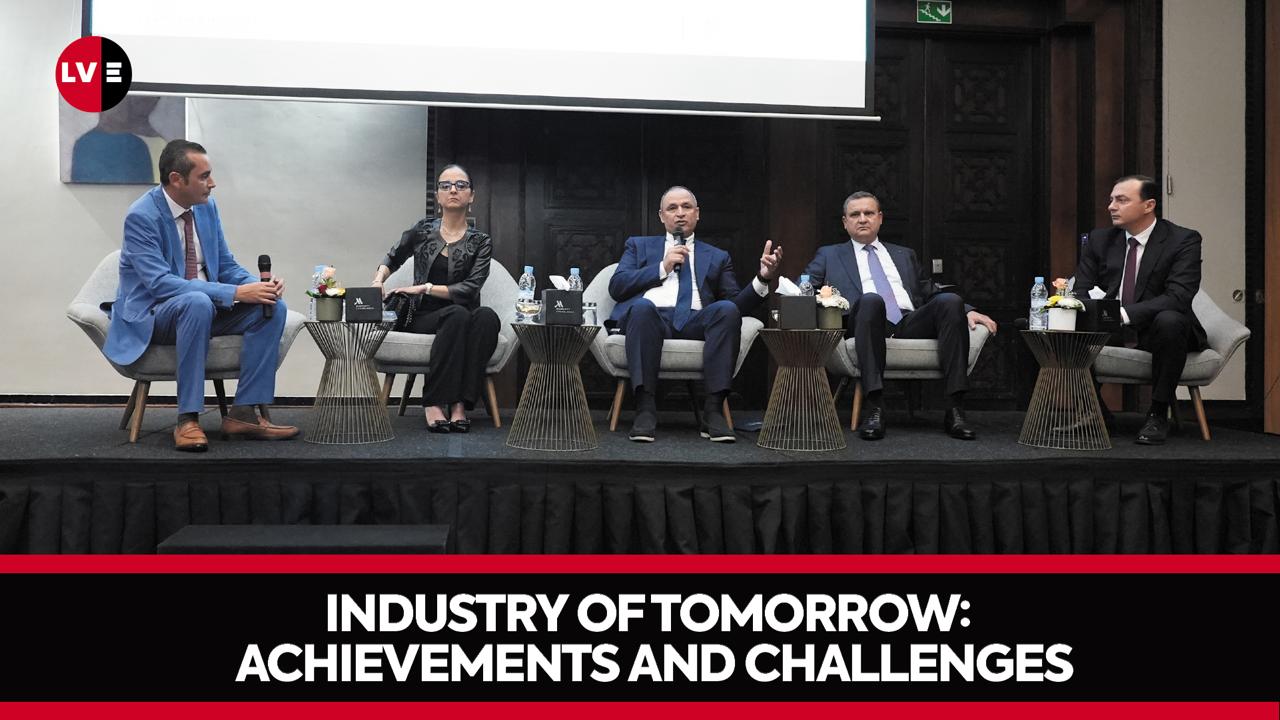
The Moroccan industrial sector has made great progress in recent years, whether in aeronautics, automotive, offshoring, or others… Currently, the country is entering a new industrial phase, establishing new emerging industries that the public and private sectors are committed to actively and jointly developing.
“La Vie Éco” dedicated its second conference-debate cycle to this new industrial era in which the country is engaged, to the development of the professions that accompany it, as well as to the various challenges and issues awaiting the Kingdom.
This conference featured the participation of prominent speakers: Ryad Mezzour, Minister of Industry and Trade; Loubna Tricha, Director General of the Office of Vocational Training and Work Promotion (OFPPT); Ali Seddiki, Director General of the Moroccan Agency for Investment and Export Development (AMDIE); and Mohamed Bachiri, President of the Industrial Development Commission of the CGEM.
If Morocco has managed to carry out a profound transformation of its industry, it is thanks to «several ‘sacrifices’ it has made over more than 25 years, including the opening of its economy notably through the conclusion of free trade agreements, which today allow it access to a potential market of 2.6 billion people, investment in port, airport, and railway infrastructures…, but also in human resources and the improvement of the business climate through the creation of industrial acceleration zones », explains Mezzour.
Building on these achievements, Morocco is entering a new phase of industrial transformation. All the ingredients are present to succeed in this mutation, starting with the availability of talent. It is normal, for an industry of tomorrow, to require professions of tomorrow. This refers to those linked to Industry 4.0, those integrating artificial intelligence, robotization… «For the first time in its history, Morocco has a huge pool of talent. It is estimated at 500,000 annually for 200,000 jobs », Mezzour specifies. In this context, the adaptation of professions constitutes one of the main components of this transformation. Tricha emphasizes: «To prepare the industry of tomorrow, we capture emerging professions as they arise. It should also be noted that while we are indeed developing new professions, we are also renewing conventional professions ».The entire challenge lies in responding to the challenges of technological evolution, digital transformation, and sustainable development.
Beyond the training aspect that accompanies this industrial transformation, Bachiri insists on the development of local integration, especially including raw materials. «Morocco reached an integration rate of 65.5% in 2023 and aims to reach 80% for the next ecosystem ». Seddiki adds: «What we lack most is the anchoring of all production layers, piece by piece and step by step ». According to him: «Efforts must continue to be deployed to improve the competitiveness of companies ».