Business
Nassereddin Alanssari: “The main challenge of recycling remains source sorting”
Plastic recycling maturity, technical challenges, regulatory framework, and R&D challenges… The General Director of the Technical Center for Plastics and Rubber (CTPC) breaks down the main levers and barriers to structuring the sector in Morocco.

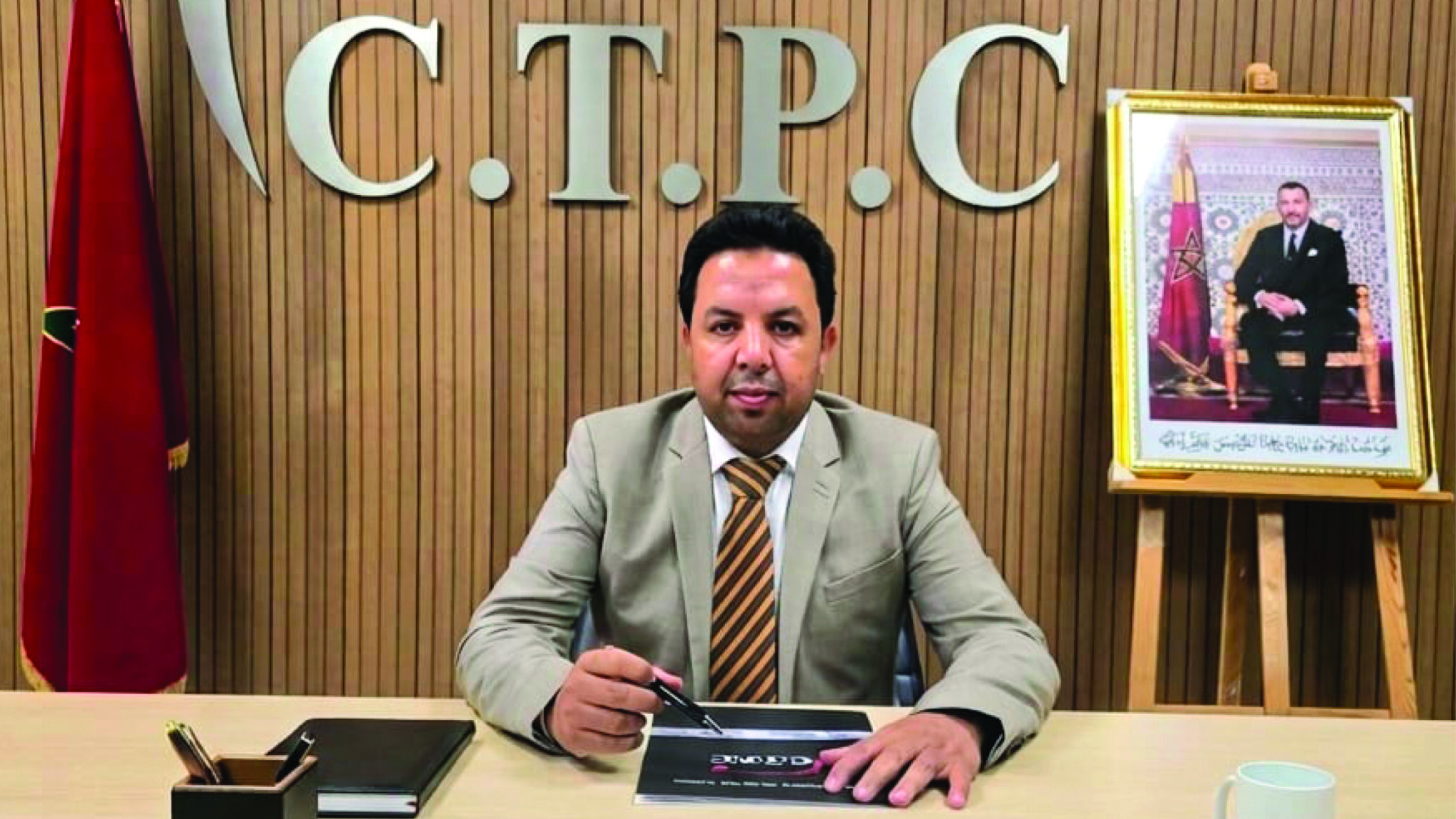
Expert in plastics, quality, and recycling of plastic materials, Nassereddin Alanssari holds a State Engineer diploma from the National School of Mineral Industry, a Master’s from ISCAE, an Executive MBA, and a Mini-MBA from McGill University.
He has more than 20 years of experience in industrial development, testing, and standardization in the plastics sector. Auditor, trainer in the “Switch to Circular Economy” program, he actively contributes to projects related to sustainable plastics, recycling, and strengthening sector skills in Morocco.
What role does the CTPC play today?
The center acts as a technical laboratory, certification body, and training center. It supports industrial companies in integrating recycled materials through analyses, conformity testing, and certification programs. It also carries out awareness and training actions around the circular economy.
How do you evaluate the level of technological maturity of plastic recycling in Morocco?
Mechanical recycling is relatively mature in Morocco today, but the sector still faces several structural bottlenecks. The main challenge remains source sorting, which generates heterogeneous waste complicating industrial companies’ work. As for chemical recycling, capable of treating multilayer or heavily contaminated plastics, it remains at an embryonic stage.
What are the main technical challenges linked to plastic waste valorization?
The absence of selective collection remains the main obstacle. Post-consumption flows are very heterogeneous, making industrial sorting complex and costly.
To this are added organic contamination and chemical impurities that alter the mechanical properties of polymers.
Multilayer packaging is also problematic, as they are very difficult to recycle mechanically. Finally, Law 28-00 prohibits the use of recycled material for food contact, strongly limiting outlets.
Are there Moroccan standards guaranteeing the quality of recycled plastics?
Yes. Morocco has approved more than 100 international standards dedicated to recycling. The CTPC, in partnership with Imanor and several private actors, has also developed national reference frameworks covering classification, collection, and sorting of plastic waste. The center also offers traceability certification compliant with European standard EN 15343.
Is recycling becoming structurally competitive?
For a long time, recycling competitiveness depended heavily on oil prices. Today, the dynamic is becoming more structural due to environmental requirements and CSR policies, particularly in automotive and sectors oriented toward European export.
Integrating recycled material is progressively becoming a strategic obligation.
Do you support industrial companies in eco-design?
Yes. The CTPC trains industrial companies to make products more easily recyclable, notably through developing monomaterial solutions instead of multilayer structures. Training is also offered on life cycle analysis and traceability standards.
Have you observed an increase in control of recycled materials?
Currently, the share of revenue specifically linked to quality control testing on recycled materials (before transformation) remains modest, not exceeding 20% of the global material characterization activity.
Control of imported virgin resins remains dominant, driven by massive import flows and immediate compliance requirements. However, a trend reversal has definitely begun, with the future implementation of extended producer responsibility (EPR) and expected changes to Law 28-00.
How are your R&D projects funded?
Funding is based on a hybrid model combining public programs, institutional partnerships, and international collaborations. The CTPC notably participates in projects supported by FACET, FSI, IRESEN, as well as international programs like H2020 or PRIMA.
What is missing to move recycling to industrial scale?
The main lever remains generalizing source sorting to obtain homogeneous deposits and reduce decontamination costs.
We also need to strengthen financial incentives, support investments in sorting technologies, and accelerate regulatory evolution. Ultimately, recycling can contribute to reducing Morocco’s dependence on imports of plastic materials, provided the sector is durably structured.