Business
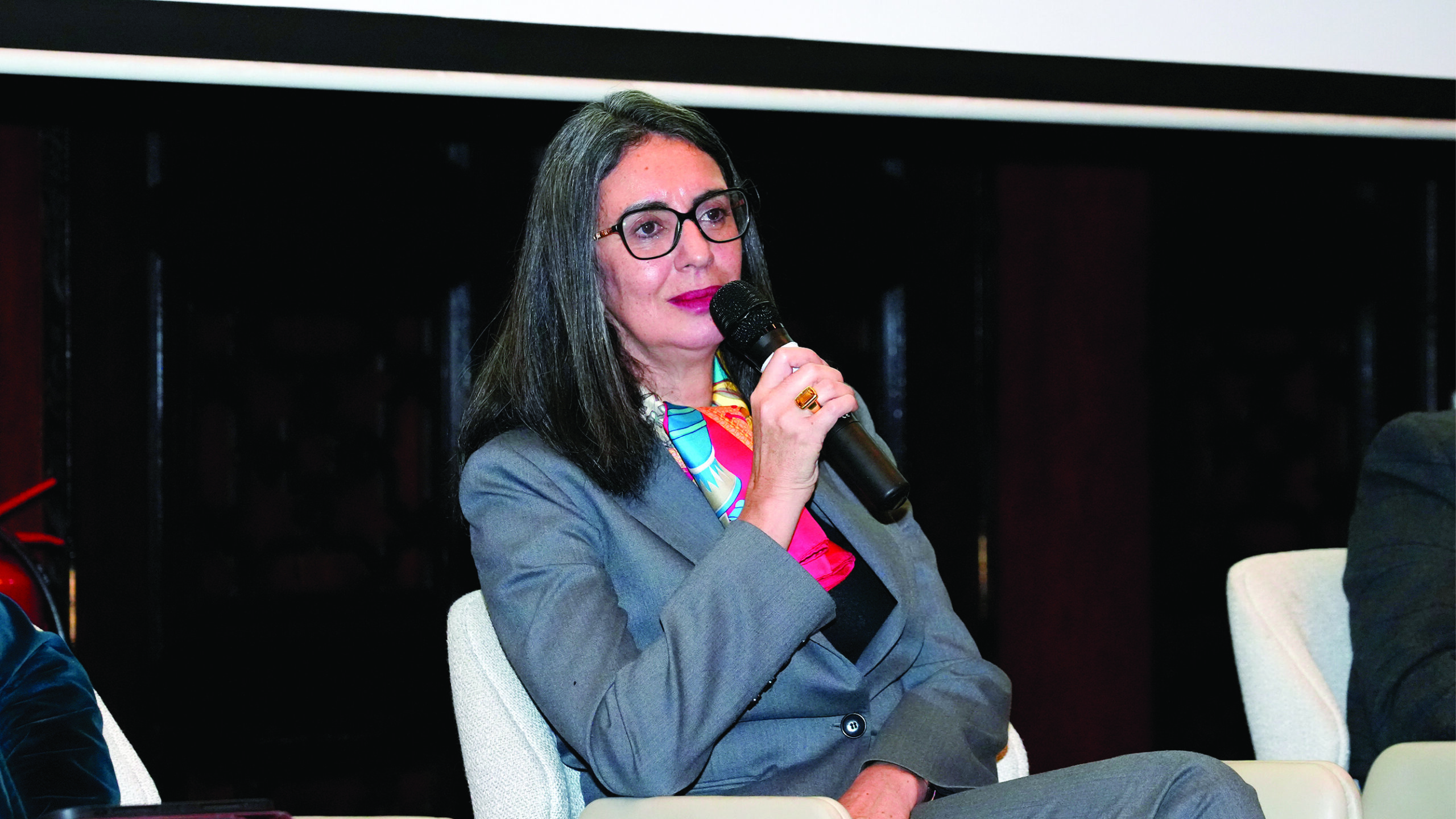
Nadia Fettah Alaoui: “An Unprecedented Scale”
Growth, financing, public debt, PPPs… the Minister of Economy and Finance looks back at the main pillars of the government’s vision for public investment.

Investment that generates growth
“Public investment has taken on an unprecedented scale during this term. 1,600 billion dirhams have been committed, up 61% compared with the previous five-year term.
The disbursement rate is at an overall satisfactory level, exceeding 80% in certain sectors. Timelines are being relatively well met for major projects. Even before economic performance, the choice was that of the social state.
These public investments cover several structuring sectors, notably the social sectors (health, education, and social protection), which form a priority foundation.
Another strategic undertaking is water, which has become a national issue in the face of extreme climate cycles. A program estimated at nearly 540 billion dirhams has been launched, encompassing dams, water highways, and desalination. Infrastructure completes the picture, whether airports, transport, or territorial facilities intended to reduce regional disparities and support economic attractiveness.”
“We are financing this investment by betting that it will be transformational for our economy and our country.
Through this transformation, we are creating a real foundation, a real platform to strengthen existing economic sectors or attract new ones, and subsequently to create growth. And this investment is productive and does indeed generate growth, with a 5% rate estimated over two consecutive years.
If one considers the global situation as well as that of our main European partner, it must be noted that it has, unfortunately, struggled to reach even 1% for several years.”
“While we were strengthening the social state and choosing to accelerate investment, we were not working improvisationally. This was not a risky gamble, but the implementation of a strategy thought out upstream, organized in phases. In parallel with this ramp-up in public investment, another dynamic was at work.
It was a steadily rising growth trend and a structuring tax reform in the process of being put in place. Thus, while public investment was rising sharply, state revenues were increasing at the same pace.”
Having more liquidity
“To finance this growth, we first turn to the domestic market. 75% of our needs are financed on the internal market with average maturities of 8 years and at a rate of 4%.
This allows us full latitude to choose the ideal refinancing method for the remaining 25%, including recourse to international markets. Despite the outcry they provoke, foreign-currency borrowings are not carried out in substantial amounts, unlike issuances on the domestic market, which are more decisive in terms of cost.
Other means exist for SOEs, such as securitization and bond issues. However, particular attention is paid to innovative financing.
It is simply a matter of transferring assets in order to have more liquidity over long maturities that do not exist on the bond market, going out to 30 years.
What is more, without providing guarantees, since the tenant is the State, and without the transaction being treated as debt. It should be noted that this instrument is used for 10% of our investments, whereas 90% are carried out in the traditional manner.”
We are still very far from having exhausted national savings. Thus, the holders of those savings will be able—through the instruments that it is up to us to design and put in place together—to take part in this value creation and receive a share of it.
Because while not everyone can be an entrepreneur or create their own company, everyone can, on the other hand, take part in the investment effort and become an actor in it.
The entire value chain is covered
“Everything is in place and the entire value chain is covered. The leverage effect of the FM6I is 1 dirham for 2, and the first investments are coming in.
The private equity and venture capital funds created have made it possible to mobilize 20 billion dirhams in three years—as much as the amount raised by this industry in 20 years.
Alongside that, Cap Access and Cap Hospitality are fully operational and are delivering convincing results. We remain attentive to both companies and the banking sector to improve these products and adapt them to expectations, because the needs are clear. A high-potential market is present, and we do not hesitate to continue accelerating the rollout of these products.
Public-private partnership is not left out. A particularly striking example of the success of this model is Tanger Med, which has now become the undisputed leader among Mediterranean ports. This project mobilized just under 150 billion dirhams of investment, funded one-third by the public sector and two-thirds by the private sector.
This considerable effort enabled the creation of nearly 140,000 jobs and the development of a 3,000-hectare industrial zone, generating particularly strong economic momentum and stimulation throughout the region.
This shows that it is essential to give investment time to produce its effects, so that the economic and social benefits can fully materialize. In the same vein, the Nador West Med project is now being rolled out.
It represents a total investment of 50 billion dirhams, including 30 billion of public origin and 20 billion in private investment (11 billion in port activities and 9 billion in industry).
The good news is that industrial activity there has practically already begun. The launch of Nador West Med has made it possible to attract two global leaders in maritime transport, which have set up on the site and are, by themselves, investing 11 billion dirhams. The expected impact on employment, particularly in the Oriental region, is major and structuring. Beyond the amounts invested, this momentum also rests on structuring reforms, namely the new Investment Charter, continuous improvement of the business climate, and the implementation of ambitious sectoral strategies.”