International
Movie: “Sentimental Value,” the Grand Prize of Heart and Silence
The 31st edition of the European Film Weeks opened in Casablanca with “Sentimental Value” by Joachim Trier, a family drama both delicate and profoundly moving. Between painful reunions and buried secrets, the Norwegian director explores time, memory, and the invisible fractures of family with clinical precision and restrained emotion, offering the Moroccan audience a film that asserts itself without fanfare… but never leaves you.

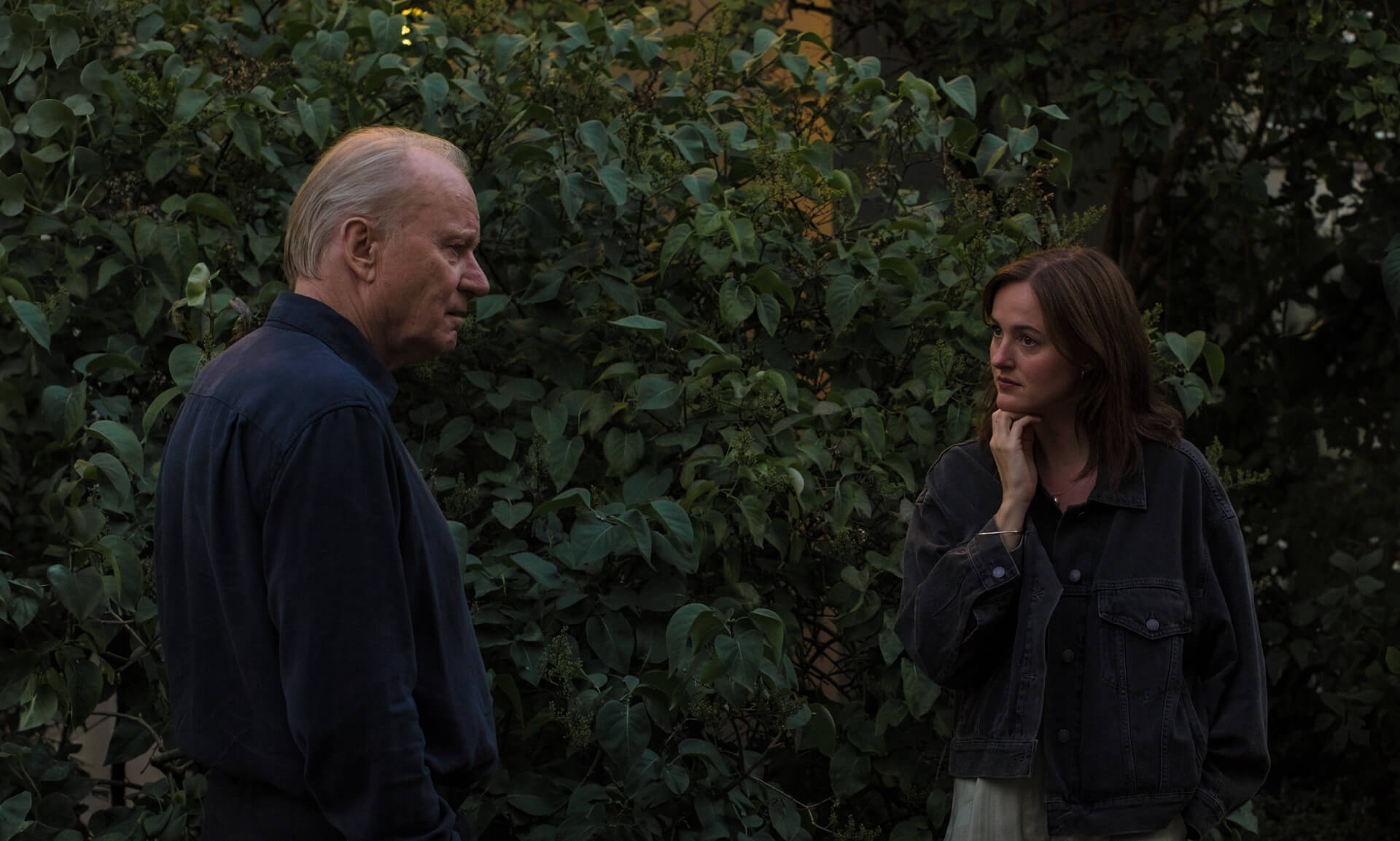
When “Sentimental Value” unfolds on the screen, it is not merely a film presented to the Moroccan audience at the opening of the European Film Weeks; it is one of those rare cinematic objects that seems intent on probing our own relationship to family fractures, to art, and to the passage of time. Joachim Trier, already known for redrawing the contours of intimate Nordic drama (“Oslo, August 31st,” “The Worst Person in the World”), here delivers a work that dominated the Cannes competition—Grand Prix at Cannes 2025—before becoming a favorite of the awards season, with nine Oscar nominations and confirmed international critical success.
The film opens on an absence grown too long. Gustav, a renowned director, returns after fifteen years of estrangement to his two daughters, Nora and Agnès, following the death of their mother. From then on, Trier places his camera in this house—a fleeting, living character, a witness to time and family history—and in the interstices of the silence woven between these beings. Instead of succumbing to pathos, “Sentimental Value” excavates the slowness of impossible reconciliations, the ambiguity of gestures of forgiveness, and the complexity of what we affectionately call “family.”
The Tri(ed) Family Under a Microscope
What strikes immediately is the economy of spectacle: here, there are no grand tearful scenes nor Hollywood-style plot twists, but a screenplay that moves between unspoken words, glances, and silences. The gesture of Gunnar, portrayed by Stellan Skarsgård, is not that of a heroic father, but of a clumsy man doggedly trying to reclaim—perhaps too late—a story he let unravel. Opposite him, Renate Reinsve crafts a Nora both powerful and fragile, driven by a desire for truth as burning as her reluctance to be overcome by emotion.
The film explores without concession this dialectic of a past that never truly passes. Trier is not Bergman when he examined the disintegration of bonds with clinical coldness: he is more like the “absolved” Bergman, who accepts the wound without glorifying it, showing it as it is—true, slow, and resistant to relief. Within this framework, each scene—whether it involves a muted dispute at the family table or an attempt at mutual understanding—carries within it a weight almost too heavy for a viewer who still hopes for simple answers.
The film’s intelligence also lies in its refusal of the expected dramatic scaffolding. Trier allows the hope of repair to glimmer without ever imposing it: reconciliations do not burst forth in flashes of grace; they carve a path through silence, memory, and the acknowledgment of past mistakes. This restraint is the strength—and sometimes the frustration—of the work: it is not a film that soothes, but a film that accompanies, that dissects, and that, perhaps, invites us to reconsider how the “sentimental value” we attribute to our own stories is often the price we pay for never truly knowing how to love.
Ultimately, “Sentimental Value” is not content with being just a family film: it is a mise en abyme of cinema itself, of the role it plays in how we give meaning to what eludes us. In its most successful moments, Trier demonstrates that the camera can be a magnifying glass as much as a mirror—trained on faces, gestures, inflections of voice—to remind us that our personal stories have a resonance broader than we believed. It is not a coup de théâtre, but a coup de fond: a film that asserts itself without fanfare, but with a discreet force that endures long after the lights come back on.