Influences
Morocco Weaves Its Memory at the Venice Biennale
For the first time, the Kingdom will debut a national pavilion at the 2026 Venice Biennale (May 9–November 22).With Asəṭṭa, artist Amina Agueznay and curator Meriem Berrada, Artistic Director of MACAAL in Marrakech, proudly elevate Moroccan artisanal craftsmanship in a vibrant tribute to Amazigh heritage and women’s narratives.

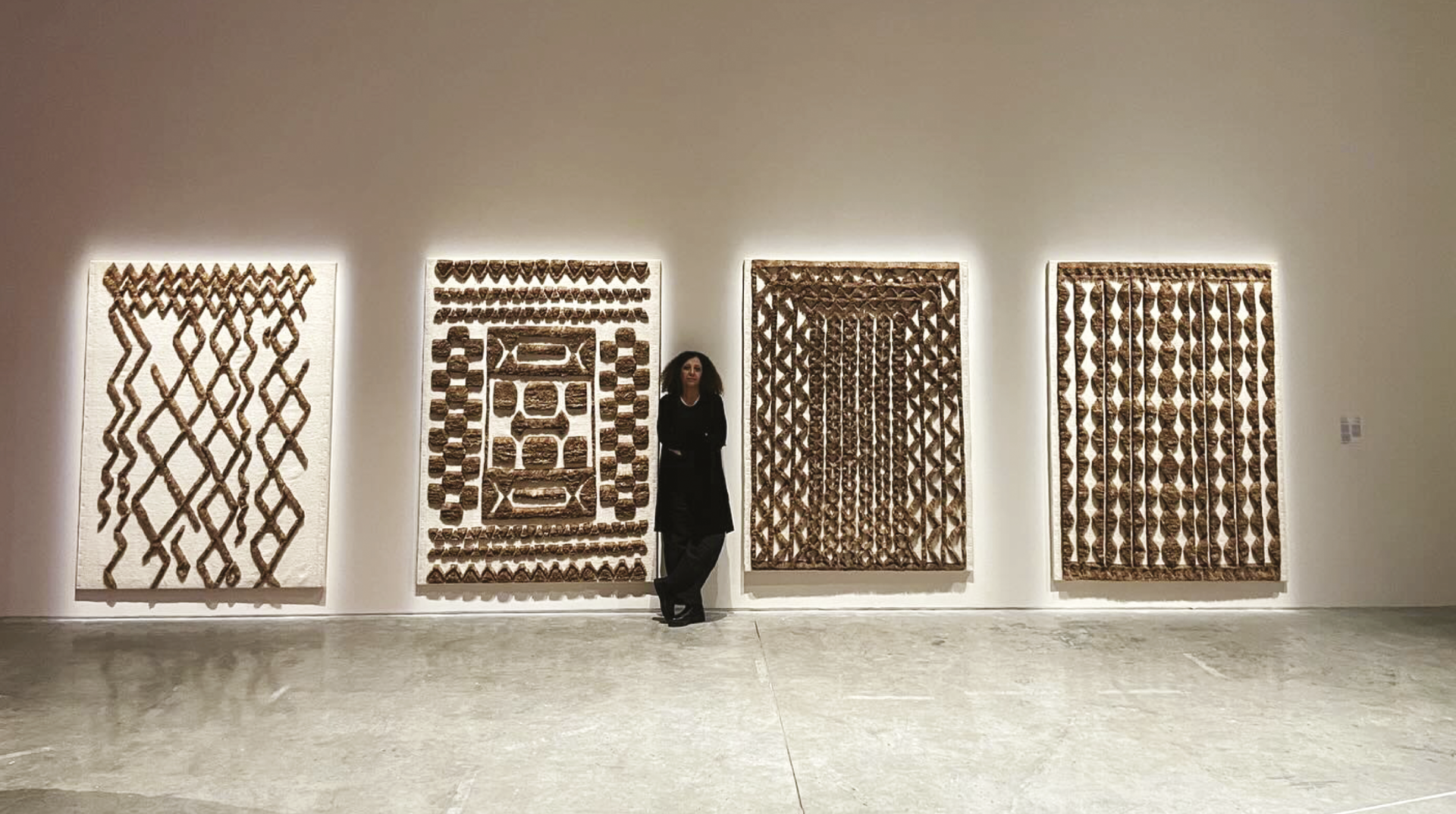
Weaving, knotting, coiling, blending. Materials are not mere fibers—they are stories, memories, roots.
Across disciplines, artists strive to bridge art, craft, and design, reimagining ancestral techniques with contemporary daring. Nothing is disembodied; everything speaks: the thread, stretched between past and present, becomes an unpredictable equation.
By reconnecting with practices rooted in local history, they rediscover what binds us to our origins—real or imagined. With Asəṭṭa, Amina Agueznay and Meriem Berrada transform this thread into a bold artistic statement, poised to leave its mark at the 61st Venice Biennale.
In Morocco, weaving is more than a gesture. It is a ritual, a sacred act where each step—from purifying the space with barley and henna to cutting the threads, a metaphor for death—resonates with meaning.
The thread is destiny, life, and inevitable end, as echoed in Amazigh proverbs: “Man cannot escape his fate” or “Every birth must one day meet death.”
Weaving becomes a cosmogony: a dialogue with the unseen, a staging of existence.
It is from this legacy that Amina Agueznay draws for Asəṭṭa, the award-winning project selected by Morocco’s Ministry of Culture for the 2026 Biennale.
With Meriem Berrada, a sharp curator and Artistic Director of MACAAL, they spin a narrative that transcends mere craft. Asəṭṭa—the Tamazight word for “to weave”—is not just an exhibition. It is a plunge into collective memory, a bridge between ancestral knowledge and global aesthetics.
Agueznay, with thirty years immersed among master weaver women, turns thread into language. Her works, like Talisman of Henna—a monumental textile dyed with henna—invoke protection, blessing, and the joy of wedding rituals.
“For nearly three decades, Amina Agueznay has quietly yet powerfully championed the preservation and evolution of Morocco’s traditional arts,” shares Berrada. A quest of humility and excellence, where every thread tells of encounters, histories, and territories.
Transmission
Weaving bypasses formal lessons: by age eight or nine, girls observe, imitate, listen. Mothers do not dictate—they demonstrate. Songs, prayers, gestures: all are absorbed in silent initiation, ensuring the survival of values.
Asəṭṭa extends this legacy. By placing craftswomen at the heart of their project, Agueznay and Berrada celebrate their role as guardians of heritage. Their installation, exploring feminine memory through weaving and textile sculpture, echoes the Biennale’s theme, In Minor Keys.
An invitation to amplify marginalized voices: those of women, ancestral knowledge, and narratives woven in the shadows.
Agueznay, trained as an architect, blurs boundaries between vernacular forms and postmodern languages. Her modular, immersive installations evoke shifting ecosystems, living landscapes where thread becomes a metaphor for a world in perpetual becoming.
Since the 2000s, her decentralized workshop—born from collaborations with Morocco’s Ministry of Crafts—has expanded nationwide. Once a bond is forged with a craftswoman, it endures. These bearers of knowledge are not merely included; they are celebrated within museum spaces.
Yet weaving teeters on a taut thread. For years, commercialization has transformed it into a product, stripped of its ritual essence. Carpets, once vessels for sacred stories, become consumer goods emptied of soul.
This folkloric reduction threatens the cultural depth of the craft. Asəṭṭa could be a rebuttal. Agueznay and Berrada reject static artifacts. Their project reimagines weaving as a living practice, poised to interrogate destiny, memory, and creativity.
“The installation explores feminine memory and Moroccan artisanal heritage, reinterpreting weaving and textile sculpture techniques through a contemporary narrative rooted in gesture,” they explain. A way to counter commodification by recentering the sacred in creative acts.
Asəṭṭa will thus carry Morocco’s voice—one of margins that resonate universally. Weaving, a practice anchored in mountains, countryside, and memories, will assert itself as a creative manifesto.
Agueznay and Berrada, by stitching fragmented narratives, remind us that craft is not a relic but a living breath. A way to affirm, as sung by the weavers, that every thread—no matter how fragile—binds past to future.