Kingdom
Morocco–Saudi Arabia: Levers for Economic Rebalancing
Trade between Rabat and Riyadh is growing, but the imbalance remains. At a time when Saudi Arabia is accelerating its economic diversification, Morocco has concrete levers to reposition its companies and transform an asymmetrical relationship into a more balanced economic partnership. Analysis.

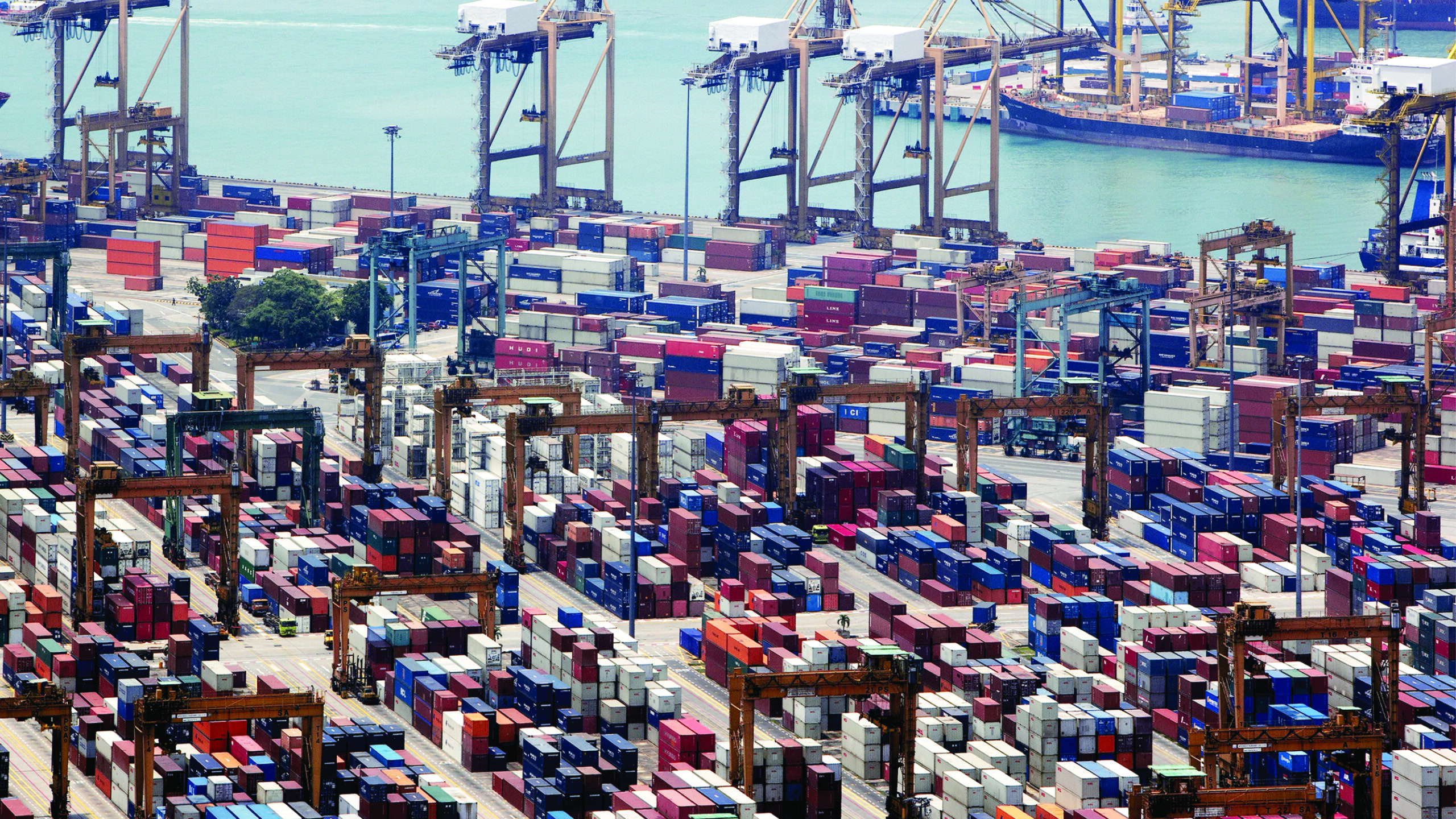
Saudi Arabia is gradually establishing itself as a strategic destination for Moroccan investors. In recent months, several major Moroccan companies have launched or strengthened their presence in the country, attracted by a rapidly transforming market fueled by massive investments.
The latest example is the creation in Riyadh of the subsidiary I-Sense International by OCP Maintenance Solutions, following its expansions in Europe, Africa, and Asia.
Through this local establishment, the Business Unit of the world leader in phosphates, created in 2017, aims to integrate into major Saudi industrial projects and, beyond that, across the entire Gulf region.
The targeted sectors notably include mining, chemicals and petrochemicals, paper, cement, steel, as well as the beverage industry—segments driven by Saudi Arabia’s economic diversification strategy.
The healthcare sector is also among the priorities of Moroccan investors. The Akdital Group, a leader in private healthcare in Morocco, is preparing to acquire majority stakes in the Awwad Albishri Private Hospital in Mecca, after having integrated the Abdul Rahman Al Mishari Hospital in Riyadh, now operated under the name Akdital Riyadh Olaya.
These two operations are part of a broader investment program of 1.4 billion dollars by 2030, aimed at developing a capacity of 1,000 beds in Saudi Arabia.
Trade exchanges remain unbalanced
This positioning is far from insignificant. When announcing the latest acquisition, Akdital’s management highlighted the strong transformation of the Saudi healthcare system, while pointing to a structural deficit in infrastructure, with a ratio of about two beds per 1,000 inhabitants.
This represents a pool of opportunities for a group that already operates more than 4,000 beds in Morocco through a network of 41 clinics. The bond issuance of 1.2 billion dirhams, completed at the end of 2025, was also part of this international expansion strategy.
In construction, the TGCC Group is not left behind. Last May, its subsidiary TGCC Middle East partnered with Naif Alrajhi Investment, one of Saudi Arabia’s leaders in real estate development, to develop several projects in the Kingdom.
This investment momentum comes in a context of growing bilateral trade. In 2024, its volume reached 26.4 billion dirhams, compared to 24.6 billion dirhams a year earlier. However, this increase masks a persistent structural imbalance.
Despite a nearly 17% increase in Moroccan exports, reaching 1.15 billion dirhams, the trade deficit stands at around 24 billion dirhams. Moroccan exports remain dominated by automotive products (excluding rail), followed by agri-food products and certain cosmetics, while imports mainly consist of oil, chemical products, and mineral materials (see infographic).
The trend has even intensified recently. According to the Observatory of Economic Complexity, in November 2025, Moroccan exports to Saudi Arabia fell by 36.5%, while imports jumped by nearly 60%, approaching one billion dirhams in a single month.
Cross-investments and economic diplomacy
In terms of direct investment, the asymmetry is just as pronounced. Around 250 Saudi companies currently operate in Morocco, particularly in renewable energy, real estate, trade, and distribution.
The Acwa Power group, highly active in solar energy with the Noor Ouarzazate, Laayoune, and Boujdour projects, also plans to produce green steel using hydrogen in the southern provinces. Based in Jeddah, Zahid Group, active in about fifteen sectors including energy, construction, logistics, and transport, holds a 30% stake in Total Morocco.
Present since 2000, Bugshan Group, through Bugshan Morocco, invests in automotive, real estate, hospitality, and distribution. Its subsidiary MCEG launched, last May, the “ACYL” mineral water plant in El-Hajeb for more than 150 million dirhams. Through its Moroccan subsidiary Jameel Motors Maroc (JMC), the family-owned Abdul Latif Jameel Motors group distributes Toyota, Lexus, MG, and Jiangling Motors.
Conversely, only about thirty Moroccan companies are active in Saudi Arabia. Aware of this imbalance, the CGEM has intensified its economic diplomacy efforts, as illustrated by the mission organized in Riyadh in January 2024, which brought together more than 100 Moroccan companies from fifteen sectors.
At the same time, Saudi business leaders are encouraging their companies to use Morocco as a gateway to sub-Saharan Africa, as demonstrated by the visit of a major business delegation in the summer of 2025.
A favorable context for rebalancing
The rise of Moroccan investments in Saudi Arabia could, in the medium term, help reduce the trade deficit. Riyadh’s Vision 2030, marked by mega-projects such as the NEOM megacity, opens vast opportunities in healthcare, tourism, construction, industry, ICT, and infrastructure, supported by regulatory reforms and attractive tax incentives.
In addition, since February 1, 2026, the Saudi financial market has been fully opened to foreign investors.
Moroccan companies can now invest directly in the Riyadh Stock Exchange (Tadawul), with full ownership of securities and exemption from capital gains tax for non-residents.
All these factors could make Saudi Arabia not only a growth market but also a regional springboard for Moroccan champions.
Phosphates and green hydrogen: Riyadh, a major competitor to Rabat
A key economic partner of Morocco in the Middle East, Saudi Arabia is also a significant competitor in the strategic sectors of phosphates and green hydrogen.
In 2024, the Kingdom was among the world’s leading phosphate producers, with production estimated at around 9.5 million tons, driven by the state-owned mining group Ma’aden. The latter plans nearly 920 million dollars in investments to strengthen its industrial capacity.
At the same time, Riyadh aims to become a global leader in green hydrogen and ammonia, notably through the flagship NEOM project, backed by an investment of 8.5 billion dollars. The objective is to produce 4 million tons of hydrogen per year by 2030, relying on solar and wind energy. This strategy places Saudi Arabia in direct competition with Morocco’s ambitions in clean energy.